
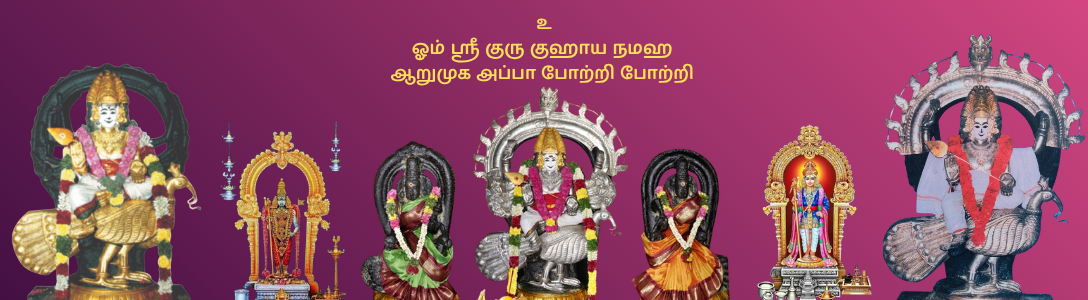
Thiruppugal 664 Vadhanasaroruga
மயூரகிரிநாதா உன் திருவடிகள் சரணம்
– மயூரகிரிநாதனுக்கு அரோகரா –
– குன்றக்குடி முருகனுக்கு அரோகரா –
பாடல்
தனன தனாதன தனன தனாதன தய்ய தனத்த தந்த
தானாதன தானந் தானன – தந்ததான
வதன சரோருக நயன சிலீமுக வள்ளி புனத்தில் நின்று
வாராய்பதி காதங் காதரை – யொன்றுமூரும்
வயலு மொரேவிடை யெனவொரு காவிடை வல்லப மற்றழிந்து
மாலாய்மட லேறுங் காமுக – எம்பிரானே
இதவிய காணிவை ததையென வேடுவ னெய்திடு மெச்சில் தின்று
லீலாசல மாடுந் தூயவன் – மைந்தநாளும்
இளையவ மூதுரை மலைகிழ வோனென வெள்ள மெனக் கலந்து
நூறாயிர பேதஞ் சாதமொ – ழிந்தவாதான்
கதைகன சாபதி கிரிவளை வாளொடு கைவசி வித்தநந்த
கோபாலம கீபன் தேவிம – கிழ்ந்துவாழக்
கயிறொ டுலூகல முருள வுலாவிய கள்வ னறப் பயந்து
ஆகாயக பாலம் பீறநி – மிர்ந்துநீள
விதரண மாவலி வெருவ மகாவ்ருத வெள்ள வெளுக்க நின்ற
நாராயண மாமன் சேயைமு – னிந்தகோவே
விளைவய லூடிடை வளைவிளை யாடிய வெள்ளிநகர்க் கமர்ந்த
வேலாயுத மேவுந் தேவர்கள் – தம்பிரானே.
பதம் பிரித்தது
தனன தனாதன தனன தனாதன தய்ய தனத்த தந்த
தானாதன தானந் தானன – தந்ததான
வதன சரோருக நயன சிலீமுக வள்ளி புனத்தில் நின்று
வாராய்பதி காதங் காதரை – ஒன்றுமூரும்
வயலும் ஒரே இடை எனவொரு காவிடை வல்லபம் அற்றழிந்து
மாலாய் மடல் ஏறுங் காமுக – எம்பிரானே
இதவிய காண் இவை ததையென வேடுவன் எய்திடும் எச்சில் தின்று
லீலாசலம் ஆடுந் தூயவன் – மைந்த நாளும்
இளையவ மூதுரை மலைகிழவோனென வெள்ள மெனக் கலந்து
நூறாயிர பேதஞ் சாதம் – ஒழிந்தவாதான்
கதை கன சாப திகிரி வளை வாளொடு கை வசிவித்த
நந்த கோபால மகீபன் தேவி – மகிழ்ந்துவாழ
கயிறொடு உலூகலம் உருள உலாவிய கள்வன் அறப் பயந்து
ஆகாய கபாலம் பீற – நிமிர்ந்துநீள
விதரண மாவலி வெருவ மகாவ்ருத வெள்ள வெளுக்க நின்ற
நாராயண மாமன் சேயை – முனிந்தகோவே
விளைவயலூடிடை வளைவிளையாடிய வெள்ளிநகர்க் கமர்ந்த
வேலாயுத மேவுந் தேவர்கள் – தம்பிரானே
English
vadhana sarOruga nayana sileemuka vaLLi punaththil nindru
vArAy padhi kAdhang kAdharai – ondrumUrum
vayalu morEvidai enavoru kAvidai vallabam
atrazhindhu mAlAy madalERung kAmuka – embirAnE
idhaviya kANivai thadhaiyena vEduvan eydhidum echchil thindru
leelAchalam Adun thUyavan main – dhanALum
iLaiyava mUdhurai malaikizha vOnena veLLa menak kalandhu
nURAyira bEdham jAtham ozhin – dhavAdhAn
gadhaigana chApa thigiri vaLai vALodu kaivasi viththa nandha
gOpAla mageepan dhEvi ma – gizhndhuvAzha
kayiRod ulUkalam uruLa ulAviya kaLva naRap payandhu
AgAya kapAlam peeRa ni – mirndhuneeLa
vitharaNa mAvali veruva mahAvrutha veLLa veLukka nindra
nArAyaNa mAman sEyai mu – nindhakOvE
viLai vayalUdidai vaLaiviLai yAdiya veLLinagark amarndha
vElAyudha mEvun dhEvargaL – thambiRAnE.
English Easy Version
vadhana sarOruga nayana sileemuka vaLLi punaththil nindru
vArAy padhi kAdhang kAdharai – ondrumUrum
vayalu morEvidai enavoru kAvidai vallabam atrazhindhu
mAlAy madalERung kAmuka – embirAnE
idhaviya kANivai thadhaiyena vEduvan eydhidum echchil thindru
leelAchalam Adum thUyavan – maindha nALum
iLaiyava mUdhurai malaikizha vOnena veLLa menak kalandhu
nURAyira bEdham jAtham – ozhindhavAdhAn
gadhaigana chApa thigiri vaLai vALodu kaivasi viththa
nandhagOpAla mageepan dhEvi – magizhndhuvAzha
kayiRod ulUkalam uruLa ulAviya kaLvan aRap payandhu
AgAya kapAlam peeRa – nimirndhuneeLa
vitharaNa mAvali veruva mahAvrutha veLLa veLukka nindra
nArAyaNa mAman sEyai – munindhakOvE
viLai vayalUdidai vaLaiviLai yAdiya veLLinagark amarndha
vElAyudha mEvun dhEvargaL – thambiRAnE
திருப்புகழ் 664 வதன சரோருக (வெள்ளிகரம்) – விளக்கம்
அருணகிரிநாதர் அருளிய இந்தத் திருப்புகழ் (664 – வதன சரோருக), வெள்ளிகரம் என்னும் திருத்தலத்தில் வீற்றிருக்கும் முருகப் பெருமானைப் போற்றிப் பாடுவதாகும். இப்பாடல் முருகனின் லீலைகளையும், அவனது மாமனான திருமாலின் அவதாரச் சிறப்புகளையும் இணைத்து, இறுதியில் இறைவனின் தத்துவ நிலையையும் விளக்குகிறது.
1. தினைப்புனத்தில் நின்ற காமுகன்
“வதன சரோருக நயன சிலீமுக” – தாமரை போன்ற முகத்தையும், அம்பைப் போன்ற கண்களையும் உடைய வள்ளியின் பின்னால் தினைப்புனத்தில் முருகன் அலைந்தான். அவளைக் காண ஒரு காத தூரம் நடந்தாலும், அது அவனுக்கு ஒரு அடி தூரம் (ஒன்று மூரும்) நடப்பது போலவே இருந்தது. அந்தத் தெய்வ மங்கைக்காகத் தன் வல்லமை அனைத்தையும் மறைத்து, ஒரு சாதாரணக் காதலனைப் போல மடல் ஏறும் நிலைக்குச் சென்ற “காமுகன்” நம் பெருமான் என்று அவனது எளிய பக்தியைப் போற்றுகிறார்.
2. வேடுவன் எச்சில் உண்ட தூயவன்
வள்ளி வளர்த்தெடுத்த வேடுவக் குலத்தைச் சேர்ந்தவர்கள், அன்போடு கொடுத்த “இதவிய காணி” (தினை மாவு) போன்றவற்றை, அவர்கள் கையாடிய எச்சில் என்று பாராமல் மகிழ்ந்து உண்டான். லீலைகள் புரிவதில் மலையைப் போன்றவன் முருகன். தகுதியற்ற பொருளையும் பக்தியின் நிமித்தமாக ஏற்றுக் கொள்ளும் அவனது தூய்மையான உள்ளத்தை “தூயவன் மைந்த” என்று புகழ்கிறார்.
3. நூறாயிரம் பேதங்கள் கடந்த ஞானம்
இறைவன் “இளையவன்”, “மூதுரை சொன்னவன்”, “மலைக்குக் கிழவன்” (தலைவன்) எனப் பலவாறாகப் போற்றப்படுகிறான். அறிவு வெள்ளம் போலப் பெருகித் ததும்பும் அவன், உலகிலுள்ள நூறாயிரம் வேறுபாடுகளையும் (பேதங்களையும்), பிறப்பு-இறப்பு எனும் சுழற்சியையும் (சாதம் – பிறப்பு) போக்க வல்லவன். சொற்களுக்கு அப்பாற்பட்ட அந்த மௌன நிலையை அவன் அருள வல்லவன்.
4. கள்ளக் கிருஷ்ணனின் மருகன்
திருமாலின் கிருஷ்ண அவதார லீலைகளை இங்கே குறிப்பிடுகிறார். கதாயுதம், சங்கு, சக்கரம், வாள் ஏந்திய நந்தகோபாலனாகிய கண்ணன், யசோதை மகிழ்ந்து வாழும்படி வளர்ந்தான். வெண்ணெய் திருடிய கள்வனான அவனை யசோதை கயிற்றால் உரலோடு கட்டினாள். அந்த உரலை இழுத்துக்கொண்டு இரண்டு மருத மரங்களுக்கு இடையே உலாவிய கள்வனான திருமாலின் மருமகன் முருகன்.
5. உலகளந்த உத்தமன்
திருமால் வாமன அவதாரம் எடுத்து, பின் திரிவிக்கிரமனாக வானுயர வளர்ந்தான். அவனது திருவடி ஆகாயத்தின் கபாலத்தைப் (முகட்டை) பிளக்கும்படி நீண்டது. மாவலிச் சக்ரவர்த்தி நடுங்கும்படி, தர்மத்தின் வெள்ளம் பெருகும்படி விண்ணையும் மண்ணையும் அளந்த அந்த நாராயணனின் மருகனே முருகன்.
6. மாமன் மகனை முனிந்த கோ
“நாராயண மாமன் சேயை முனிந்த கோவே” – இது ஒரு சிறப்பான குறிப்பு. மகாபாரதப் போரில் அர்ஜுனனுக்கு (திருமாலின் மகன் போன்றவன்) உதவியாக இருந்த கண்ணன், பாண்டவர்களுக்குத் துணை நின்றான். அல்லது, திருமாலின் மகனாகக் கருதப்படும் காமதேவனை (மன்மதனை) எரித்த சிவனின் புதல்வன் முருகன் என்பதையும் இது குறிக்கலாம். அசுரர்களைக் கோபித்து அழித்த தலைவன் முருகன்.
7. சங்கு விளையாடும் வெள்ளிநகர்
வெள்ளிகரம் தலத்தின் நீர்வளத்தை மீண்டும் ஒருமுறை வர்ணிக்கிறார். விளைச்சல் மிக்க வயல்களின் ஊடே, வெண்மையான சங்குகள் (வளை) ஊர்ந்து சென்று விளையாடுகின்றன. இயற்கை எழிலும், ஆன்மீகச் செறிவும் நிறைந்த ஊர் வெள்ளிகரம்.
8. தேவர்கள் தம்பிரான்
வெள்ளிகரம் திருத்தலத்தில் வீற்றிருப்பவனும், கையில் வேலாயுதத்தை ஏந்தியிருப்பவனுமான முருகன், தேவர்களுக்கெல்லாம் தலைவன் (தம்பிரான்). அசுர பயத்தைப் போக்கித் தேவர்களைக் காத்த அந்த வேலவன், என்னையும் இப்பிறவித் துயரிலிருந்து காக்க வேண்டும் என்று அருணகிரிநாதர் நிறைவு செய்கிறார்.
சுருக்கம்
இப்பாடலின் சாரம்: வள்ளியின் பின்னால் ஒரு பித்தனைப் போலத் தினைப்புனத்தில் அலைந்து, வேடுவர் தந்த எச்சில் உணவை உண்ட எளிமையானவன் முருகன். நூறாயிரம் பேதங்களைக் கடந்து, பிறவிப் பிணியை அறுக்கும் ஞான வெள்ளம் அவன். உரலோடு தவழ்ந்த கள்வனும், உலகளந்த உத்தமனுமான நாராயணனின் மருமகன். சங்கு ஊர்ந்து விளையாடும் வயல்கள் சூழ்ந்த வெள்ளிகரம் திருத்தலத்தில் வேலாயுதத்துடன் வீற்றிருக்கும் தேவர்களின் தலைவன் அவன்.
The Essence of Thiruppugazh 664 Vadana Saroruga (Vellikaram)
In this rich and narrative-driven hymn (Thiruppugazh 664 – “Vathana Saroruga”), composed at the fertile shrine of Velligaram, Saint Arunagirinathar juxtaposes the intense romantic humility of Lord Muruga with the majestic cosmic power of His uncle, Lord Vishnu. The song illustrates how the Supreme Being becomes simple for the sake of love, while remaining the terrifying force against evil.
1. The Obsession of Divine Love
The song opens with a vivid depiction of Muruga as a lovesick suitor. Captivated by Valli, whose face resembles a lotus (“Vathana Saroruga”) and whose eyes are like sharp arrows (“Nayana Sileemuga”), Muruga stands waiting in her millet field. For Him, walking a distance of ten leagues (“Pathi Katham”) to see her feels like moving less than half a foot (“Oru arai”). This highlights that when divine love takes over, physical strain and distance become irrelevant.
2. The Readiness for Public Humiliation
Arunagirinathar describes Muruga as a “Kamuga” (Lover) who is ready to engage in “Madal Eruthal.” This is an ancient Tamil custom where a rejected lover creates a horse out of prickly palmyra stems and rides it publicly to shame the girl into accepting him. The Lord of the Universe is so desperate for the soul (Valli) that He is willing to discard His dignity and “ride the Madal,” showing the extent of His compassion and longing for the devotee.
3. Eating the Hunter’s Offering
The hymn celebrates Muruga’s simplicity. He joyfully accepted and ate the millet flour and honey offered by the hunters (“Veduvan”), even though it was considered “Echil” (tasted/leftover food or culturally impure by orthodox standards). To the “Pure One” (“Thooyavan”), the caste or status of the offering did not matter; only the love behind it mattered. He performed playful miracles (“Leela chalam”) to please these simple forest folk.
4. The Remover of Duality
Muruga is addressed as the “Young One” (“Ilaiyava”) and yet the “Old One” (“Moothurai” – embodiment of ancient wisdom). He is the one who helps the soul cross the “flood” of birth and death. He removes the “Noorayira Bhedam”—the hundred thousand differences and dualities that confuse the human mind. By merging with Him, the soul transcends the cycle of birth (“Satham ozhinthava”).
5. The Glory of Nanda Gopa’s Son
The poet dedicates a significant portion of this song to praising Lord Vishnu (Muruga’s uncle). He describes Vishnu appearing as Krishna, the son of Nanda Gopa, to bring joy to Yasoda. This Krishna is armed with the five great weapons: the Club, the Bow (“Sarnga”), the Sword (“Nandaka”), the Conch (“Panchajanya”), and the Discus (“Sudarshana”). This establishes the mighty lineage of Muruga.
6. The Thief Bound to the Mortar
Arunagirinathar fondly recalls the childhood pranks of Krishna. He calls Him the “Kalvan” (Thief) who stole butter. To punish Him, Yasoda tied Him with a rope (“Kayiru”) to a heavy wooden mortar (“Ulookalam”). The Lord, who binds the universe, allowed Himself to be bound by a mother’s rope and dragged the mortar between two trees, liberating the accursed sons of Kubera.
7. The Cosmic Form of Vamana
The scene shifts from the small baby Krishna to the gigantic Vamana Avatar. To subdue the arrogance of Emperor Mahabali (“Mavali”), Vishnu took a colossal form (“Maha Virutha”). He grew so tall that His head pierced the shell of the universe (“Aagaya Kapalam Peera”), measuring the earth and sky. Arunagirinathar praises Muruga as the “King” (“Kove”) related to this awe-inspiring Narayana.
8. The Lord of the Fertile Velligaram
The song concludes by returning to the shrine of Velligaram. It is described as a place of immense fertility where conch shells (“Valai”) are found playing in the fields (“Vilai Vayal”), indicating the abundance of water. In this silver city (“Velli Nagar”), Muruga resides as the “Tambiran” (Master) of the Devas, wielding the Spear to destroy evil and protect the righteous.
Summary
The essence of this hymn is The Paradox of the Divine.
- Simplicity: Arunagirinathar portrays Muruga as a humble lover waiting in millet fields and eating hunter’s food, willing to suffer for Valli’s love.
- Majesty: He contrasts this with the cosmic power of Vishnu (Muruga’s uncle), describing the Vamana Avatar measuring the sky and Krishna being bound to a mortar.
- The Master: He addresses Muruga as the Remover of Duality and the Lord of the Devas who resides in the fertile, conch-filled fields of Velligaram.