
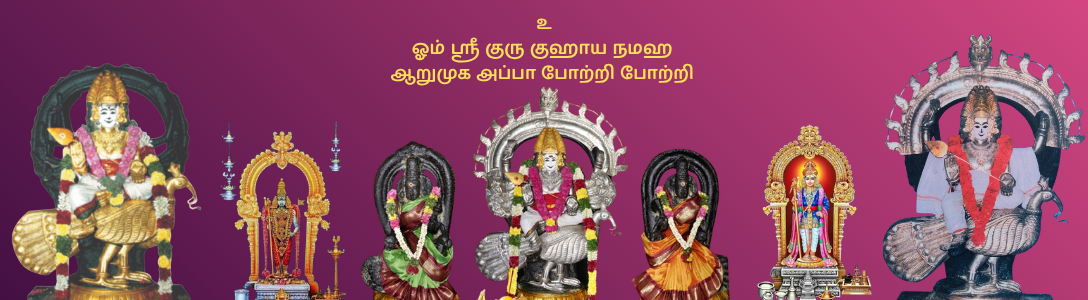
Thiruppugazh 221 theruvinilnadavA (swAmimalai)
மயூரகிரிநாதா உன் திருவடிகள் சரணம்
– மயூரகிரிநாதனுக்கு அரோகரா –
– குன்றக்குடி முருகனுக்கு அரோகரா –
திருப்புகழ் 220 தருவர் இவர் (சுவாமிமலை) – திருப்புகழ் 222 நாசர்தங் கடை (சுவாமிமலை)
பாடல்
தனதன தனனா தனனா
தனந்த தத்தம் – தனதான
தெருவினில் நடவா மடவார்
திரண்டொ றுக்கும் – வசையாலே
தினகர னெனவே லையிலே
சிவந்து திக்கும் – மதியாலே
பொருசிலை வளையா இளையா
மதன்தொ டுக்குங் – கணையாலே
புளகித முலையா ளலையா
மனஞ்ச லித்தும் – விடலாமோ
ஒருமலை யிருகூ றெழவே
யுரம்பு குத்தும் – வடிவேலா
ஒளிவளர் திருவே ரகமே
யுகந்து நிற்கும் – முருகோனே
அருமறை தமிழ்நூ லடைவே
தெரிந்து ரைக்கும் – புலவோனே
அரியரி பிரமா தியர்கால்
விலங்க விழ்க்கும் – பெருமாளே.
பதம் பிரித்தது
தனதன தனனா தனனா
தனந்த தத்தம் – தனதான
தெருவினில் நடவா மடவார்
திரண்டு ஒறுக்கும் – வசையாலே
தினகரனென வேலையிலே
சிவந்து உதிக்கும் – மதியாலே
பொருசிலை வளையா இளையா
மதன்தொடுக்குங் – கணையாலே
புளகித முலையாள் அலையா
மனஞ்சலித்தும் – விடலாமோ
ஒருமலை யிருகூறெழவே
உரம் புகுத்தும் – வடிவேலா
ஒளிவளர் திருவேரகமே
உகந்து நிற்கும் – முருகோனே
அருமறை தமிழ்நூல் அடைவே
தெரிந்துரைக்கும் – புலவோனே
அரியரி பிரமாதியர் கால்
விலங்க அவிழ்க்கும் – பெருமாளே.
English
theruvinil nadavA madavAr
thiraNd oRukkum – vasaiyAlE
dhinakaran ena vElaiyilE
sivandhu dhikkum – madhiyAlE
porusilai vaLaiyA iLaiyA
madhan thodukkum – kaNaiyAlE
puLakitha mulaiyAL alaiyA
manan saliththum – vidalAmO
orumalai iru kUR ezhavE
uram puguththum – vadivElA
oLivaLar thiru EragamE
ugandhu niRkum – murugOnE
arumaRai thamizh nUl adaivE
therindhu raikkum – pulavOnE
ari hari biramAdhiyar kAl
vilang avizhkkum – perumALE.
English Easy Version
theruvinil nadavA madavAr
thiraNd oRukkum – vasaiyAlE
dhinakaran ena vElaiyilE
sivandhu dhikkum – madhiyAlE
porusilai vaLaiyA iLaiyA
madhan thodukkum – kaNaiyAlE
puLakitha mulaiyAL alaiyA
manan saliththum – vidalAmO
orumalai iru kUR ezhavE
uram puguththum – vadivElA
oLivaLar thiru EragamE
ugandhu niRkum – murugOnE
arumaRai thamizh nUl adaivE
therindhu raikkum – pulavOnE
ari hari biramAdhiyar kAl
vilang avizhkkum – perumALE.
திருப்புகழ் 221 தெருவினில் நடவா (சுவாமிமலை) – விளக்கம்
சுவாமிமலையில் வீற்றிருக்கும் முருகப்பெருமானை வேண்டி அருணகிரிநாதர் பாடிய “தெருவினில் நடவா” (பாடல் 221) என்னும் இத்திருப்புகழ், அகத்துறை (காதல்) மரபில் பாடப்பட்ட ஒரு மிகச் சிறந்த இலக்கியப் படைப்பாகும். முருகனைப் பிரிந்து வாடும் தலைவியின் துயரத்தையும், அவளின் வேதனையைத் தீர்க்கக் கோரி முருகனின் மாபெரும் வீரத்தைப் போற்றியும் இப்பாடல் அமைந்துள்ளது.
இதன் ஆழமான விளக்கத்தை எட்டுத் தலைப்புகளில் கீழே காணலாம்.
1. ஊரார் வீசும் பழிச்சொற்கள்
இப்பாடல் முருகனின் மீது காதல் கொண்ட ஒரு தலைவியின் நிலையைக் கூறுகிறது. வீதிகளில் தேவையில்லாமல் நடமாடாத, வீட்டிலேயே அடங்கியிருக்கும் கற்புடைய பெண்கள் (மடவார்), முருகனைப் பிரிந்து காதல் நோயால் வாடும் இத்தலைவியைப் பார்த்துப் பலவாறாகப் பழித்துப் பேசுகிறார்கள். ஒன்றாகத் திரண்டு அவர்கள் வீசும் வசைகள் (பழிச்சொற்கள்) தலைவிக்குப் பெரும் துயரத்தைத் தருகின்றன.
2. சூரியனைப் போலச் சுட்டெரிக்கும் நிலவு
காதலனைப் பிரிந்து வாடும் பெண்களுக்குக் குளிர்ந்த தென்றலும், நிலவும் நெருப்பாகச் சுடும் என்பது தமிழ் இலக்கிய மரபு. மாலை வேளையில் வானில் சிவந்து உதிக்கும் சந்திரனானவன் (மதி), தனது குளிர்ந்த ஒளியை வீசுவதற்குப் பதிலாக, சுட்டெரிக்கும் சூரியனைப் (தினகரன்) போலத் தலைவிக்குக் கடுமையான வெப்பத்தையும் வேதனையையும் தருகிறான் என்று புலவர் வர்ணிக்கிறார்.
3. மன்மதனின் கணை தரும் வேதனை
என்றும் இளமையோடு இருக்கும் காதல் கடவுளான மன்மதன், தன்னுடைய போருக்குரிய கரும்பு வில்லை வளைத்துத் தலைவியின் மீது மலர்க்கணைகளை (அம்புகளை) வீசுகிறான். முருகனின் பிரிவால் ஏற்கெனவே தவித்துக்கொண்டிருக்கும் தலைவிக்கு, மன்மதனின் இந்தத் தொடர்ச்சியான தாக்குதல் தாங்க முடியாத மனவேதனையைக் கொடுக்கிறது.
4. தலைவியின் மனச்சோர்வும் முறையீடும்
பெண்களின் பழிச்சொற்கள், சுட்டெரிக்கும் நிலவு, மன்மதனின் அம்புகள் ஆகிய இம்முன்றாலும் தாக்கப்பட்டு, காதல் உணர்வால் புளகாங்கிதம் அடைந்த மார்பகங்களை உடைய இத்தலைவியானவள், மனம் சலிப்படைந்து மிகவும் அலைக்கழிக்கப்படுகிறாள். இவ்வாறு இவள் தவித்துத் தளரும்படி நீ அவளைக் கைவிட்டு விடலாமா? அவளுக்கு அருள் செய்யக் கூடாதா? என்று தோழி முருகனிடம் கேட்பது போல் இப்பகுதி அமைந்துள்ளது.
5. கிரவுஞ்ச மலையைப் பிளந்த வேலாயுதம்
தலைவியின் துயரத்தைக் கூறிய பின், முருகனின் வீரத்தைப் புகழ்கிறார் அருணகிரிநாதர். தேவர்களைப் பலவாறாக அச்சுறுத்தி மாயங்கள் பல செய்த கொடிய கிரவுஞ்ச மலையானது, இரண்டு கூறுகளாகப் பிளந்து விழும்படி, தன்னுடைய வலிமையான வேலாயுதத்தைச் செலுத்தித் துளைத்தெடுத்த மாவீரன் இவன். தடையாக நின்ற மலையையே பிளந்தவனுக்குத் தலைவியின் துயரைத் தீர்ப்பது எம்மாத்திரம் என்பதை இது உணர்த்துகிறது.
6. திருவேரகத்தின் ஒளிவளர் முருகன்
ஆன்மீக ஒளியும், ஞான ஒளியும் எப்பொழுதும் பெருகி வளரும் ஒப்பற்ற திருத்தலம் திருவேரகம் எனப்படும் சுவாமிமலை ஆகும். அந்தப் புனிதமான திருத்தலத்தில் அடியார்களுக்கு அருள்புரிவதற்காகவே, மிகவும் மகிழ்ந்து (உகந்து) எழுந்தருளி நிற்கும் அழகிய முருகோனே என்று அவனது இருப்பிடச் சிறப்பைப் போற்றுகிறார்.
7. வேதமும் தமிழும் உரைத்த ஞானப் புலவன்
அருமையான நான்கு வேதங்களின் மறைபொருளையும், இலக்கண இலக்கியங்கள் நிறைந்த செந்தமிழ் நூல்களின் சாரத்தையும் முறையாகத் தெரிந்து, அதனை உலகோர்க்கு உரைத்த சிறந்த ஞானப் புலவன் (புலவோன்) முருகப்பெருமான் ஆவான். சிவபெருமானுக்கே பிரணவப் பொருளை உரைத்த குருநாதனான அவனை விடச் சிறந்த புலவர் வேறு எவர் இருக்க முடியும்?
8. திருமால், பிரம்மனின் சிறை மீட்ட பெருமான்
சூரபத்மனின் கொடுமைகளால் திருமால் (அரி), படைப்புக் கடவுளான பிரம்மன் முதலான தெய்வங்களும், தேவர்களும் பலவிதமான துன்பங்களை அனுபவித்தனர். அவர்கள் கால்களில் அசுரர்கள் இட்டிருந்த அடிமை விலங்குகளை உடைத்தெறிந்து, அவர்களைச் சிறையிலிருந்து மீட்டு மீண்டும் தேவலோகத்தில் வாழச் செய்த தேவாதி தேவனே (பெருமாளே) என்று பாடி நிறைவு செய்கிறார்.
சுருக்கம்
முருகனைப் பிரிந்து வாடும் தலைவியானவள், வீதி வழியே செல்லும் பெண்கள் பேசும் பழிச்சொற்களாலும், மாலை நேரத்தில் சூரியனைப் போலச் சுட்டெரிக்கும் சந்திரனாலும், கரும்பு வில்லை வளைத்து மன்மதன் தொடுக்கும் மலர்க்கணைகளாலும் மனம் சலித்து அலைக்கழிக்கப்படுகிறாள்; அவளை நீ கைவிடலாமா? கிரவுஞ்ச மலையைத் தன் வேலால் பிளந்தவனே! ஒளி பொருந்திய சுவாமிமலையில் விரும்பி வீற்றிருப்பவனே! வேதங்களையும் தமிழ் நூல்களையும் கற்று உணர்ந்த ஞானப் புலவனே! திருமால், பிரம்மன் மற்றும் தேவர்களின் கால்களில் இருந்த விலங்குகளை உடைத்து அவர்களைச் சிறை மீட்ட தேவாதி தேவனே, இத்தலைவிக்கு அருள்புரிவாயாக என்பதே இத்திருப்புகழின் மையக்கருத்தாகும்.
The Essence of Thiruppugazh 221 theruvinilnadavA (swAmimalai)
Here is a deep explanation of the Thiruppugazh “Theruvinil Nadava” (Song 221), composed by Saint Arunagirinathar at the sacred hill shrine of Swamimalai (Thiruveragam).
This particular hymn is composed in the beautiful classical Tamil Akam (love/interior) tradition. In this poetic framework, the soul assumes the role of a lovesick heroine (Thalaivi/Nayaki) who is desperately longing for union with the Supreme Lord (Thalaivan/Nayakan). The song bridges the agonizing pain of spiritual separation with the majestic, liberating power of the Divine.
Below is the detailed explanation divided into eight thematic headings.
1. The Stinging Gossip of the Townswomen
The hymn opens by describing the social torment faced by the heroine (the soul deeply in love with God). Because her overwhelming devotion and longing for Lord Murugan cannot be hidden, she becomes the subject of local gossip. Arunagirinathar describes virtuous, conservative women who strictly stay indoors and never wander the streets (theruvinil nadava madavar). These women gather in groups to mock and hurl harsh words of blame (vasai) at her. This represents how worldly society often misunderstands and ridicules intense spiritual devotion.
2. The Cool Moon that Burns Like the Sun
In classical Tamil love poetry, natural elements reflect the emotional state of the lover. To a person united with their beloved, the moon is soothing and cool. However, to a maiden suffering the agony of separation, the evening moon acts as a tormentor. The poet beautifully notes that when the moon rises in the evening sky, its reddish glow does not cool her down; instead, it scorches her like the blazing, midday sun (dhinakaran). This perfectly captures the burning agony of a soul separated from divine grace.
3. The Relentless Arrows of the Eternally Youthful Cupid
Adding to her internal torment is Manmathan (the God of Love/Cupid), who is described as eternally youthful (ilaiya). Seizing the opportunity of her separation from the Lord, Manmathan ruthlessly bends his bow for battle (poru silai valaiya) and relentlessly fires his flower-arrows (kanai) at her. Spiritually, this symbolizes how worldly desires and sensual distractions continuously attack the mind when it feels distant from God, causing deep emotional turmoil.
4. A Desperate Plea Against Divine Abandonment
Unable to bear the societal mockery, the scorching moon, and the arrows of lust, the heroine is physically and mentally exhausted. Her chest heaves with emotional distress, and her mind is completely weary and wandering. At this critical juncture, the poet (speaking either as the heroine or her empathetic friend) makes a heart-wrenching plea to Lord Murugan: “Can You really abandon her while her mind is suffering so much?” (manan saliththum vidalamo). It is a desperate cry for immediate divine intervention.
5. The Mighty Spear that Shattered the Mountain
From this delicate, emotional plea, the hymn dramatically shifts to a majestic tone of martial praise. Arunagirinathar invokes the Lord’s absolute power by recalling His cosmic battle. He praises Lord Murugan as the wielder of the sharp, beautiful spear (Vadivel), who thrust it with immense, unstoppable strength (uram) to split the unparalleled, deceptive Krauncha mountain into two halves. This symbolizes the Lord’s ability to effortlessly shatter the massive, mountain-like obstacles of human ego and ignorance.
6. The Ever-Radiant Shrine of Thiruveragam
The poet then geographically anchors this supreme grace at the shrine of Swamimalai, historically known as Thiruveragam. He describes this sacred hill as a place where divine light and spiritual wisdom continuously grow and flourish (olivalar). Lord Murugan resides here joyfully and willingly (ugandhu nirkum), ready to shower His grace upon those who seek Him.
7. The Supreme Scholar of the Vedas and Tamil
Swamimalai is renowned as the site where Lord Murugan became the Supreme Guru (Swaminatha) by teaching the meaning of the Pranava Mantra (“Om”) to His father, Lord Shiva. Honoring this aspect, Arunagirinathar praises Murugan as the Ultimate Scholar and Poet (Pulavone). The Lord possesses flawless, complete knowledge of the most profound, ancient Vedas as well as the rich, grammatical Tamil scriptures, expounding their truths with perfect clarity.
8. The Liberator of Brahma, Vishnu, and the Devas
In the concluding lines, the poet highlights Murugan’s role as the supreme savior of the cosmos. During the oppressive reign of the demon Surapadman, even the greatest gods like Lord Hari (Vishnu) and Lord Brahma were imprisoned and shackled. It was Lord Murugan, the Great Lord (Perumal), who fought the demons, shattered the heavy iron chains (vilangu) from the feet of the divine trinity, and restored cosmic order. The implication is profound: if He can liberate the greatest gods from physical chains, He can certainly free the lovesick soul from the chains of worldly suffering.
Summary
Thiruppugazh 221 is a deeply emotional and poetic masterpiece that uses the Akam (love poetry) tradition to express the soul’s yearning for God. The hymn begins by depicting a lovesick maiden (the soul) who is tormented by the harsh gossip of conservative townswomen, the evening moon that burns her like the sun, and the relentless arrows of Cupid. Exhausted and weary, she begs Lord Murugan not to abandon her to this misery. The poem then brilliantly pivots to praise the Lord’s unmatched power: He is the heroic warrior whose Vel split the Krauncha mountain, the omniscient Scholar-Poet of the Vedas and Tamil who resides joyfully in the radiant shrine of Thiruveragam (Swamimalai), and the Great Deliverer who shattered the shackles of Lord Vishnu and Lord Brahma. Ultimately, it is a prayer asking the Lord, who saved the cosmos, to save a single, devoted soul from the agony of separation.
Thiruppugal – திருப்புகழ்