
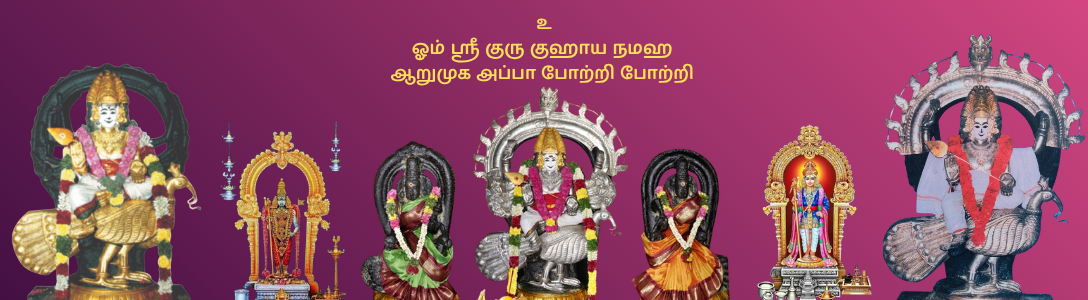
Thiruppugazh 223 nAvERupAmaNaththa (swAmimalai)
மயூரகிரிநாதா உன் திருவடிகள் சரணம்
– மயூரகிரிநாதனுக்கு அரோகரா –
– குன்றக்குடி முருகனுக்கு அரோகரா –
திருப்புகழ் 222 நாசர்தங் கடை (சுவாமிமலை) – திருப்புகழ் 224 நிலவினிலே (சுவாமிமலை)
பாடல்
தானான தான தத்த தானான தான தத்த
தானான தான தத்த – தனதான
நாவேறு பாம ணத்த பாதார மேநி னைத்து
நாலாறு நாலு பற்று – வகையான
நாலாரு மாக மத்தி னூலாய ஞான முத்தி
நாடோறு நானு ரைத்த – நெறியாக
நீவேறெ னாதி ருக்க நான்வேறெ னாதி ருக்க
நேராக வாழ்வ தற்கு – னருள்கூர
நீடார்ஷ டாத ரத்தின் மீதேப ராப ரத்தை
நீகாணெ னாவ னைச்சொ – லருள்வாயே
சேவேறு மீசர் சுற்ற மாஞான போத புத்தி
சீராக வேயு ரைத்த – குருநாதா
தேரார்கள் நாடு சுட்ட சூரார்கள் மாள வெட்டு
தீராகு காகு றத்தி – மணவாளா
காவேரி நேர்வ டக்கி லேவாவி பூம ணத்த
காவார்சு வாமி வெற்பின் – முருகோனே
கார்போலு மேனி பெற்ற மாகாளி வாலை சத்தி
காமாரி வாமி பெற்ற – பெருமாளே.
பதம் பிரித்தது
தானான தான தத்த தானான தான தத்த
தானான தான தத்த – தனதான
நாவேறு பாம ணத்த பாதாரமே நினைத்து
நாலாறு நாலு பற்று – வகையான
நாலாரும் ஆகமத்தின் நூலாய ஞான முத்தி
நாடோறு நானு ரைத்த – நெறியாக
நீவேறெ னாதிருக்க நான்வேறெ னாதிருக்க
நேராக வாழ்வதற்குன் – அருள்கூர
நீடு ஆர் ஷடாதரத்தின் மீதே பராபரத்தை
நீகாணென ஆவனைச்சொல் – அருள்வாயே
சேவேறும் ஈசர் சுற்ற மாஞான போத புத்தி
சீராகவே உரைத்த – குருநாதா
தேரார்கள் நாடு சுட்ட சூரார்கள் மாள வெட்டு
தீரா குகா குறத்தி – மணவாளா
காவேரி நேர்வடக்கிலே வாவி பூம ணத்த
கா ஆர் சுவாமி வெற்பின் – முருகோனே
கார்போலு மேனி பெற்ற மாகாளி வாலை சத்தி
காமாரி வாமி பெற்ற – பெருமாளே.
English
nAvERu pAmaNaththa pAdhAra mEninaindhu
nAl ARu nAlu patru – vagaiyAna
nAlArum Agamaththin nUlAya nyAna muththi
nALdhOru nAn uraiththa – neRiyAga
neevER enAdh irukka nAn vER enAdhirukka
nErAga vazhvadhaRkun – aruLkUra
needAr shadAdharaththin meedhE parAparaththai
nee kAN enA anaichchol – aruLvAyE
sEvERum eesar sutra mA nyAna bOdha budhdhi
seerAgavE uraiththa – gurunathA
thErArgaL nAdu sutta sUrArgaL mALa vettu
dheerA guhA kuRaththi – maNavALA
kAvEri nEr vadakkilE vAvi pU maNaththa
kavAr suvAmi veRpin – murugOnE
kAr pOlu mEni petra mAkALi vAlai saththi
kAmAri vAmi petra – perumALE.
English Easy Version
nAvERu pAmaNaththa pAdhAra mEninaindhu
nAl ARu nAlu patru – vagaiyAna
nAlArum Agamaththin nUlAya nyAna muththi
nALdhOru nAn uraiththa – neRiyAga
neevER enAdh irukka nAn vER enAdhirukka
nErAga vazhvadhaRkun – aruLkUra
needAr shadAdharaththin meedhE parAparaththai
nee kAN enA anaichchol – aruLvAyE
sEvERum eesar sutra mA nyAna bOdha budhdhi
seerAgavE uraiththa – gurunathA
thErArgaL nAdu sutta sUrArgaL mALa vettu
dheerA guhA kuRaththi – maNavALA
kAvEri nEr vadakkilE vAvi pU maNaththa
kavAr suvAmi veRpin – murugOnE
kAr pOlu mEni petra mAkALi vAlai saththi
kAmAri vAmi petra – perumALE.
திருப்புகழ் 223 நாவேறு பா மணத்த (சுவாமிமலை) – விளக்கம்
சுவாமிமலையில் வீற்றிருக்கும் முருகப்பெருமானைப் போற்றி அருணகிரிநாதர் அருளிய “நாவேறு பா மணத்த” (பாடல் 223) என்னும் இத்திருப்புகழ், ஜீவாத்மாவும் பரமாத்மாவும் ஒன்றறக் கலக்கும் அத்வைத நிலையையும், குண்டலினி யோகத்தின் உச்சியைக் காட்டும் தத்துவங்களையும் மிக ஆழமாக விளக்கும் ஒரு ஞானப் பாடலாகும்.
இதன் விரிவான விளக்கத்தை எட்டுத் தலைப்புகளில் கீழே காணலாம்.
1. நாவால் துதிக்கப்படும் திருவடிகள்
அடியார்களின் நாவினால் மிகவும் சிறப்பித்துப் பாடப்படும் பாமாலைகளால் நறுமணம் கமழும் உனது அழகிய திருவடிகளை மட்டுமே என் மனம் எப்பொழுதும் நினைத்திருக்க வேண்டும் என்று அருணகிரிநாதர் இப்பாடலைத் தொடங்குகிறார். இறைவனின் திருவடிகளைச் சரணடைவதே அனைத்து ஞானத்திற்கும் அடிப்படை என்பதை இதன் மூலம் உணர்த்துகிறார்.
2. இருபத்தெட்டு ஆகமங்கள் காட்டும் முக்தி நெறி
“நாலாறு நாலு” என்பது (4×6+4) இருபத்தெட்டு ஆகமங்களைக் குறிக்கும். சிவாகமங்கள் எனப்படும் காமிகம் முதல் வாதுளம் வரையிலான இருபத்தெட்டு ஆகம நூல்களும் எடுத்துரைக்கின்ற சிறப்பான ஞானத்தையும், முக்தி நெறியையும் நான் நாள்தோறும் மற்றவர்களுக்கு எடுத்துரைக்கின்றேன். அத்தகைய சிறந்த நெறியில் நானும் தவறாமல் நின்று வாழ வேண்டும்.
3. நீயும் நானும் ஒன்றெனக் கலக்கும் பேரின்பம்
பக்தி நெறியின் உச்சபட்சமான வேண்டுதலைப் புலவர் இங்கு முன்வைக்கிறார். “நீ வேறாக இல்லாமல், நான் வேறாக இல்லாமல்” (நீ வேறு, நான் வேறு என்ற பேதம் முற்றிலுமாக அழிந்து), ஜீவாத்மாவாகிய நானும் பரமாத்மாவாகிய நீயும் இரண்டறக் கலந்து ஒன்றாகிவிடும் அந்த மாபெரும் அத்வைதப் பேரின்ப நிலையில் நான் வாழ்வதற்கு நீ திருவருள் புரிய வேண்டும்.
4. ஆறாதாரங்களுக்கு அப்பால் உள்ள பரம்பொருள்
மனித உடலில் உள்ள மூலாதாரம், சுவாதிஷ்டானம், மணிபூரகம், அநாகதம், விசுத்தி, ஆக்ஞை என்னும் ஆறு ஆதாரச் சக்கரங்களுக்கும் (ஷடாதாரம்) மேலே, உச்சியில் விளங்குகின்ற ஒப்பற்ற பரம்பொருளை “நீ காண்பாயாக” என்று எனக்கு ஒரு சொல்லால் உனது திருவாயால் உபதேசித்து அருள வேண்டும் என்று முருகனிடம் ஞான யாசகம் கேட்கிறார்.
5. சிவபெருமானுக்கே ஞானம் உரைத்த குருநாதன்
காளை (இடப) வாகனத்தின் மீது ஏறி வரும் சிவபெருமானுக்கும், சுற்றத்தாருக்கும் மேலான மெய்ஞ்ஞானத்தையும், போதத்தையும், புத்தியையும் மிகச் சிறப்பாகவும் சீராகவும் உபதேசித்த மாபெரும் குருநாதனே! தந்தைக்கு உபதேசம் செய்த சுவாமிமலை நாதனின் பெருமையை இந்த வரிகள் பறைசாற்றுகின்றன.
6. சூரர்களை வெட்டி வீழ்த்திய வள்ளியின் மணாளன்
நல்வழியைத் தேர்ந்து தெளியாத அசுரர்களின் நாட்டைச் சுட்டுப் பொசுக்கி, கொடிய சூரர்கள் அனைவரும் மாண்டு போகும்படி உனது வேலால் வெட்டி வீழ்த்திய மாவீரனே! குறவர் குலத்தில் வளர்ந்த வள்ளியம்மையை விரும்பி மணந்த மணவாளனே என்று முருகனின் வீரத்தையும், கருணையையும் ஒருங்கே புகழ்கிறார்.
7. காவிரி வடகரையில் திகழும் சுவாமிமலை
புனிதமான காவிரி நதிக்கு நேர் வடக்குப் பக்கத்தில் அமைந்துள்ளது சுவாமிமலை. அங்குள்ள தடாகங்களில் மலர்ந்துள்ள தாமரை முதலிய பூக்களின் நறுமணம் எங்கும் வீசும். அத்தகைய குளிர்ந்த சோலைகள் சூழ்ந்த திருவேரகம் எனப்படும் சுவாமிமலை என்னும் குருமலையில் வீற்றிருக்கும் முருகோனே!
8. உமையம்மை பெற்றெடுத்த தேவாதி தேவன்
கார்மேகம் போன்ற கரிய திருமேனியைக் கொண்டவளும், மாகாளி, வாலை, பராசக்தி என்று பல திருநாமங்களைக் கொண்டவளும், மன்மதனை எரித்த சிவபெருமானின் இடப்பாகத்தில் (வாம பாகத்தில்) வீற்றிருப்பவளுமான பார்வதி தேவி பெற்றெடுத்த தேவாதி தேவனே (பெருமாளே), அடியேனுக்கு நீயும் நானும் ஒன்றெனும் மெய்ஞ்ஞானத்தை அருள வேண்டும் என்று பாடி நிறைவு செய்கிறார்.
சுருக்கம்
அடியார்கள் பாடும் பாக்களால் மணம் வீசும் உனது திருவடிகளை நினைத்து, இருபத்தெட்டு ஆகமங்கள் கூறும் முக்தி நெறியில் நான் நிலைத்து நிற்க வேண்டும். நீ வேறு, நான் வேறு என்ற பேதமில்லாமல் நாம் இருவரும் ஒன்றாகக் கலக்கும் பேரின்பத்தை நான் பெற, ஆறு ஆதாரங்களுக்கும் மேலே உள்ள பரம்பொருளை “நீ காண்பாயாக” என்று எனக்கு உபதேசித்தருள வேண்டும். சிவபெருமானுக்கே ஞானம் உரைத்த குருநாதனே! சூரர்களை அழித்த வள்ளியின் மணாளனே! காவிரி நதியின் வடகரையில் பூக்கள் மணம் வீசும் சோலைகள் சூழ்ந்த சுவாமிமலையில் வீற்றிருப்பவனே! பார்வதி தேவி பெற்றெடுத்த பெருமாளே, அடியேனுக்குத் திருவருள் புரிவாயாக என்பதே இத்திருப்புகழின் மையக்கருத்தாகும்.
The Essence of Thiruppugazh 223 nAvERupAmaNaththa (swAmimalai)
Archiving and explaining classical regional literature reveals the profound philosophical depths hidden in our ancient texts, and this magnificent Thiruppugazh is a perfect example for such exploration. Composed by Saint Arunagirinathar at the sacred hill shrine of Swamimalai, “Naaveru Pamanaththa” (Song 223) is a masterpiece of esoteric wisdom. It moves seamlessly from devotional surrender to the high philosophies of Agamic texts, Kundalini yoga, and Advaita (non-duality).
Here is a deep explanation of the hymn, divided into eight thematic headings.
1. Meditating on the Fragrant Lotus Feet
The hymn opens with the poet anchoring his entire consciousness to the divine feet of Lord Murugan. Arunagirinathar describes these lotus feet as being exceptionally fragrant (pAmaNaththa). However, this fragrance does not come from ordinary flowers; rather, it emanates from the beautiful “garlands of poetic verses” continuously sung by the devoted tongues of saints and seekers. The poet yearns to keep his mind permanently fixed on these celebrated feet.
2. The Wisdom of the Twenty-Eight Agamas
Arunagirinathar displays his deep scriptural knowledge by referring to the formula “four, six, and four” (nAl ARu nAlu), which is a poetic cipher for the twenty-eight fundamental Saiva Agamas (the foundational texts of Saiva Siddhanta). He prays that his daily life and teachings may be perfectly aligned with the righteous path of supreme wisdom and ultimate liberation (Jnana Mukthi) as laid out in these ancient, sacred scriptures.
3. The Peak of Non-Duality (Advaita)
This section forms the spiritual core of the hymn. Moving beyond ritualistic devotion, the poet asks for the ultimate philosophical realization: the state of non-duality. He prays for the grace to live in a state where the illusion of separation is completely shattered—“Let me not say I am different from You, and let You not say You are different from me” (nee vER enAdh irukka nAn vER enAdhirukka). He seeks to live directly (nErAga) in this blissful, unified consciousness where the soul merges entirely with God.
4. Transcending the Six Chakras
To achieve this ultimate union, the poet asks the Lord for a specific, transformative initiation. According to yogic traditions, spiritual energy must rise through the six foundational energy centers in the body (Shadadhara). Arunagirinathar begs Lord Murugan to utter a single word of grace (anaichchol) instructing him to “Behold the Supreme” (Paraparam) that exists infinitely above and beyond these six chakras, granting him the highest mystical vision.
5. The Supreme Guru to Lord Shiva
The poem then glorifies Murugan’s unique role at Swamimalai as the Guru of all Gurus. The poet praises Him as the divine teacher who imparted the most profound wisdom, supreme knowledge, and absolute intellectual clarity (mA nyAna bOdha budhdhi) in a perfect, systematic manner to none other than His own father, Lord Shiva (who rides the majestic bull), and His celestial entourage.
6. The Valiant Consort of Valli
Balancing Murugan’s intellectual supremacy with His martial and romantic attributes, Arunagirinathar addresses Him as the brave warrior (Dheera) and the dweller of the heart’s cave (Guha). He is the valiant Lord who ruthlessly cut down the ignorant, destructive Asuras (demons) who laid waste to the lands. Simultaneously, He is the accessible and loving husband of Valli, the devoted maiden from the Kurava tribe.
7. The Fragrant Groves of Swamimalai
The hymn grounds its soaring philosophy in a specific, physical landscape. The poet describes the geography of the Lord’s abode, noting that the sacred hill of Swamimalai (suvAmi veRpin) is situated directly to the north of the life-giving Cauvery river (kAvEri nEr vadakkilE). It is a tranquil, spiritually charged environment surrounded by beautiful groves and ponds that bloom with intensely fragrant flowers.
8. The Divine Son of the Supreme Goddess
In the concluding lines, the poet pays homage to Lord Murugan’s divine lineage. He addresses Murugan as the Great Lord (Perumale) born to the Supreme Goddess Parvati. She is gloriously described as Maha Kali, who possesses a majestic form as dark as the rainclouds, as Bala (the youthful goddess), and as the ultimate cosmic energy (Shakti) who occupies the left half (Vami) of Lord Shiva, the destroyer of Kama (the God of Love).
Summary
Thiruppugazh 223 is a profound spiritual text that charts the journey from devotional worship to the highest peaks of yogic realization. Saint Arunagirinathar begins by meditating on the Lord’s lotus feet, which are fragrant with the songs of devotees. He seeks to live strictly by the liberating wisdom of the twenty-eight Saiva Agamas. Delving into deep mysticism, the poet begs for the ultimate state of non-duality—where all separation between the soul and God vanishes—and asks Murugan to initiate him into the supreme reality that exists above the six chakras. The hymn concludes by glorifying Lord Murugan as the Supreme Guru who taught Lord Shiva, the valiant destroyer of demons, the loving consort of Valli, and the divine son of Goddess Kali, presiding majestically over the fragrant, river-nourished groves of Swamimalai.
Thiruppugal – திருப்புகழ்