
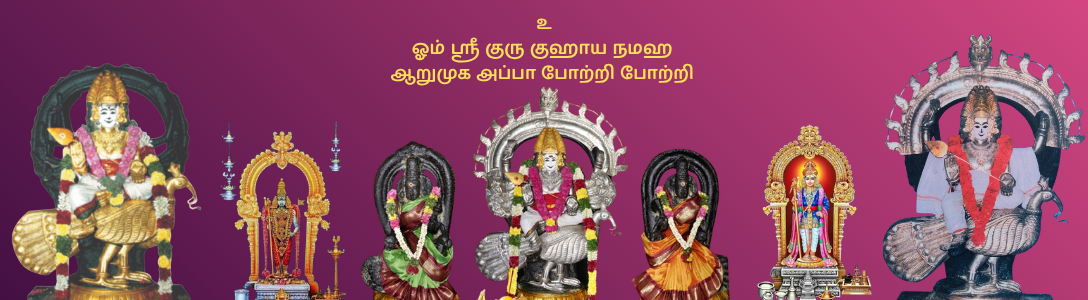
Thiruppugal 932 Iruvinaippiravi
மயூரகிரிநாதா உன் திருவடிகள் சரணம்
– மயூரகிரிநாதனுக்கு அரோகரா –
– குன்றக்குடி முருகனுக்கு அரோகரா –
பாடல்
தனதனத் தனனத் – தனதான
இருவினைப் பிறவிக் – கடல்மூழ்கி
இடர்கள்பட் டலையப் – புகுதாதே
திருவருட் கருணைப் – ப்ரபையாலே
திரமெனக் கதியைப் – பெறுவேனோ
அரியயற் கறிதற் – கரியானே
அடியவர்க் கெளியற் – புதநேயா
குருவெனச் சிவனுக் – கருள்போதா
கொடுமுடிக் குமரப் – பெருமாளே.
பதம் பிரித்தது
தனதனத் தனனத் – தனதான
இருவினைப் பிறவிக் – கடல்மூழ்கி
இடர்கள்பட்டு அலையப் – புகுதாதே
திருவருட் கருணைப் – ப்ரபையாலே
திரமெனக் கதியைப் – பெறுவேனோ
அரியயற்கு அறிதற்கு – அரியானே
அடியவர்க்கு எளிய – அற்புதநேயா
குருவெனச் சிவனுக்கு – அருள்போதா
கொடுமுடிக் குமரப் – பெருமாளே
English
iru vinai piRavik – kadal mUzhgi
idargaL pattalaiyap – pugudhAdhE
thiruvarut karuNaip – prabaiyAlE
thira menak gathiyaip – peRuvEnO
ari ayaRk aRidhaRk – ariyAnE
adiyavark keLi – aRbutha nEyA
guruvena sivanuk – aruL bOdhA
kodumudik kumarap – perumALE.
English Easy Version
iru vinai piRavik – kadal mUzhgi
idargaL pattalaiyap – pugudhAdhE
thiruvarut karuNaip – prabaiyAlE
thira menak gathiyaip – peRuvEnO
ari ayaRk aRidhaRk – ariyAnE
adiyavark keLi – aRbutha nEyA
guruvena sivanuk – aruL bOdhA
kodumudik kumarap – perumALE.
திருப்புகழ் 932 இருவினைப் பிறவி (திருப்பாண்டிக்கொடுமுடி) – விளக்கம்
அருணகிரிநாதர் அருளிய திருப்புகழ் பாடல்களில், திருப்பாண்டிக்கொடுமுடி திருத்தலத்திற்கு உரிய “இருவினைப் பிறவிக் கடல்மூழ்கி…” என்று தொடங்கும் பாடல், பிறவித் துன்பத்திலிருந்து விடுபட்டு நிலையான முக்தியை வேண்டும் ஆழமான தத்துவார்த்தம் கொண்ட ஒரு அற்புதப் படைப்பாகும். இப்பாடலின் விரிவான விளக்கத்தை எட்டு தலைப்புகளிலும், அதற்கடுத்து ஒரு சுருக்கத்திலும் விரிவாகக் காண்போம்.
1. முன்னுரை
மனித வாழ்வின் நிலையாமையையும், இறைவன் அருளாலேயே முக்தி சாத்தியம் என்பதையும் விளக்கும் அற்புதமான பாடல் இது. ஈரோடு மாவட்டத்தில் காவிரியாற்றின் கரையில் அமைந்துள்ள தேவாரப் பாடல் பெற்ற திருத்தலமான திருப்பாண்டிக்கொடுமுடியில் (தற்போதைய கொடுமுடி) வீற்றிருக்கும் முருகப்பெருமானை நோக்கி அருணகிரிநாதர் இந்தப் பாடலைப் பாடியுள்ளார். முதல் பாதியில் தனது ஆன்மா படும் பாட்டையும் இறைவனின் அருளை நோக்கிய ஏக்கத்தையும் வெளிப்படுத்தும் கவிஞர், இரண்டாம் பாதியில் முருகனின் அளப்பரிய கருணையையும், ஈசனுக்கே குருவான அவனது பெருமையையும் பாடிப் பரவசப்படுகிறார்.
2. இருவினைகளால் விளையும் பிறவிப் பெருங்கடல் (இருவினைப் பிறவிக் கடல்மூழ்கி)
இந்து தத்துவத்தின்படி, மனிதனின் ஆத்மா ‘இருவினை’ எனப்படும் நல்வினை (புண்ணியம்), தீவினை (பாவம்) ஆகிய இரண்டின் பலன்களையும் அனுபவிப்பதற்காகவே மீண்டும் மீண்டும் பிறவி எடுக்கிறது. இரும்புச் சங்கிலியால் கட்டப்பட்டாலும், தங்கச் சங்கிலியால் கட்டப்பட்டாலும் கட்டுப்பாடு ஒன்றுதான் என்பதைப் போல, நல்வினை, தீவினை ஆகிய இரண்டும் மனிதனைப் பிறவி என்னும் கரைகாண முடியாத பெருங்கடலில்தான் தள்ளுகின்றன. இந்த முடிவற்ற பிறவிச் சுழற்சியாகிய கடலில் நான் ஆழமாக மூழ்கித் தவிக்கிறேன் என்று அருணகிரிநாதர் மனித குலத்தின் சார்பாக தன் நிலையை உரைக்கிறார்.
3. துன்ப அலைகளில் சிக்கித் தவிக்காத நிலை (இடர்கள்பட் டலையப் புகுதாதே)
பிறவி என்ற கடலில் விழுந்தவன், சும்மா மிதப்பதில்லை; அங்கு வீசும் ஆசை, கோபம், நோய், வறுமை, பற்று எனப்படும் ‘இடர்கள்’ (துன்பங்கள்) என்னும் கொடிய அலைகளால் அலைக்கழிக்கப்படுகிறான். ஒரு துன்பம் முடிவதற்குள் அடுத்த துன்பம் வந்து தாக்குகிறது. நிம்மதியின்றி, நிலையான கரையை அடைய முடியாமல், திக்கற்று அலைந்து திரியும் இந்தத் துயரமான வாழ்க்கைக்குள் நான் இனிமேலும் சிக்கிக் கொள்ளக் கூடாது; இந்த அலைக்கழிப்பிலிருந்து எனக்கு நிரந்தரமான விடுதலை வேண்டும் என்று கவிஞர் மன்றாடுகிறார்.
4. திருவருளாகிய கருணைப் பேரொளி (திருவருட் கருணைப் ப்ரபையாலே)
இந்தக் கொடிய பிறவிக்கடலில் இருந்து ஒரு மனிதன் தன் சுய பலத்தால் மட்டும் தப்பித்துக் கரைசேர முடியாது. அவனுக்கு இறைவனின் வழிகாட்டுதல் தேவை. ‘ப்ரபை’ என்றால் கண்களைக் கூசச்செய்யும் பிரகாசமான பேரொளி என்று பொருள். முருகப்பெருமானின் திருவருள் கலந்த அளவற்ற கருணையே அந்தப் பேரொளியாகும். அஞ்ஞானம் (அறியாமை) என்னும் இருளில் தத்தளிக்கும் எனக்கு, உன்னுடைய கருணையாகிய ஞான ஒளியை வீசி, இருளை அகற்றி என்னை வழிநடத்த வேண்டும் என்பது இதன் உட்பொருளாகும்.
5. நிலையான முக்திப் பேற்றை வேண்டுதல் (திரமெனக் கதியைப் பெறுவேனோ)
‘திரம்’ என்ற சொல்லுக்கு உறுதி அல்லது என்றுமே நிலைத்திருக்கும் தன்மை என்று பொருள். உலக இன்பங்கள் அனைத்தும் தோன்றி மறையும் தற்காலிகமானவை. ஆனால், இறைவனின் திருவடிகளைச் சென்றடையும் ‘கதி’ (முக்தி நிலை) மட்டுமே என்றும் அழியாத, மாறுபடாத பேரானந்த நிலையாகும். உனது கருணை ஒளியின் துணைகொண்டு, பிறப்பிறப்பற்ற, என்றென்றும் நிலைத்திருக்கக்கூடிய அந்தச் சிறப்பான முக்திப் பேற்றினை நான் பெறும் நாள் வருமோ? என்று முருகனிடம் தனது ஆழமான முக்தி வேட்கையை வெளிப்படுத்துகிறார்.
6. திருமால் மற்றும் பிரம்மனால் அறிய முடியாத பரம்பொருள் (அரியயற் கறிதற் கரியானே)
‘அரி’ எனப்படும் காக்கும் கடவுளான திருமாலும், ‘அயன்’ எனப்படும் படைப்புக் கடவுளான பிரம்மனும் ஒருமுறை இறைவனின் முழுமையைக் காண முயன்று தோற்றனர். ஈசனின் அடியையும் முடியையும் தேடி அவர்களால் காண முடியவில்லை என்பதைப் புராணங்கள் கூறுகின்றன. அத்தகைய பிரம்மா மற்றும் விஷ்ணுவாலும் தம் அறிவினால் அளந்து அறிய முடியாத ஆதிப் பரம்பொருளாகிய சிவபெருமானின் அம்சமே முருகப்பெருமான். தேவர்களாலும் முழுமையாகப் புரிந்துகொள்ள முடியாத நுட்பமான இறைத் தத்துவம் நீயே எனப் போற்றுகிறார்.
7. அடியார்களுக்கு எளியவனான அற்புத நேயன் (அடியவர்க் கெளியற் புதநேயா)
திருமால், பிரம்மன் போன்ற பெரும் தெய்வங்களுக்கே எட்டாத உயரத்தில் இருக்கும் முருகப்பெருமான், எப்படிப்பட்டவன் தெரியுமா? அவனிடம் உண்மையான அன்பும், பக்தியும் செலுத்தித் தன்னை முழுமையாக அர்ப்பணிக்கும் சாதாரண ‘அடியார்களுக்கு’ மிக மிக எளிமையானவன். எந்தவிதமான அகந்தையுமின்றி தன்னை நாடும் பக்தர்களிடத்தில் ‘அற்புத நேயம்’ (ஆச்சரியப்படத்தக்க, அளப்பரிய அன்பு) கொண்டவன். அறிவுக்கும் அகந்தைக்கும் எட்டாத இறைவன், தூய அன்பிற்கு மட்டுமே எளிதில் கட்டுப்படுவான் என்பதை இது அழகாக உணர்த்துகிறது.
8. சிவபெருமானுக்கே குருவான சுவாமிநாதன் (குருவெனச் சிவனுக் கருள்போதா, கொடுமுடிக் குமரப் பெருமாளே)
உலகத்துக்கே குருவாக, தட்சிணாமூர்த்தியாக விளங்கும் சிவபெருமானுக்கே ஒரு காலகட்டத்தில் குருவாக அமர்ந்து, ‘ஓம்’ என்னும் பிரணவ மந்திரத்தின் ஆழமான தத்துவார்த்தத்தை உபதேசித்த (அருள் போதா) ஞானாசிரியன் முருகப்பெருமான். தந்தைக்கு உபதேசம் செய்த ‘தகப்பன் சுவாமியாக’ வீற்றிருக்கும் பேரறிவாளனே! காவிரியாற்றின் கரையில் அமைந்துள்ள திருப்பாண்டிக்கொடுமுடி என்னும் பழமையானதும் புனிதமானதுமான திருத்தலத்தில் எழுந்தருளியிருக்கும் குமரப் பெருமானே! எனக்கு அருள் செய்வாயாக எனப் பாடி முடிக்கிறார்.
சுருக்கம்
நல்வினை, தீவினை ஆகிய இருவினைகளால் ஏற்படும் முடிவற்ற பிறவியாகிய பெருங்கடலில் விழுந்து, பல்வேறு துன்ப அலைகளில் சிக்கி அலைக்கழிக்கப்படும் வாழ்வுக்குள் நான் இனிமேலும் செல்லக் கூடாது. அறியாமை இருளைப் போக்கும் உன்னுடைய திருவருளும் கருணையும் கலந்த பேரொளியின் துணையைக் கொண்டு, என்றுமே அழியாத, நிலையான முக்திப் பேற்றினை நான் அடையும் பாக்கியம் எனக்குக் கிடைக்குமா? படைக்கும் பிரம்மனாலும், காக்கும் திருமாலும் கூடத் தம் அறிவினால் முழுமையாகப் புரிந்துகொள்ள முடியாத அளப்பரிய பரம்பொருளே! ஆனால், உன்னை எந்தப் பிரதிபலனுமின்றி நேசிக்கும் உண்மையான அடியார்களுக்கு மிக எளிதில் கிடைப்பவனே! ஆச்சரியமான பேரன்பு கொண்டவனே! உலகிற்கே பரம் பொருளான சிவபெருமானுக்கே குருவாக வீற்றிருந்து பிரணவ மந்திரத்தின் பொருளை உபதேசித்த ஞானாசிரியனே! திருப்பாண்டிக்கொடுமுடி என்னும் புண்ணியத் திருத்தலத்தில் வீற்றிருக்கும் குமரப் பெருமானே, எனக்கு முக்தி தந்தருள்வாயாக! என்பதே இப்பாடலின் ஆழமான பொருளாகும்.
The Essence of Thiruppugazh 932 Iruvinai Piravi (Thiruppaandikkodumudi)
Here is a deep and comprehensive explanation of the Thiruppugazh hymn “Iru vinai piRavi,” composed by Saint Arunagirinathar, dedicated to Lord Muruga at the sacred shrine of Thiruppandikodumudi.
1. The Endless Ocean of Karma
In the opening line, “iru vinai piRavik kadal mUzhgi,” Arunagirinathar introduces the fundamental Hindu philosophical concept of Iru Vinai—the twin karmas of good (Punya) and bad (Papa) deeds. According to spiritual wisdom, both good and bad karmas act as chains that bind a soul to the material world; a golden chain binds just as effectively as an iron one. By accumulating these karmic imprints, the soul is cast into the vast, shoreless ocean of repeated births and deaths. The saint voices the collective despair of humanity, expressing how deeply we are submerged in this exhausting cycle of reincarnation.
2. Escaping the Torment of Worldly Sufferings
Following the ocean metaphor, “idargaL pattalaiyap pugudhAdhE” describes the turbulent nature of this worldly existence. A soul drowning in the ocean of birth does not simply float; it is violently tossed around by the relentless waves of Idargal—hardships, sorrows, diseases, and unfulfilled desires. Arunagirinathar prays for an intervention to stop this aimless wandering. He pleads with the divine to ensure that he no longer enters (pugudhAdhE) into this labyrinth of earthly torment, seeking a definitive end to the continuous battering by life’s inevitable miseries.
3. The Radiant Light of Divine Grace
To escape a pitch-black ocean, one needs a guiding lighthouse. The phrase “thiruvarut karuNaip prabaiyAlE” provides the solution to the soul’s karmic plight. Prabai translates to a brilliant, blinding halo or a radiant aura of light. The saint recognizes that human effort alone is insufficient to cross the ocean of Maya (illusion). It is only through the intensely radiant light of Lord Muruga’s holy grace and boundless compassion that the darkness of spiritual ignorance can be shattered, guiding the lost soul toward the shores of liberation.
4. The Quest for Permanent Salvation
In “thira menak gathiyaip peRuvEnO,” Arunagirinathar articulates the ultimate goal of the spiritual seeker. Every worldly pleasure is fleeting, but Thiram represents that which is eternally stable, unshakable, and permanent. Gathi refers to the ultimate refuge or salvation (Mukthi). The saint yearningly asks, “Will I ever attain that permanent state of spiritual liberation?” This line captures the intense longing of the soul to merge with the divine and achieve a state of everlasting peace that is entirely immune to the transient ups and downs of human life.
5. Incomprehensible to the Supreme Gods
Shifting from the human condition to the majesty of the Divine, “ari ayaRk aRidhaRk ariyAnE” highlights the supreme, infinite nature of the Lord. Hindu mythology recounts how Ari (Lord Vishnu, the preserver) and Ayan (Lord Brahma, the creator) once attempted to find the origin and the end of the Supreme Shiva, but failed because His true magnitude is beyond intellectual comprehension. As the direct manifestation of Lord Shiva’s supreme consciousness, Lord Muruga shares this infinite, unfathomable nature. He remains an enigma, impossible to be fully understood even by the highest celestial beings using mere intellect or power.
6. The Wonderfully Accessible Friend to Devotees
In a beautiful paradox, the line “adiyavark keLi aRbutha nEyA” reveals the tender, loving side of God. While He is incomprehensibly vast to the mighty gods, He transforms into a wonderfully simple and accessible companion (Eliyan) to His humble devotees (Adiyavar). Arbutha Neya means a friend of miraculous, unconditional love. This emphasizes the path of Bhakti (devotion)—God cannot be grasped by arrogance, status, or intellectual pursuit, but He willingly surrenders Himself to a heart that approaches Him with pure, unadulterated love.
7. The Supreme Teacher of Lord Shiva
The phrase “guruvena sivanuk aruL bOdhA” references one of the most celebrated legends of Lord Muruga, where He takes on the role of Swaminatha (the Lord of the Lord). When Lord Brahma could not explain the meaning of “Om” (the Pranava Mantra), Muruga imprisoned him. When Lord Shiva asked Muruga if He knew the meaning, Muruga replied that He did, but would only reveal it if Shiva listened as a devoted student. Thus, the son became the supreme Guru to His own father, imparting the deepest esoteric truths of the universe. This establishes Muruga as the ultimate embodiment of supreme wisdom.
8. The Divine Lord of Kodumudi
The hymn concludes with “kodumudik kumarap perumALE,” directly invoking the presiding deity of Thiruppandikodumudi, an ancient and highly revered temple town situated on the banks of the river Kaveri. Arunagirinathar addresses Him affectionately as Kumara—the eternally youthful, beautiful, and vibrant God. By grounding this vast philosophical prayer in a specific geographic and spiritual location, the saint invites seekers to direct their devotion toward the tangible presence of the divine Lord residing in this sacred shrine.
Summary
Thiruppugazh 932, “Iru vinai piRavi,” is a profound prayer for spiritual liberation. Saint Arunagirinathar laments the human condition of being hopelessly submerged in the turbulent ocean of continuous birth and death, tossed around by the painful waves of karmic consequences. Acknowledging that self-effort is not enough, he begs for the radiant light of Lord Muruga’s compassion to guide him toward an eternal, unshakable state of salvation. The hymn brilliantly contrasts the Lord’s infinite nature—so vast that even the creator Brahma and preserver Vishnu cannot comprehend Him—with His deep, intimate accessibility to true devotees. Ultimately, the song praises Lord Muruga as the Supreme Guru who taught the Pranava Mantra to Lord Shiva Himself, seeking His divine refuge at the holy shrine of Thiruppandikodumudi.