
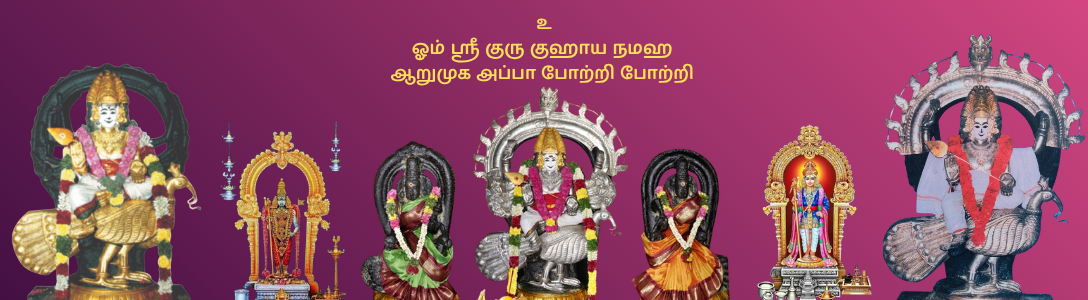
Thiruppugazh 230 maruvEseRiththa (swAmimalai)
மயூரகிரிநாதா உன் திருவடிகள் சரணம்
– மயூரகிரிநாதனுக்கு அரோகரா –
– குன்றக்குடி முருகனுக்கு அரோகரா –
திருப்புகழ் 229 மகர கேதனத்தன் (சுவாமிமலை) – திருப்புகழ் 231 முறுகு காள (சுவாமிமலை)
பாடல்
தனனா தனத்த தனனா தனத்த
தனனா தனத்த – தனதான
மருவே செறித்த குழலார் மயக்கி
மதனா கமத்தின் – விரகாலே
மயலே யெழுப்பி யிதழே யருத்த
மலைபோல் முலைக்கு – ளுறவாகிப்
பெருகாத லுற்ற தமியேனை நித்தல்
பிரியாது பட்ச – மறவாதே
பிழையே பொறுத்து னிருதாளி லுற்ற
பெருவாழ்வு பற்ற – அருள்வாயே
குருவா யரற்கு முபதேசம் வைத்த
குகனே குறத்தி – மணவாளா
குளிர்கா மிகுத்த வளர்பூக மெத்து
குடகா விரிக்கு – வடபாலார்
திருவே ரகத்தி லுறைவா யுமைக்கோர்
சிறுவா கரிக்கு – மிளையோனே
திருமால் தனக்கு மருகா வரக்கர்
சிரமே துணித்த – பெருமாளே.
பதம் பிரித்தது
தனனா தனத்த தனனா தனத்த
தனனா தனத்த – தனதான
மருவே செறித்த குழலார் மயக்கி
மதனா கமத்தின் – விரகாலே
மயலே யெழுப்பி இதழே யருத்த
மலைபோல் முலைக்குள் – உறவாகிப்
பெருகாத லுற்ற தமியேனை நித்தல்
பிரியாது பட்ச – மறவாதே
பிழையே பொறுத்து உனிருதாளி லுற்ற
பெருவாழ்வு பற்ற – அருள்வாயே
குருவா யரற்கும் உபதேசம் வைத்த
குகனே குறத்தி – மணவாளா
குளிர்கா மிகுத்த வளர்பூக மெத்து
குடகா விரிக்கு – வடபாலார்
திருவேரகத்தி னுறைவாய் உமைக்கொர்
சிறுவா கரிக்கு – மிளையோனே
திருமால் தனக்கு மருகா அரக்கர்
சிரமே துணித்த – பெருமாளே.
English
maruvE seRiththa kuzhalAr mayakki
mathanA kamaththin – virakAlE
mayalE ezhuppi ithazhE yaruththa
malaipOl mulaikkuL – uRavAkip
perukAthaluRRa thamiyEnai niththal
piriyAthu patcham – maRavAthE
pizhaiyE poRuththun iruthALil uRRa
peruvAzhvu paRRa – aruLvAyE
guruvAy araRkum upathEsam vaiththa
guhanE kuRaththi – maNavALA
kuLirkA mikuththa vaLar pUkameththu
kudakAvirikku – vadapAlAr
thiruvErakaththi luRaivAy umaikkor
ciRuvA karikku – iLaiyOnE
thirumAl thanakku marukA varakkar
ciramE thuniththa – perumALE.
English Easy Version
maruvE seRiththa kuzhalAr mayakki
mathanA kamaththin – virakAlE
mayalE ezhuppi ithazhE yaruththa
malaipOl mulaikkuL – uRavAki
perukAthaluRRa thamiyEnai niththal
piriyAthu patcham – maRavAthE
pizhaiyE poRuththu un iruthALil uRRa
peruvAzhvu paRRa – aruLvAyE
guruvAy araRkum upathEsam vaiththa
guhanE kuRaththi – maNavALA
kuLirkA mikuththa vaLar pUkameththu
kudakAvirikku – vadapAlAr
thiruvErakaththin uRaivA y Umaikkor
ciRuvA karikku – iLaiyOnE
thirumAl thanakku marukA Arakkar
ciramE thuniththa – perumALE.
திருப்புகழ் 230 மருவே செறித்த (சுவாமிமலை) – விளக்கம்
சுவாமிமலையில் (திருவேரகம்) அருளப்பட்ட “மருவே செறித்த” (பாடல் 230) என்ற இத்திருப்புகழ் பாடலின் ஆழமான விளக்கங்கள் கீழே கொடுக்கப்பட்டுள்ளன:
1. நறுமணம் கமழும் கூந்தலின் மாய மயக்கம்
பாடலின் தொடக்கத்தில் உலகியல் ஆசைகளின் வலையை அருணகிரிநாதர் சுட்டிக்காட்டுகிறார். நறுமணம் வீசும் மலர்களைச் செறிவாகச் சூடிய கூந்தலைக் கொண்ட பெண்களின் புற அழகானது மனிதர்களின் மனதை எளிதில் மயக்கக்கூடியது. இந்த மயக்கம் நிலையான மெய்ப்பொருளை நாடவிடாமல், மனிதர்களைச் சிற்றின்ப மாயையிலேயே கட்டிப்போடும் தன்மையுடையது என்பதை விளக்குகிறார். அழகின் மீது கொள்ளும் இந்த ஈர்ப்பே அறியாமை இருளில் மனிதனைத் தள்ளும் முதல் படியாக அமைகிறது.
2. காம சாத்திரத்தின் வித்தைகளும் சிற்றின்பமும்
காம சாத்திரங்களில் கூறப்பட்டுள்ள பல்வேறு வித்தைகளைப் பயன்படுத்தி ஆடவர்களின் உள்ளத்தில் எல்லையற்ற காம இச்சையைத் தூண்டுவர். சுவையான இதழ்களைப் பருகக் கொடுத்தும், மலை போன்ற மார்பகங்களில் நெருக்கமான உறவைக் கொண்டும் மனிதர்களைத் தங்கள் வசப்படுத்துவர். இந்த நிலையற்ற உடல் இன்பங்களை மெய்யான இன்பம் எனத் தவறாக எண்ணி மனித மனம் அதிலேயே உழல்கிறது. புலன் இன்பங்கள் எவ்வாறு மனித விவேகத்தை அழிக்கின்றன என்பதை இந்தப் பகுதி ஆழமாக உணர்த்துகிறது.
3. மாயையில் சிக்கிய தனிமை நிலை
இத்தகைய சிற்றின்ப மாயைகளில் ஆழமான காதல் கொண்டு, அதிலேயே மூழ்கிக் கிடக்கும் ஆதரவற்ற தனிமையில் உள்ளவன் நான் என்று அருணகிரிநாதர் தன்னை முன்னிறுத்தி மானுடர்களின் நிலையைக் கூறுகிறார். உலகியல் ஆசைகளில் உழன்று ஆன்மீகப் பாதையை மறந்த தமியேனாகிய என் மீதுள்ள உனது அன்பை ஒருநாளும் நீ மறந்துவிடக் கூடாது என்று இறைவனிடம் உரிமைப் பாராட்டுகிறார். இறைவனின் கருணையொன்றே தன்னை இந்த நிலையில் இருந்து மீட்டெடுக்க முடியும் என்ற உறுதியான நம்பிக்கை இதில் வெளிப்படுகிறது.
4. பிழைகளைப் பொறுத்துத் திருவடி அருள வேண்டுதல்
மாயையில் சிக்கி நான் செய்த குற்றங்களையும் பிழைகளையும் பொறுத்தருள வேண்டும் என்று நெஞ்சுருக வேண்டுகிறார். என்னைக் கைவிடாமல் தினமும் என்னோடு இருந்து, பிறவித் துன்பத்தை அறுத்து என்றென்றும் உனது இரு திருவடிகளையும் பற்றிக் கொள்ளும் ‘பெருவாழ்வு’ என்னும் முக்தி இன்பத்தை எனக்குத் தந்தருள வேண்டும் எனப் பிரார்த்திக்கிறார். இறைவனின் திருவடி நிழலே மனிதன் அடைய வேண்டிய மிக உயர்ந்த மற்றும் நிலையான வாழ்வு என்பதை இது பறைசாற்றுகிறது.
5. சிவபெருமானுக்கு உபதேசித்த குருநாதர்
பாடலின் பிற்பாதியில் அருணகிரிநாதர் இறைவனின் பெருமைகளைப் பாடத் தொடங்குகிறார். அகில உலகங்களுக்கும் பதியாகிய சிவபெருமானுக்கே பிரணவ மந்திரத்தின் (ஓம்) உட்பொருளை உபதேசித்த ஒப்பற்ற குருநாதர் முருகப் பெருமான் ஆவார். அடியார்களின் இதயக் குகையில் உறைபவனான (குகன்) அந்தப் பெருமான், தூய பக்தியுடைய குறவர் குலப் பெண்ணான வள்ளியம்மையைத் திருமணம் செய்த எளிய மணாளனாகவும் விளங்குகிறான். எல்லையற்ற ஞானமும், எல்லையற்ற அன்பும் இறைவனிடம் ஒருங்கே அமைந்துள்ளதை இது காட்டுகிறது.
6. காவிரியின் வடகரையில் அமைந்த திருவேரகம்
முருகப் பெருமான் வீற்றிருக்கும் தலத்தின் இயற்கை எழிலை இங்கு கவிஞர் வருணிக்கிறார். குளிர்ந்த காற்றோட்டமான சோலைகள் நிறைந்துள்ளதும், பாக்கு மரங்கள் (பூக மரம்) செழித்து வளர்ந்துள்ளதுமான இயற்கை வளம் மிக்க பகுதி அது. மேற்கிலிருந்து குடகு மலையில் தோன்றிப் பாய்ந்து வரும் புனிதம் வாய்ந்த காவிரி நதியின் வடகரையில் அமைந்த ‘திருவேரகம்’ (சுவாமிமலை) என்னும் திருத்தலத்தில் வீற்றிருந்து பெருமான் அருளாட்சி செய்கிறான்.
7. உமையவளின் மைந்தனும் விநாயகரின் இளவலும்
முருகனின் தெய்வீகப் பின்னணியை அருணகிரிநாதர் மேலும் போற்றுகிறார். அகிலாண்டேஸ்வரியான அன்னை பார்வதி தேவியின் (உமை) ஒப்பற்ற அன்புப் புதல்வன் முருகன். மேலும், தடைகளை நீக்கும் ஆனைமுகக் கடவுளான விநாயகப் பெருமானுக்கு (கரி) அன்புத் தம்பியாக (இளையோன்) விளங்குபவன். இது சிவசக்தி தத்துவத்தின் முழுமையையும், குடும்ப உறவுகளின் மேன்மையின் ஊடாக முருகனின் எல்லையற்ற தெய்வீக ஆற்றலையும் வெளிப்படுத்துகிறது.
8. திருமாலின் மருகனும் அரக்கர்களை அழித்த பெருமாளும்
இறுதியாக முருகனின் வீரத்தையும், காக்கும் கடவுளான திருமாலுடனான உறவையும் சிறப்பிக்கிறார். திருப்பாற்கடலில் பள்ளி கொண்டுள்ள மகாவிஷ்ணுவின் (திருமால்) அன்புக்குரிய மருகன் (மருமகன்) முருகப் பெருமான். தேவர்களுக்கும் நல்லவர்களுக்கும் பெருந்துன்பம் விளைவித்த சூரபத்மன் முதலான கொடிய அரக்கர்களின் தலைகள் அனைத்தும் அறுபட்டு விழும்படி அழித்த மாவீரன் அவன். இத்தகைய வல்லமை பொருந்திய திருவேரகப் பெருமானே எனக்கு முக்தி அளிக்க வேண்டும் எனப் பாடிப் பணிகிறார்.
சுருக்கம்
திருப்புகழ் 230-ஆம் பாடல், சிற்றின்ப மாயையிலிருந்து விடுபட்டு இறைவனின் திருவடிகளை அடையும் பெருவாழ்வை யாசிக்கிறது. நறுமணக் கூந்தலும், காம சாத்திர வித்தைகளும் கொண்ட பெண்களின் மாய வலையில் சிக்கித் தவிக்கும் தமியேனது பிழைகளைப் பொறுத்து, நிலையான முக்தி என்னும் பெருவாழ்வைத் தந்தருள வேண்டும் என்று அருணகிரிநாதர் வேண்டுகிறார். தொடர்ந்து முருகனின் பெருமைகளைப் போற்றுகிறார். சிவபெருமானுக்கே உபதேசித்த குருநாதனாகவும், வள்ளியின் மணாளனாகவும், உமையவளின் மைந்தனாகவும், விநாயகரின் தம்பியாகவும், திருமாலின் மருகனாகவும் விளங்கும் முருகன், கொடிய அரக்கர்களை அழித்த மாவீரன் ஆவார். அந்தப் பெருமான், குளிர்ந்த சோலைகளும் பாக்கு மரங்களும் சூழ்ந்த, காவிரியின் வடகரையில் அமைந்துள்ள திருவேரகம் (சுவாமிமலை) திருத்தலத்தில் வீற்றிருந்து அடியார்களுக்கு அருள்பாலிக்கிறார் என்பதே இப்பாடலின் சுருக்கமாகும்.
The Essence of Thiruppugazh 230 maruvEseRiththa (swAmimalai)
Here is a deep and comprehensive explanation of the profound Thiruppugazh verse “MaruvE seRiththa” (Song 230), set in the sacred shrine of Swamimalai (traditionally known as Thiruverakam).
1. The Entrapment of Fragrant Tresses
The poem opens by vividly describing the sensory illusions that bind the human soul to the material world. Saint Arunagirinathar speaks of the intoxicating allure of women who adorn their dense, dark hair with heavily fragrant flowers. This powerful scent serves as the first sensory trap, overwhelming the mind and clouding human intellect. The poet uses this imagery to represent how easily the worldly environment, with its superficial beauty and sensory appeals, distracts a spiritual seeker from their true, higher purpose.
2. The Intoxication of Carnal Knowledge
Beyond mere physical beauty, the poet delves into the psychological and emotional entrapment of lust. He describes how these women use the calculated arts and techniques found in the treatises of love (the Madana Agamas or scriptures of Manmatha, the God of Love) to deliberately arouse deep infatuation. By offering their sweet lips and embracing men with their mountain-like breasts, they create a false sense of intimacy. This represents the deeply ingrained human tendency to mistake fleeting, physical gratification for true love and lasting happiness.
3. The Agony of the Lonely, Infatuated Soul
Arunagirinathar humbly places himself in the position of the struggling, ordinary human. He refers to himself as a lonely, destitute soul (“thamiyen”) who has fallen deeply into this abyss of worldly infatuation and endless desires. Acknowledging his own helplessness, he confesses that his mind is entirely consumed by this multiplying, agonizing lust. This profound moment of vulnerability highlights the inescapable grip of Maya (illusion), showing that human willpower alone is often insufficient to break free from the cycle of sensory addiction.
4. A Plea for Forgiveness and the “Great Life”
Realizing his inability to save himself, the poet makes a desperate and beautiful plea to Lord Murugan. He begs the Lord not to separate from him, to never forget His innate compassion, and to completely forgive all the flaws and sins he has committed while trapped in this illusion. He asks to be granted the “Peru Vazhvu”—the Great Life. In Shaiva Siddhanta philosophy, this “Great Life” refers to the ultimate, supreme liberation (Moksha) achieved by eternally resting at the holy feet of the Lord, far beyond the reach of worldly sorrow.
5. The Supreme Teacher of Lord Shiva
To affirm the Lord’s absolute authority to grant such liberation, the poem shifts to praising Murugan’s divine majesty. He is hailed as the supreme Guru who graciously imparted the highest spiritual wisdom—the meaning of the Pranava Mantra (Om)—even to His own father, Lord Shiva (Hara). By elevating Murugan to the position of the Guru to the Supreme Destroyer of the Universe, Arunagirinathar establishes that Murugan is the ultimate source of cosmic knowledge, capable of dispelling the deepest ignorance in a human soul.
6. The Dweller in the Heart and Valli’s Consort
The Lord is then addressed as “Guha,” meaning the one who resides in the secret cave of the devotee’s heart. This beautiful epithet emphasizes God’s intimate presence within every soul. Immediately following this, He is praised as the beloved husband of the hunter-girl, Valli. This juxtaposition is deeply symbolic: the Supreme Teacher of the cosmos is also the accessible, loving Lord who dwells in the heart and embraces a humble tribal girl. It assures the devotee that despite their flaws, God’s grace is attainable through pure devotion.
7. The Idyllic Shrine on the Kaveri’s Northern Bank
The poet then beautifully grounds this magnificent Lord in the physical geography of the Tamil landscape. He describes the sacred town of Thiruverakam (Swamimalai) as a lush, fertile paradise. It is an idyllic place filled with exceedingly cool, refreshing groves and towering, flourishing areca nut trees. Geographically, he places this holy shrine specifically on the northern bank of the sacred river Kaveri, which flows down from the western Kodagu (Coorg) mountains, highlighting the vibrant natural beauty that surrounds the Lord’s abode.
8. The Divine Lineage and the Slayer of Demons
In the concluding lines, Arunagirinathar glorifies Murugan’s supreme cosmic lineage and martial valor. Murugan is the peerless little son of Goddess Uma (Parvati) and the younger brother of the elephant-faced Lord Ganesha (“Kari”). Furthermore, He is the cherished nephew of Lord Vishnu (“Thirumal”). Bringing the poem to a triumphant close, the poet praises this Great Lord (“Perumal”) as the fierce warrior who entirely severed the heads of the wicked Asuras (demons), symbolizing the ultimate destruction of the devotee’s ego, lust, and worldly attachments.
Summary
Thiruppugazh 230 is a profound plea for divine grace to overcome the overwhelming illusions of the material world. In the first half, Saint Arunagirinathar paints a vivid picture of the soul’s entrapment in sensory lust, describing how the calculated seductions, fragrant hair, and physical allure of women plunge the mind into agonizing infatuation. Recognizing his helplessness, the poet begs the Lord to forgive his countless worldly flaws and grant him the “Great Life” of eternal spiritual liberation. To justify this absolute surrender, the second half of the poem glorifies Lord Murugan’s majesty. Praised as the supreme Guru who taught Lord Shiva, the intimate dweller in the heart, the beloved of Valli, and the divine nephew of Lord Vishnu who beheaded the Asuras, Murugan is celebrated as the ultimate savior. Finally, the poet beautifully visualizes this compassionate, demon-slaying Lord residing majestically in Thiruverakam (Swamimalai), amidst the cool groves and towering areca trees on the northern bank of the sacred Kaveri river.
Thiruppugal – திருப்புகழ்