
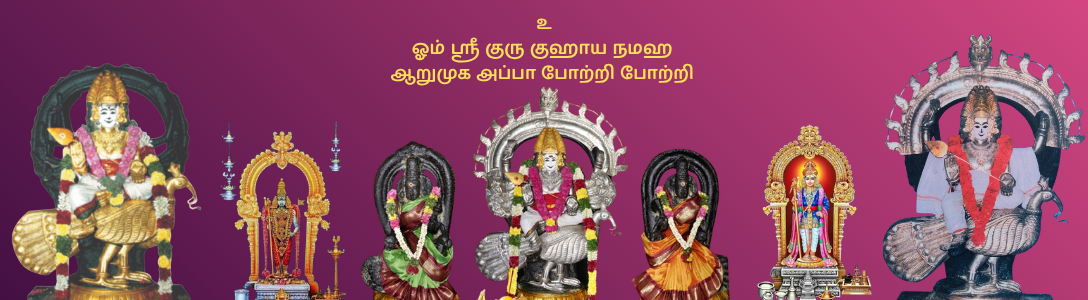
Thiruppugazh 231 muRugukALa (swAmimalai)
மயூரகிரிநாதா உன் திருவடிகள் சரணம்
– மயூரகிரிநாதனுக்கு அரோகரா –
– குன்றக்குடி முருகனுக்கு அரோகரா –
திருப்புகழ் 230 மருவே செறித்த (சுவாமிமலை) – திருப்புகழ் 232 வாதமொடு சூலை (சுவாமிமலை)
பாடல்
தனன தான தனன தந்த, தனன தான தனன தந்த
தனன தான தனன தந்த – தனதான
முறுகு காள விடம யின்ற இருகண் வேலி னுளம யங்கி
முளரி வேரி முகைய டர்ந்த – முலைமீதே
முழுகு காதல் தனைம றந்து பரம ஞான வொளிசி றந்து
முகமொ ராறு மிகவி ரும்பி – அயராதே
அறுகு தாளி நறைய விழ்ந்த குவளை வாச மலர்க ரந்தை
அடைய வாரி மிசைபொ ழிந்து – னடிபேணி
அவச மாகி யுருகு தொண்ட ருடன தாகி விளையு மன்பி
னடிமை யாகு முறைமை யொன்றை – அருள்வாயே
தறுகண் வீரர் தலைய ரிந்து பொருத சூர னுடல்பி ளந்து
தமர வேலை சுவற வென்ற – வடிவேலா
தரள மூர லுமைம டந்தை முலையி லார அமுத முண்டு
தரணி யேழும் வலம்வ ருந்திண் – மயில்வீரா
மறுவி லாத தினைவி ளைந்த புனம்வி டாம லிதணி ருந்து
வலிய காவல் புனைய ணங்கின் – மணவாளா
மருவு ஞாழ லணிசெ ருந்தி யடவி சூத வனநெ ருங்கி
வளர்சு வாமி மலைய மர்ந்த – பெருமாளே.
பதம் பிரித்தது
தனன தான தனன தந்த, தனன தான தனன தந்த
தனன தான தனன தந்த – தனதான
முறுகு காள விடம் அயின்ற இரு கண் வேலின் உ(ள்)ள(ம்) மயங்கி
முளரி வேரி முகை அடர்ந்த – முலை மீதே
முழுகு காதல் தனை மறந்து பரம ஞான ஒளி சிறந்து
முகம் ஒரு ஆறு மிக விரும்பி – அயராதே
அறுகு தாளி நறை அவிழ்ந்த குவளை வாச மலர் கரந்தை
அடைய வாரி மிசை பொழிந்து உன் – அடி பேணி
அவசமாகி உருகு தொண்டர் உடன் அதாகி விளையும் அன்பின் அடிமையாகும் முறைமை ஒன்றை – அருள்வாயே
தறுகண் வீரர் தலை அரிந்து பொருத சூரன் உடல் பிளந்து
தமர வேலை சுவற வென்ற – வடி வேலா
தரளம் ஊரல் உமை மடந்தை முலையில் ஆர் அமுதம் உண்டு
தரணி ஏழும் வலம் வரும் திண் – மயில் வீரா
மறு இலாத தினை விளைந்த புனம் விடாமல் இதணில் இருந்து
வலிய காவல் புனை அணங்கின் – மணவாளா
மருவு ஞாழல் அணி செருந்தி அடவி சூத வன(ம்) நெருங்கி
வளர் சுவாமி மலை அமர்ந்த – பெருமாளே.
English
muRuku kALa vidama yinRa irukaN vEli nuLama yangi
muLari vEri mukaiya darntha – mulaimeethE
muzhuku kAthal thanaima Ranthu parama njAna voLisi Ranthu
mukamo rARu mikavi rumpi – ayarAthE
aRuku thALi naRaiya vizhntha kuvaLai vAsa malarka ranthai
adaiya vAri misaipo zhinthu – nadipENi
avasa mAki yuruku thoNda rudana thAki viLaiyu manpi
nadimai yAku muRaimai yonRai – aruLvAyE
thaRukaN veerar thalaiya rinthu porutha cUra nudalpi Lanthu
thamara vElai suvaRa venRa – vadivElA
tharaLa mUra lumaima danthai mulaiyi lAra amutha muNdu
tharaNi yEzhum valamva runthiN – mayilveerA
maRuvi lAtha thinaivi Laintha punamvi dAma lithaNi runthu
valiya kAval punaiya Nangin – maNavALA
maruvu njAzha laNise runthi yadavi cUtha vanane rungi
vaLarsu vAmi malaiya marntha – perumALE.
English Easy Version
muRuku kALa vidam ayinRa iru kaN vElin u(L)La(m) mayangi
muLari vEri mukai adarntha – mulai meethE
muzhuku kAthal thanai maRanthu parama njAna oLi siRanthu
mukam oru ARu mika virumpi – ayarAthE
aRuku thALi naRai avizhntha kuvaLai vAsa malar karanthai
adaiya vAri misai pozhinthu un – adi pENi
avasamAki uruku thoNdar udan athAki viLaiyum anpin
adimaiyAkum muRaimai onRai – aruLvAyE
thaRukaN veerar thalai arinthu porutha cUran udal piLanthu
thamara vElai suvaRa venRa – vadi vElA
tharaLam Ural umai madanthai mulaiyil Ar amutham uNdu
tharaNi Ezhum valam varum thiN – mayil veerA
maRu ilAtha thinai viLaintha punam vidAmal ithaNil irunthu
valiya kAval punai aNangin – maNavALA
maruvu njAzhal aNi serunthi adavi cUtha vana(m) nerungi
vaLar suvAmi malai amarntha – perumALE.
திருப்புகழ் 231 முறுகு காள (சுவாமிமலை) – விளக்கம்
சுவாமிமலையில் அருளப்பட்ட “முறுகு காள” (பாடல் 231) என்ற திருப்புகழ் பாடலின் ஆழமான விளக்கங்கள் கீழே கொடுக்கப்பட்டுள்ளன:
1. கொடிய நஞ்சை ஒத்த கண்களும் மாய மயக்கமும்
பாடலின் தொடக்கத்தில், மனிதனை உலகியல் ஆசைகளில் வீழ்த்தும் பெண்களின் அழகை அருணகிரிநாதர் விவரிக்கிறார். காலகூடம் போன்ற மிகக் கொடிய விஷத்தைக் குடித்ததைப் போல சிவந்து காணப்படும் பெண்களின் வேல் போன்ற கூர்மையான கண்களைக் கண்டு மனித மனம் மயங்குகிறது. தாமரை அரும்புகளைப் போன்ற அவர்களின் மார்பகங்களின் மீது மையல் கொண்டு, சிற்றின்ப வலையில் சிக்கித் தவிக்கும் மனிதர்களின் பலவீனமான மனநிலையை இந்த வரிகள் மிகத் தெளிவாகப் படம் பிடித்துக் காட்டுகின்றன.
2. உலகியல் காமத்தை மறந்து மெய்ஞானம் அடைதல்
நிலையற்ற சிற்றின்ப ஆசைகளில் மூழ்கிக் கிடக்கும் மனநிலையை முற்றிலும் மறக்க வேண்டும் என்று கவிஞர் கூறுகிறார். அந்த உலகியல் காமத்தை அறவே ஒழித்துவிட்டு, எல்லையற்ற பரமாத்மாவின் உண்மையான வடிவைக் காட்டும் ‘பரம ஞானம்’ என்னும் மேலான அறிவு ஒளியில் திளைத்துச் சிறந்து விளங்க வேண்டும். அறியாமை இருளை அகற்றி, ஞான ஒளியை நோக்கி ஆன்மா பயணிக்க வேண்டும் என்பதே இதன் உட்பொருளாகும்.
3. சோர்வின்றி ஆறுமுகனைத் தரிசித்தல்
பரம ஞானம் பெற்ற ஆன்மா எதை விரும்பும் என்பதை இந்தப் பகுதி உணர்த்துகிறது. உலகியல் மாயைகளில் இருந்து விடுபட்ட மனம், ஞான சொரூபமாக விளங்கும் முருகப் பெருமானின் தெய்வீகமான ஆறு முகங்களையும் தரிசிப்பதையே பெரிதும் விரும்பும். மாயைகளில் அலைக்கழிக்கப்பட்டுச் சோர்வடையாமல் (அயராதே), முழுமையான பக்தியுடனும் தளர்வாத உறுதியுடனும் இறைவனை நோக்கித் தவம் செய்யும் உன்னத நிலையை இது குறிக்கிறது.
4. நறுமண மலர்கள் தூவித் திருவடி அர்ச்சனை
இறைவனின் திருவடிகளை எவ்வாறு பூசிக்க வேண்டும் என்று அருணகிரிநாதர் விளக்குகிறார். புனிதம் வாய்ந்த அறுகம்புல், தாளி என்னும் கொடிவகை, தேன் நிறைந்த வாசனையுடைய குவளை (நீலோற்பலம்) மற்றும் கரந்தை ஆகிய நறுமண மலர்களைக் கொண்டு முருகப் பெருமானின் திருவடிகளின் மீது மழையெனப் பொழிந்து அர்ச்சனை செய்ய வேண்டும். இது இறைவனின் மீது நாம் வைக்கும் தூய பக்தியையும், நித்திய வழிபாட்டின் அவசியத்தையும் வலியுறுத்துகிறது.
5. உள்ளம் உருகும் மெய்யடியார் திருக்கூட்டம்
தனக்கு முக்தி கிடைக்க வேண்டும் என்பதற்காக அருணகிரிநாதர் இறைவனிடம் ஒரு மிகச் சிறந்த வரத்தைக் கேட்கிறார். “உன் மீது கொண்ட எல்லையற்ற அன்பினால் தம்மை மறந்து, நெஞ்சம் உருகிக் கண்ணீர் வடிக்கும் உன்னுடைய மெய்யடியார்கள் கூட்டத்தில் நானும் ஒருவனாகி, உனக்குத் தொண்டு செய்யும் (அடிமையாகும்) அந்த உன்னத அருளை எனக்குத் தர வேண்டும்” என்று வேண்டுகிறார். சத்சங்கம் எனப்படும் நல்லடியார்களின் சேர்க்கையே இறைவனை அடைவதற்கான மிகச் சிறந்த வழி என்பதை இது காட்டுகிறது.
6. சூரனைப் பிளந்து கடலை வற்றச் செய்த வேலன்
பாடலின் பிற்பாதியில் முருகப் பெருமானின் வீரதீரச் செயல்கள் போற்றப்படுகின்றன. தேவர்களைத் துன்புறுத்திய கொடிய அரக்க வீரர்களின் தலைகளை அறுத்து எறிந்த வீரன் முருகன். மாயைகள் செய்து போரிட்ட சூரபத்மனின் உடலை இரண்டாகப் பிளந்தும், அவன் ஒளிந்திருந்த பெருஞ்சத்தமிடும் கடலின் (தமர வேலை) நீர் முழுவதும் முற்றிலும் வற்றிப் போகும்படியும் தனது கூர்மையான வடிவேலைச் செலுத்திய மகா வீரன் முருகப் பெருமான் ஆவார். இது அஞ்ஞானத்தை அழிக்கும் மெய்ஞானத்தின் வல்லமையைக் குறிக்கிறது.
7. உமையின் அமுதுண்ட மயில் வீரன்
முருகப் பெருமானின் தாயன்பும், உலகை வலம் வந்த பெருமையும் இங்கு பாடப்படுகிறது. முத்துப் போன்ற பிரகாசமான புன்னகையைக் கொண்ட அன்னை உமாதேவியின் திருமுலையில் ஊறிய ஞானப்பால் என்னும் அமுதத்தை வயிறார உண்ட திருமகன் முருகன். மேலும், ஏழு உலகங்களையும் தன் மயில் வாகனத்தின் மீது ஏறி மிக வேகமாகச் சுற்றி வந்த திண்மையான வீரனும் அவனாவான். இது மாங்கனிக்காக உலகை வலம் வந்த புராண நிகழ்வை நினைவூட்டுகிறது.
8. சுவாமிமலையில் வீற்றிருக்கும் வள்ளியின் மணாளன்
இறுதியாக, முருகப் பெருமான் வீற்றிருக்கும் தலத்தின் சிறப்பும், அவன் வள்ளியம்மையை மணந்த அழகும் கூறப்படுகிறது. எந்தவிதக் குற்றமும் இல்லாமல் தினை விளைந்த புனத்தில், பரண் மீது அமர்ந்து காவல் காத்த தெய்வப் பெண்ணான வள்ளியம்மையின் மணாளன் முருகன். குங்குமப் பூ மரம் (ஞாழல்), செருந்தி மரங்கள், மாமரங்கள் (சூத வனம்) ஆகியவை அடர்ந்து வளர்ந்து நெருங்கியுள்ள இயற்கை எழில் கொஞ்சும் சுவாமிமலையில் அமர்ந்து அருள்பாலிக்கும் பெருமான் அவன் என்று பாடி நிறைவு செய்கிறார்.
சுருக்கம்
திருப்புகழ் 231-ஆம் பாடல், சிற்றின்ப மாயைகளில் இருந்து விடுபட்டு ஞான ஒளியைப் பெறுவதற்கான வழியைப் போதிக்கிறது. விஷம் போன்ற கூர்மையான கண்களையும், தாமரை அரும்பு போன்ற மார்பகங்களையும் கொண்ட பெண்களின் மீதுள்ள சிற்றின்ப ஆசையை மறந்து, மெய்ஞான ஒளியில் திளைக்க வேண்டும் என்று அருணகிரிநாதர் வலியுறுத்துகிறார். சோர்வின்றி ஆறுமுகனை விரும்பி, அறுகம்புல், குவளை, கரந்தை மலர்களால் அவனது திருவடிகளைப் பூசித்து, அன்பினால் உருகும் மெய்யடியார்களின் கூட்டத்தில் இணைந்து தொண்டு செய்யும் அருளைத் தரக் கோருகிறார். சூரபத்மனின் உடலைப் பிளந்து கடலை வற்றச் செய்த கூர்மையான வேலை உடையவனும், அன்னை உமையின் ஞானப்பால் உண்டு ஏழு உலகங்களையும் மயில் மீது வலம் வந்த வீரனும், தினைப்புனம் காத்த வள்ளியின் மணாளனுமாகிய முருகப் பெருமான், மரங்கள் அடர்ந்த சோலைகள் சூழ்ந்த சுவாமிமலையில் வீற்றிருந்து முக்தி அருளுவான் என்பதே இப்பாடலின் சுருக்கமாகும்.
The Essence of Thiruppugazh 231 muRugukALa (swAmimalai)
Here is a deep and comprehensive explanation of the profound Thiruppugazh verse “MuRuku kALa” (Song 231), set in the sacred shrine of Swamimalai.
1. The Poisonous Snare of Sensual Infatuation
The poem begins by vividly illustrating the powerful and often destructive grip of worldly lust on the human mind. Saint Arunagirinathar compares the captivating, sharp eyes of enchanting women to spears that have consumed Kalakuta (the most deadly cosmic poison). When a person’s mind is struck by these venomous, spear-like glances, it becomes utterly mesmerized and loses its rational clarity. The poet further describes the deep infatuation with physical beauty, comparing it to being drawn to lotus buds brimming with sweet pollen. This opening serves as a stark warning about how easily the soul is trapped by the intoxicating illusions of sensory pleasure.
2. Renouncing Lust for Supreme Divine Wisdom
Having identified the trap of worldly desires, the poet outlines the necessary spiritual shift. He urges the seeker to completely forget and discard this drowning, suffocating lust. In its place, the mind must be illuminated by Parama Gnana—the supreme, transcendental light of divine wisdom. This transition marks the journey from spiritual ignorance (darkness) to ultimate enlightenment. It emphasizes that true realization can only occur when the mind is emptied of its base, animalistic desires, making room for the pure light of the Divine.
3. Unwavering Devotion to the Six-Faced Lord
Once the mind is illuminated by this supreme wisdom, its focus must be entirely redirected toward the Divine. Arunagirinathar states that the awakened soul must intensely and passionately desire the vision of Lord Murugan’s six divine faces (Aarumugam). Crucially, this devotion must be practiced without any fatigue, distraction, or wavering (“ayarAthe”). The six faces represent the Lord’s omnipresence and His mastery over the six directions, and focusing on them requires an unyielding, steadfast spiritual discipline.
4. The Discipline of Sacred Floral Worship
The poet then details the physical act of devotion, which serves to ground the seeker’s spiritual focus. He describes the meticulous gathering of sacred offerings: the purifying Arugu grass, Thali creepers, honey-dripping Kuvalai (blue water lilies), and fragrant Karanthai flowers. The devotee is instructed to shower these blossoms abundantly at the holy feet of the Lord. This act is not merely a ritual; it symbolizes the complete offering of one’s actions, senses, and love at the feet of the Divine, establishing a tangible connection between the worshipper and God.
5. Yearning for the Fellowship of True Devotees
In a profound moment of surrender, Arunagirinathar reveals his ultimate prayer. He does not ask for wealth or power, but rather to be completely overwhelmed by ecstatic devotion (“avasamagi”). He begs Lord Murugan for the grace to join the holy company (Satsang) of true devotees whose hearts physically melt with love for God. By asking to become a humble servant alongside these pure souls, the poet highlights that true spiritual elevation is found in selfless service and in the uplifting company of those who share an unconditional love for the Divine.
6. The Fierce Warrior Who Silenced the Roaring Ocean
The second half of the poem shifts from the devotee’s internal struggle to the magnificent, cosmic victories of Lord Murugan. The poet glorifies Murugan as the wielder of the sharp, beautiful Vel (spear). With this divine weapon, He decapitated fearless, demonic warriors and cleaved the body of the formidable demon Soorapadman in two. Furthermore, the Lord dried up the roaring, turbulent ocean where the demon hid. In a spiritual context, the Vel is divine knowledge, Soorapadman is the ego, and the roaring ocean is the restless, chaotic human mind that God silences to bring profound peace.
7. The Divine Child and the Cosmic Traveler
Arunagirinathar then praises the Lord’s divine lineage and His omnipresent majesty. He describes Murugan as the blessed child who drank the nectar-like milk of supreme wisdom from Goddess Uma (Parvati), whose smile is as radiant as pure pearls. Nourished by the Mother of the Universe, this great warrior majestically mounted His strong, invincible peacock and effortlessly traveled around the seven worlds. The peacock represents the conquered ego, and His cosmic journey signifies His absolute sovereignty over all of creation.
8. The Consort of Valli Enshrined in Swamimalai
In the concluding lines, the poet brings this cosmic Lord down to the earthly realm, highlighting His boundless compassion. Murugan is celebrated as the beloved husband of Valli, the divine damsel who stood vigilantly on a high watchtower, fiercely guarding the flawless millet fields. Finally, Arunagirinathar places this Great Lord (“Perumal”) in the sacred, earthly geography of Swamimalai. The temple is beautifully described as being deeply surrounded by thick, lush forests of fragrant Gnazhal (saffron), Serundhi, and mango trees, portraying a serene sanctuary where the soul can finally find rest and liberation.
Summary
Thiruppugazh 231 is a profound spiritual guide that charts the soul’s journey from sensory bondage to divine liberation. In the first half, Saint Arunagirinathar warns of the poisonous, captivating trap of worldly lust, urging the seeker to abandon it in favor of the illuminating light of supreme wisdom. He emphasizes the importance of unwavering focus on the six-faced Lord, rigorous floral worship, and above all, the deep yearning to serve God in the company of ecstatic, melting devotees. The second half of the poem validates this devotion by exalting Lord Murugan’s supreme power and grace. Praised as the fierce warrior who used His Vel to destroy the ego-driven demons and dry the turbulent ocean, the divine child nourished by Goddess Uma, and the humble lover of Valli, Murugan is presented as the ultimate savior. Enshrined amidst the lush, fragrant groves of Swamimalai, He stands ready to grant ultimate refuge to those who surrender.
Thiruppugal – திருப்புகழ்