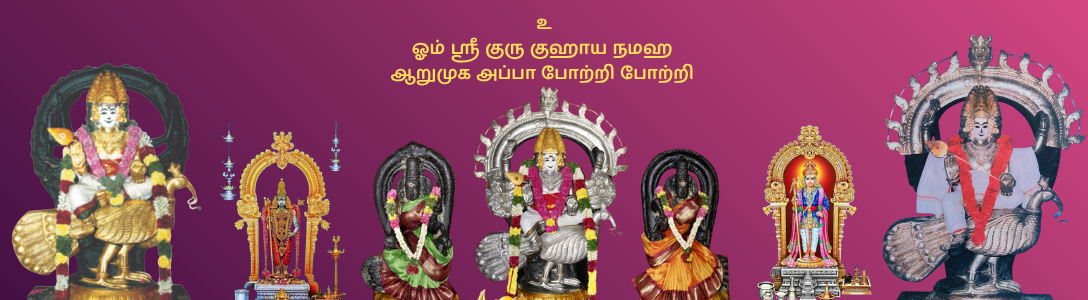
Thiruppugal 595 Meychcharvuatre
மயூரகிரிநாதா உன் திருவடிகள் சரணம்
– மயூரகிரிநாதனுக்கு அரோகரா –
– குன்றக்குடி முருகனுக்கு அரோகரா –
பாடல்
தத்தா தத்தா தத்தா தத்தா
தத்தா தத்தத் – தனதான
மெய்ச்சார் வற்றே பொய்ச்சார் வுற்றே
நிச்சார் துற்பப் – பவவேலை
விட்டே றிப்போ கொட்டா மற்றே
மட்டே யத்தத் – தையர்மேலே
பிச்சா யுச்சா கிப்போ ரெய்த்தார்
பத்தார் விற்பொற் – கழல்பேணிப்
பிற்பால் பட்டே நற்பால் பெற்றார்
முற்பா லைக்கற் – பகமேதான்
செச்சா லிச்சா லத்தே றிச்சே
லுற்றா ணித்துப் – பொழிலேறுஞ்
செக்கோ டைக்கோ டுக்கே நிற்பாய்
நித்தா செக்கர்க் – கதிரேனல்
முச்சா லிச்சா லித்தாள் வெற்பாள்
முத்தார் வெட்சிப் – புயவேளே
முத்தா முத்தீ யத்தா சுத்தா
முத்தா முத்திப் – பெருமாளே.
பதம் பிரித்தது
தத்தா தத்தா தத்தா தத்தா
தத்தா தத்தத் – தனதான
மெய்ச் சார்வு அற்றே பொய்ச் சார்வு உற்றே
நிச்சார் துற்பப் – பவ வேலை
விட்டேறிப் போக ஒட்டாமல் தே(ன்) மட்டே
அத் தத்தையர் – மேலே
பிச்சாய் உச்சாகிப் போர் எய்த்தார்
பத்தார் விற்பொற் – கழல்பேணிப்
பிற்பால் பட்டே நற்பால் பெற்றார்முன்
பாலைக் கற்பகமே – தான்
செச் சாலிச் சாலத் தேறிச் சேல்
உற்று ஆணித்துப் – பொழிலேறும்
செக்கோடைக் கோடுக்கே நிற்பாய்
நித்தா செக்கர்க் – கதிர் ஏனல்
முச்சாலிச் சாலித் தாள் வெற்பாள்
முத்து ஆர் வெட்சிப் – புயவேளே
முத்தா முத்தீ யத்தா சுத்தா
முத்தா முத்திப் – பெருமாளே
English
meycchAr vatRE poycchAr vutRE
nicchAr thuRpap – pavavElai
vittE RippO kottA matRE
mattE yaththath – thaiyarmElE
picchA yucchA kippO reyththAr
paththAr viRpoR – kazhalpENip
piRpAl pattE naRpAl petRAr
muRpA laikkaR – pakamEthAn
secchA licchA laththE RicchE
lutRA Niththup – pozhilERum
sekkO daikkO dukkE niRpAy
niththA sekkark – kathirEnal
mucchA licchA liththAL veRpAL
muththAr vetchip – puyavELE
muththA muththee yaththA suththA
muththA muththip – perumALE.
English Easy Version
meyc chArvu atRE poyc chArvu utRE
nicchAr thuRpap – pava vElai
vittERip pOka ottAmal thE(n)
mattE ath thaththaiyar – mElE
picchAy ucchAkip pOr eyththAr
paththAr viRpoR – kazhalpENip
piRpAl pattE naRpAl petRArmun
pAlaik kaRpakamE – thAn
sec chAlic chAlath thERic
chEl utRu ANiththup – pozhilERum
sekkOdaik kOdukkE niRpAy
niththA sekkark – kathir Enal
mucchAlic chAlith thAL veRpAL
muththu Ar vetchip – puyavELE
muththA muththee yaththA suththA
muththA muththip – perumALE.
திருப்புகழ் 595 மெய்ச் சார்வு அற்றே (திருச்செங்கோடு) – விளக்கம்
திருச்செங்கோட்டில் அருணகிரிநாதர் அருளிய “மெய்ச்சார் வற்றே பொய்ச்சார் வுற்றே…” எனத் தொடங்கும் திருப்புகழ் (595), நிலையற்ற உலக மாயைகளில் இருந்து விலகி, இறைவனின் திருவடிகளைப் பற்றிக் கொண்டு முக்தி அடையும் வழியைப் போதிக்கும் ஒரு சிறந்த தத்துவப் பாடலாகும். இப்பாடலின் ஆழமான விளக்கத்தை எட்டு தலைப்புகளில் கீழே காண்போம்.
1. மெய்ப்பொருளை மறந்து பொய்ப் பொருளை நாடுதல்
பாடலின் தொடக்கத்திலேயே மனித மனத்தின் அறியாமையை அருணகிரிநாதர் சுட்டிக்காட்டுகிறார். “மெய்ச்சார் வற்றே பொய்ச்சார் வுற்றே” என்ற வரிகள், மனிதர்கள் உண்மையான மெய்ப்பொருளாகிய இறைவனைச் சார்ந்திருக்காமல், நிலையற்ற, அழியக்கூடிய உலகியல் இன்பங்களையே சார்ந்து வாழ்கிறார்கள் என்பதைக் குறிக்கிறது. நிலையான நிம்மதியைத் தரும் இறைவனை மறந்து, பொய்யான மாயைகளில் மனிதர்கள் தம்மைத் தொலைத்து விடுகிறார்கள்.
2. பிறவிப் பெருங்கடலில் சிக்கித் தவித்தல்
பொய்யான உலகப் பற்றுதல்களின் காரணமாக ஏற்படும் விளைவை அடுத்த வரிகள் விளக்குகின்றன. “துற்பப் பவவேலை விட்டேறிப் போக ஒட்டாமல்” என்று பாடுகிறார். அதாவது, துன்பங்கள் நிறைந்த இந்தப் பிறவி என்னும் பெருங்கடலில் வீழ்ந்து தவிக்கின்றனர். அதிலிருந்து நீந்தி வெளியேறி, கரையேற முடியாமல் மாயை அவர்களைத் தடுத்துத் தன் வசத்திலேயே கட்டிப் போட்டு விடுகிறது. பிறவித் தளையை அறுக்க இயலாத மனிதனின் இயலாமை இங்கு வெளிப்படுகிறது.
3. பொருள் தேடும் மாதர் மீதான மையல்
மனிதன் பிறவிக்கடலில் மூழ்குவதற்கான முக்கிய காரணங்களில் ஒன்றான சிற்றின்ப மயக்கத்தை அருணகிரிநாதர் கண்டிக்கிறார். பணத்தையும் பொருளையும் மட்டுமே குறியாகக் கொண்டு வாழும் விலைமாதர்கள் மீது மனிதர்கள் பித்துப் பிடித்தவர்களைப் போல அலைகிறார்கள். காம இச்சை தலைக்கேறி (உச்சாகி), அதிலேயே மூழ்கித் தங்களின் உடலையும் உயிரையும் தேய்த்து இளைத்து விடுகிறார்கள் (எய்த்தார்) என்று சிற்றின்பத்தின் சீரழிவை வேதனையோடு விவரிக்கிறார்.
4. அடியார்களின் பெருமையும் திருவடிப் பேறும்
மாயையில் உழலும் உலகத்தாருக்கு மாறாக, இறைவனின் உண்மையான அடியார்கள் எவ்வாறு வாழ்கிறார்கள் என்பதை “பத்தார் விற்பொற் கழல்பேணி” என்று விளக்குகிறார். உண்மையான பக்தர்கள், வீரக்கழல் அணிந்த முருகப்பெருமானின் பொற்பாதங்களையே தஞ்சம் எனப் போற்றிப் பணிகிறார்கள். இறைவனின் பின்னால், அவனது நிழல் போலத் தொடர்ந்து சென்று, பிறவா நிலையாகிய மிகச் சிறந்த நற்கதியை (நற்பால்) அடைகிறார்கள். இதுவே வாழ்வின் உண்மையான பயனாகும்.
5. கற்பகத் தருவாக அருளும் கருணை
தன்னை நாடி வரும் அடியார்களுக்கு முருகப்பெருமான் எத்தகைய அருளை வழங்குகிறார் என்பதை “முற்பாலைக் கற்பகமே தான்” என்று வர்ணிக்கிறார். கேட்டதைக் கொடுக்கும் தெய்வலோக மரமான கற்பக விருட்சத்தைப் போன்றவன் முருகன். ஆதி காலத்திலிருந்தே தன்னைச் சரணடையும் பக்தர்களுக்கு வேண்டிய வரங்களை வாரி வழங்கும் கருணை மழையாக, எல்லையில்லாத அருளைச் சுரக்கும் கற்பகத் தருவாக இறைவன் விளங்குகிறான்.
6. திருச்செங்கோட்டின் இயற்கை வளம்
இறைவன் வீற்றிருக்கும் திருச்செங்கோடு மலையின் செழிப்பான இயற்கையை அருணகிரிநாதர் மிக அழகாகப் படம் பிடித்துக் காட்டுகிறார். சிறந்த செந்நெல் பயிர்கள் (செச்சாலி) உயர்ந்து வளர்ந்துள்ள வயல்கள்; அங்கே துள்ளிப் பாயும் சேல் மீன்கள்; குளிர்ந்த சோலைகள் சூழ்ந்த வளமான மலைப்பகுதி திருச்செங்கோடு. இத்தகைய செழிப்பான, செந்நிறமான சிகரங்களைக் கொண்ட மலைமீது என்றென்றும் நிலையான பரம்பொருளாக (நித்தா) முருகப்பெருமான் வீற்றிருக்கிறான்.
7. வள்ளியம்மை மீது கொண்ட தெய்வீகக் காதல்
தினைப்புனத்தில் காவல் காத்த குறமகள் வள்ளியின் மீது முருகன் கொண்ட காதலை அடுத்ததாகக் குறிப்பிடுகிறார். சிவந்த தினைப் பயிர்களையும், மூன்று வகையான விளைச்சல்களையும் (முச்சாலி) உடைய மலைநாட்டுப் பெண்ணான வள்ளியம்மையின் மீது மிகுந்த அன்பு கொண்டவன் முருகன். முத்துவடங்களையும், வெட்சி மலர் மாலைகளையும் தனது அகன்ற, வலிமையான புயங்களில் (தோள்களில்) அணிந்த அழகிய குமரவேள் அவன் என்று இறைவனின் தோற்றப்பொலிவைப் புகழ்கிறார்.
8. முத்தீ வளர்க்கும் தூய முத்திப் பெருமான்
இறுதியாக, முருகப்பெருமானின் தத்துவ வடிவங்களைப் போற்றிப் பாடலை நிறைவு செய்கிறார். தூய்மையானவனே! முத்தீ (கார்ஹபத்யம், ஆகவனீயம், தட்சிணாக்கினி ஆகிய மூன்று வகையான யாகத் தீ) வளர்த்து வேத நெறிப்படி வாழும் அந்தணர்களால் போற்றப்படும் தலைவனே! எங்கள் தந்தையே! அடியார்களின் பிறவித் துன்பங்களை வேரறுத்து, அவர்களுக்கு ஒப்பற்ற ‘முக்தி’ என்னும் பேரின்பத்தை அருளும் முத்திப் பெருமாளே! என்று சரணடைகிறார்.
சுருக்கம்
திருப்புகழ் 595-வது பாடல், பொய்யான உலக இன்பங்களையும், காம மாயையையும் நம்பிப் பிறவிப் பெருங்கடலில் மூழ்கி அழியும் மனிதனின் அறியாமையைச் சுட்டிக்காட்டுகிறது. இந்த மாயையில் இருந்து விடுபட, முருகனின் திருவடிகளைப் பற்றிக் கொள்ளும் அடியார்கள் பிறவா நிலையான நற்கதியைப் பெறுவார்கள். அடியார்களுக்குக் கற்பக மரமாக நின்று அருள்பாலிக்கும் முருகன், வளமான வயல்களும் சோலைகளும் சூழ்ந்த திருச்செங்கோட்டில் வீற்றிருக்கிறான். வெட்சி மலர் சூடி தினைப்புனத்து வள்ளியை மணந்தவனும், முத்தீ வளர்க்கும் வேத நெறியரால் போற்றப்படுபவனும், தூய்மையின் வடிவானவனுமான அந்த முத்திப் பெருமாளைச் சரணடைவதே பிறவித் துன்பத்தைப் போக்கும் ஒரே வழி என்பதே இப்பாடலின் சுருக்கமாகும்.
The Essence of Thiruppugazh 595 Meych Saarvu Atre (Tiruchengode)
Here is a deep and clear explanation of Arunagirinathar’s Thiruppugazh 595 (“MeycchAr vatRE”), a profound philosophical hymn that contrasts the tragedy of worldly illusions with the ultimate liberation found in divine surrender.
1. Forsaking the Truth for Illusions
The hymn opens by addressing the fundamental tragedy of the human condition: humanity’s tendency to abandon the eternal truth (God) and cling to falsehoods. Arunagirinathar uses the powerful contrast between “mey” (the absolute truth) and “poy” (the false, transient world). Instead of anchoring their lives in the unchanging reality of the Divine, people mistakenly place their trust and affection in worldly attachments that are bound to perish, thereby setting themselves up for inevitable disappointment and suffering.
2. Drowning in the Ocean of Samsara
Because humans attach themselves to illusions, they are thrown into the terrifying “ocean of birth” (Samsara). The poet describes this as a wretched, endless cycle of repeated births and deaths. Burdened by the heavy weight of their desires and sins, people desperately struggle to swim across this ocean but find themselves completely unable to reach the shore. The material world binds them so tightly that escaping this karmic cycle through their own effort becomes an impossible task.
3. The Intoxication of Lust and Greed
Arunagirinathar then points to one of the primary reasons humanity is trapped in this ocean: the intoxicating delusion of lust combined with greed. He vividly describes how men lose their senses, acting like madmen as they chase after courtesans who are only interested in their wealth. Pushed to the extreme edge of sensual obsession, these men completely exhaust their physical, mental, and spiritual energy, entirely wasting the precious gift of human life on hollow, transactional pleasures.
4. The Path of True Devotion
In stark contrast to those drowning in worldly madness, the poet introduces the path of the true devotees. Unlike the ignorant masses, these devoted souls recognize the futility of worldly pursuits. Instead, they seek ultimate refuge by cherishing and holding on tightly to the victorious, golden anklet-adorned feet of Lord Murugan. This section highlights that true wisdom lies in shifting one’s focus from fleeting sensual pleasures to eternal divine devotion.
5. The Wish-Fulfilling Divine Tree
By choosing the path of devotion and humbly following behind the Lord, these devotees attain the highest, most pristine spiritual state—salvation. Arunagirinathar beautifully praises Lord Murugan as the eternal “Kalpaka tree” (the mythical wish-fulfilling tree of the heavens). Just as the Kalpaka tree grants every pure wish of those who stand beneath its shade, Lord Murugan eternally showers His boundless grace, spiritual wealth, and liberation upon those who surrender to Him.
6. The Bountiful Red Peaks of Thiruchengode
The hymn then transitions into a breathtaking description of the sacred landscape where this magnificent Lord resides. Arunagirinathar paints a vibrant picture of Thiruchengode, describing its highly fertile lands filled with tall, red paddy fields, leaping fish, and deeply shaded, lush groves. Atop the majestic red-peaked mountain of this incredibly prosperous region stands the Eternal Lord, radiating divine light and watching over His devotees.
7. The Divine Romance with Goddess Valli
Continuing the imagery of the hilly landscape, the poet celebrates the divine love between Lord Murugan and Goddess Valli. Valli is described as the beautiful mountain girl who guarded the red millet fields. To woo her, the Lord adorns His strong, broad shoulders with radiant pearl garlands and bright red Vetchi flowers—a floral symbol of the mountainous Kurinji region. This divine romance symbolizes the Supreme Lord’s willingness to step down from the heavens to pursue and embrace the pure, devoted human soul.
8. The Supreme Lord of Liberation (Mukthi)
In the grand finale, Arunagirinathar exalts Lord Murugan through His highest spiritual attributes. He calls Him “Muththa” (as precious and flawless as a pearl) and “Suththa” (the embodiment of absolute purity). He praises Him as the Lord of the three sacred Vedic fires, worshipped by deeply spiritual sages. Most importantly, he surrenders to Him as “Mukthi Perumal”—the Supreme Lord who single-handedly cuts the chains of karma and grants ultimate liberation (Mukthi) to the soul.
Summary
Thiruppugazh 595 is a powerful philosophical journey from the depths of human ignorance to the heights of spiritual liberation. Arunagirinathar begins by lamenting how people abandon the eternal truth to chase false illusions, particularly the toxic combination of lust and greed, which leaves them drowning helplessly in the endless ocean of birth and death. However, he offers a way out: unwavering devotion to Lord Murugan. Praising the Lord as a celestial wish-fulfilling tree, the poet describes Murugan’s beautiful abode on the fertile, red peaks of Thiruchengode and His divine romance with the mountain girl Valli. The hymn culminates in total surrender to the Pure Lord of the sacred fires, who is the ultimate granter of Mukthi (salvation).