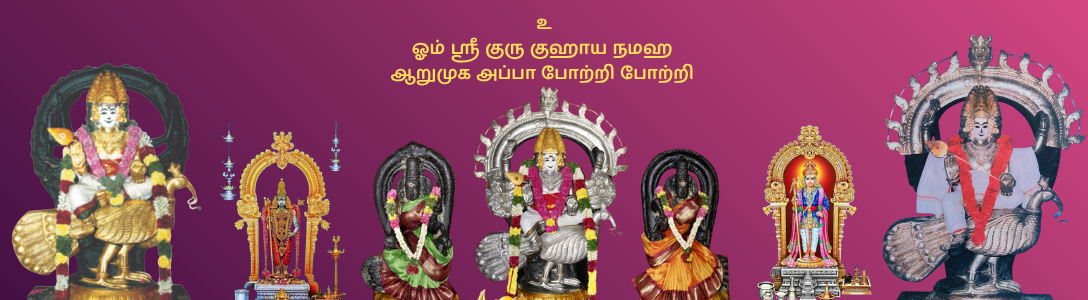
Thiruppugal 854 Kendaigalporum
மயூரகிரிநாதா உன் திருவடிகள் சரணம்
– மயூரகிரிநாதனுக்கு அரோகரா –
– குன்றக்குடி முருகனுக்கு அரோகரா –
பாடல்
தந்ததன தந்ததன தனதனத்
தந்ததன தந்ததன தனதனத்
தந்ததன தந்ததன தனதனத் – தனதான
கெண்டைகள்பொ ருங்கண்மங் கையர்மலர்க்
கொண்டைகள்கு லுங்கநின் றருகினிற்
கெஞ்சுபலு டன்குழைந் தமளியிற் – கொடுபோய்வண்
கெந்தபொடி யும்புனைந் துறவணைத்
தின்பவச னந்தருந் தொழிலடுக்
கின்றமய லின்படுந் துயரறப் – ப்ரபைவீசுந்
தண்டைகள்க லின்கலின் கலினெனக்
கிண்கிணிகி ணின்கிணின் கிணினெனத்
தண்கொலுசு டன்சிலம் பசையவுட் – பரிவாகிச்
சந்ததமும் வந்திரும் பரிமளப்
பங்கயப தங்களென் கொடுவினைச்
சஞ்சலம லங்கெடும் படியருட் – புரிவாயே
தொண்டர்கள்ச ரண்சரண் சரணெனக்
கொம்புகள்கு குங்குகுங் குகுமெனத்
துந்துமிதி மிந்திமிந் திமினெனக் – குறுமோசை
சுந்தரிம ணஞ்செயுஞ் சவுரியக்
கந்தகுற வஞ்சிதங் கருவனத்
துங்கமலை யும்புரந் தமரருக் – கிடர்கூரும்
பண்டர்கள்பு யங்களும் பொடிபடக்
கண்டவப்ர சண்டகுஞ் சரியெழிற்
பைந்தருவ னம்புரந் தகழெயிற் – புடைசூழும்
பந்திவரு மந்திசெண் பகமகிற்
சந்துசெறி கொன்றைதுன் றியவனப்
பந்தணையில் வந்திடுஞ் சரவணப் – பெருமாளே.
பதம் பிரித்தது
தந்ததன தந்ததன தனதனத்
தந்ததன தந்ததன தனதனத்
தந்ததன தந்ததன தனதனத் – தனதான
கெண்டைகள் பொரும் கண் மங்கையர் மலர்க்
கொண்டைகள் குலுங்க நின்று அருகினில்
கெஞ்சு ப(ல்)லுடன் குழைந்து அமளியில் – கொடு போய்
வண் கெந்த பொடியும் புனைந்து உற அணைத்து
இன்ப வசனம் தரும் தொழில்
அடுக்கின்ற மயலின் படும் துயர் அற – ப்ரபை வீசும்
தண்டைகள் கலின்கலின் கலின் எனக்
கிண்கிணி கிணின் கிணின் என தண்
கொலுசுடன் சிலம்பு அசைய உள் – பரிவாகி
சந்ததமும் வந்து இரும் பரிமளப்
பங்கயப் பதங்கள் என் கொடு வினைச்
சஞ்சல மலம் கெடும்படி அருள் – புரிவாயே
தொண்டர்கள் சரண் சரண் சரண் என
கொம்புகள் குகும் குகும் குகும் என
துந்துமி திமிந் திமிந் திமிந் எனக் – குறு(கு)ம் ஓசை
சுந்தரி மணம் செயும் சவுரியக்
கந்த குற வஞ்சி தங்கு அரு வனத்
துங்க மலையும் புரந்து அமரருக்கு – இடர் கூரும்
பண்டர்கள் புயங்களும் பொடிபடக்
கண்டவ ப்ரசண்ட குஞ்சரி எழில்
பைந்தரு வனம் புரந்து அகழ் எயில் – புடை சூழும்
பந்தி வரு மந்தி செண்பகம் அகில்
சந்து செறி கொன்றை துன்றிய வன
பந்தணையில் வந்திடும் சரவணப் – பெருமாளே
English
keNdaikaLpo rungaNman gaiyarmalark
koNdaikaLku lunganin RarukiniR
kenjupalu dankuzhain thamaLiyiR – kodupOyvaN
kenthapodi yumpunain thuRavaNaith
thinpavasa nantharun thozhiladuk
kinRamaya linpadun thuyaraRap – prapaiveesum
thaNdaikaLka linkalin kalinenak
kiNkiNiki NinkiNin kiNinenath
thaNkolusu dansilam pasaiyavut – pAivAki
santhathamum vanthirum parimaLap
pangayapa thangaLen koduvinaic
chanjalama langedum padiyarut – purivAyE
thoNdarkaLsa raNsaraN saraNenak
kompukaLku kungukung kukumenath
thunthumithi minthimin thiminenak – kuRumOsai
sunthrima Nanjeyum savuriyak
kanthakuRa vanjithan karuvanath
thungamalai yumpuran thamararuk – kidarkUrum
paNdarkaLpu yangaLum podipadak
kaNdavapra saNdakun jariyezhiR
paintharuva nampuran thakazheyiR – pudaisUzhum
panthivaru manthiseN pakamakiR
chanthuseRi konRaithun Riyavanap
panthaNaiyil vanthidum saravaNap – perumALE.
English Easy Version
keNdaikaL porum kaN mangaiyar malark
koNdaikaL kulunga ninRu arukinil
kenju pa(l)ludan kuzhainthu amaLiyil – kodu pOy vaN
kentha podiyum punainthu uRa aNaiththu
inpa vasanam tharum thozhil adukkinRa
mayalin padum thuyar aRa – prapai veesum
thaNdaikaL kalinkalin kalin ena
kiNkiNi kiNin kiNin ena
thaN kolusudan silampu asaiya uL – parivAki
santhathamum vanthidum parimaLa
pangaya pathangaL en kodu vinaic
chanjala(m) malam kedumpadi – aruL purivAyE
thoNdarkaL saraN saraN saraN enak
kompukaL kukum kukum kukum enath
thunthumi thimin thimin thimin enak – kuRu(ku)m Osai
sunthari maNam seyum savuriyak
kantha kuRavanji thangu aru vanath
thunga malaiyum puranthu amararukku – idar kUrum
paNdarkaL puyangaLum podipadak
kaNdava prasaNda kunjari ezhil
paintharu vanam puranthu akazh eyil – pudai sUzhum
panthi varu manthi seNpakam akil
santhu seRi konRai thunRiya vana
panthaNaiyil vanthidum saravaNap – perumALE
திருப்புகழ் 854 கெண்டைகள் பொரும் (திருப்பந்தணை நல்லூர்) – விளக்கம்
அருணகிரிநாதர் அருளிச்செய்த இத்திருப்புகழ், விலைமாதர்களின் பொய்யான வலையில் வீழ்ந்து சீரழியும் மனித மனத்தை மீட்டெடுத்து, ஞானமும் முக்தியும் தரக்கூடிய முருகப்பெருமானின் திருவடிகளைச் சரணடையும் உன்னத வழியைக் காட்டுகிறது. அடியார்களின் துதிப்பாடல்களும், வாத்தியங்களின் முழக்கமும் ஒலிக்க, வள்ளியையும் தெய்வானையையும் காத்தருளிய சரவணபவனின் பெருமையை இப்பாடல் அழகாக விவரிக்கிறது. இதன் விரிவான பொருளைக் கீழே எட்டு தலைப்புகளிலும், இறுதிச் சுருக்கத்திலும் காணலாம்.
1. விலைமாதர்களின் மயக்கும் நடிப்பும் பார்வையும்
(கெண்டைகள்பொ ருங்கண்மங் கையர்மலர்க் கொண்டைகள்கு லுங்கநின் றருகினிற்…) கெண்டை மீன்களைப் போல ஒன்றோடொன்று போர் செய்வது போன்ற மைதீட்டிய நீண்ட கண்களை உடையவர்கள் விலைமாதர்கள். அவர்கள் ஆடவர்களின் அருகில் வந்து நிற்கும்போது, தங்களின் கூந்தலில் சூடியுள்ள மலர்கள் நிறைந்த கொண்டை அசையும்படியாக நளினமாக நிற்பார்கள். பணத்தின் மீதும் ஆசையின் மீதும் உள்ள நோக்கத்தால், ஆடவர்களிடம் பலவாறு கெஞ்சி, பொய்யாகக் குழைந்து, அவர்களைத் தங்கள் படுக்கைக்கு அழைத்துப் செல்வார்கள். இத்தகைய போலித்தனமான கவர்ச்சி மனிதனை அறியாமையில் ஆழ்த்தும் தன்மை கொண்டது.
2. காம வலையில் வீழ்த்துபவர்களின் வஞ்சகம்
(கெந்தபொடி யும்புனைந் துறவணைத் தின்பவச னந்தருந் தொழிலடுக்…) அந்தப் பெண்கள் தங்கள் உடம்பில் நறுமணம் வீசும் சந்தனம் போன்ற வாசனைப் பொடிகளைப் பூசிக்கொண்டு ஆடவர்களை இறுக்கமாகத் தழுவிக்கொள்வார்கள். மனதிற்கு இன்பம் தருவது போலப் பல பொய்யான காதல் வார்த்தைகளைப் பேசி, காம மயக்கத்தை மென்மேலும் அடுக்குவார்கள். இத்தகைய சிற்றின்ப மயக்கத்தில் அகப்பட்டு, அடியேன் படும் எல்லையற்ற துயரங்கள் முற்றிலுமாக ஒழிந்து போக வேண்டும். இந்த மாயையிலிருந்து என்னை விடுவிக்க உனது திருவருளே துணை நிற்க வேண்டும்.
3. இனிய நாதத்துடன் ஒலிக்க வரும் இறைவனின் திருவடிகள்
(தண்டைகள்க லின்கலின் கலினெனக் கிண்கிணிகி ணின்கிணின் கிணினெனத்…) என் துயரங்களைத் தீர்ப்பதற்காக நீ எவ்வாறு எழுந்தருள வேண்டும் தெரியுமா? உனது திருப்பாதங்களில் அணிந்துள்ள, பேரொளியை வீசும் தண்டைகள் ‘கலின் கலின் கலின்’ என்றும், கிண்கிணிகள் ‘கிணின் கிணின் கிணின்’ என்றும் இனிய நாதத்தை எழுப்ப வேண்டும். மேலும், குளிர்ந்த கொலுசுகளும் சிலம்புகளும் சேர்ந்து ஒலிக்க, அடியேனின் மீது மிகுந்த பரிவு கொண்டு, உனது நடையழகைக் காட்டி என் முன்தோன்றி நீ காட்சியளிக்க வேண்டும்.
4. வினைகள் தீர்க்கும் தாமரைத் திருவடியின் கருணை
(சந்ததமும் வந்திரும் பரிமளப் பங்கயப தங்களென் கொடுவினைச்…) எப்பொழுதும் என்னை நாடி வந்து, நறுமணம் வீசும் தாமரை மலர் போன்ற உனது சிறந்த திருவடிகளை என் தலைமீது சூட்ட வேண்டும். அந்தத் திருவடிகளின் ஸ்பரிசத்தால், முற்பிறவிகளில் நான் செய்த கொடிய கர்ம வினைகள் யாவும் அழிய வேண்டும். என் மனதை வாட்டும் சஞ்சலங்களும், என்னைப் பீடித்துள்ள ஆணவம், கன்மம், மாயை என்னும் மும்மலங்களும் முற்றிலுமாக அழிந்து போகும்படி நீ அடியேனுக்கு உனது திருவருளைப் புரிய வேண்டும்.
5. அடியார்களின் சரணாகதியும் பேரிகை முழக்கமும்
(தொண்டர்கள்ச ரண்சரண் சரணெனக் கொம்புகள்கு குங்குகுங் குகுமெனத்…) உனது திருவருளை வேண்டி நிற்கும் மெய்யடியார்கள், “சரணடை அடைந்தோம், சரணம், சரணம்” என்று உன்னை இடைவிடாது போற்றித் துதிக்கிறார்கள். அந்தச் சமயத்தில், ஊதுகொம்புகள் “குகுங் குகுங் குகும்” என்ற ஓசையை எழுப்புகின்றன. போர்முரசு மற்றும் துந்துபி முதலான வாத்தியங்கள் “திமிந் திமிந் திமின்” என்று முழங்குகின்றன. இத்தகைய மங்களகரமான ஒலிகள் எங்கும் நிறைந்து ஒலிக்கும்படியான பெருமையை உடையவனே!
6. குறவஞ்சி வள்ளியைக் கரம்பிடித்த வேலவனின் வீரம்
(சுந்தரிம ணஞ்செயுஞ் சவுரியக் கந்தகுற வஞ்சிதங் கருவனத்…) பேரழகு வாய்ந்த குறவர் குலத்து மகளான வள்ளிப் பிராட்டியை மிகுந்த காதலுடன் மணம் செய்துகொண்ட மாபெரும் வீரனே! கந்தப்பெருமானே! தினைப்புனத்தைக் காவல் காத்த வள்ளியம்மையின் பெருமைக்குரிய உயர்ந்த தினைப்புன மலையையும் அவளது இனத்தாரையும் அன்போடு காத்தவனே! அடியவர்களின் மீது நீ காட்டும் எல்லையற்ற கருணைக்கு இதுவே பெரும் சான்றாகும்.
7. அசுரர்களை அழித்து தெய்வயானையைக் காத்த கருணை
(பண்டர்கள்பு யங்களும் பொடிபடக் கண்டவப்ர சண்டகுஞ் சரியெழிற்…) தேவர்களுக்குத் தீராத துன்பங்களைச் செய்த சூரபத்மன் முதலான அசுரர்களின் வலிமை மிகுந்த தோள்கள் அடியோடு பொடிப்பொடியாகி அழியும்படிச் செய்த பிரசண்ட வீரனே (மாபெரும் வீரனே)! ஐராவதம் என்னும் யானையால் வளர்க்கப்பட்ட தெய்வயானை (குஞ்சரி) வசிக்கும் தேவலோகத்தின் அழகிய கற்பகச் சோலைகளையும், தேவர்களையும் காத்து அருளியவனே! அசுரர்களை அழித்து நல்லோரைக் காக்கும் கருணைக்கடலே!
8. இயற்கை எழில் கொஞ்சும் திருப்பந்தணை நல்லூர்
(பந்திவரு மந்திசெண் பகமகிற் சந்துசெறி கொன்றைதுன் றியவனப்…) ஆழமான அகழிகளும், உயர்ந்த மதில்களும் நாற்புறமும் சூழ்ந்துள்ள பாதுகாப்பான தலம் திருப்பந்தணை நல்லூர். அங்கே குரங்குகள் கூட்டங்கூட்டமாக மரங்களில் தாவி விளையாடி மகிழும். செண்பகம், மகிழம், சந்தனம் மற்றும் கொன்றை ஆகிய வாசனை மிகுந்த மரங்கள் நெருங்கி வளர்ந்துள்ள அடர்ந்த சோலைகளைக் கொண்ட அந்தத் திருப்பந்தணை நல்லூரில் எழுந்தருளியுள்ள சரவணப் பெருமாளே! என்னை ஆட்கொண்டு அருள்புரிவாயாக!
சுருக்கம்
இத்திருப்புகழில் அருணகிரிநாதர், போலி அன்பையும் கவர்ச்சியையும் காட்டி ஆண்களை மயக்கும் விலைமாதர்களின் மாய வலையிலிருந்து தன்னை விடுவிக்குமாறு இறைவனிடம் வேண்டுகிறார். தன் வினைகளும், மனக்குழப்பமும், மும்மலங்களும் நீங்குவதற்கு, தண்டையும் சிலம்பும் ஒலிக்க முருகப்பெருமான் வந்து தன் தாமரைத் திருவடிகளைத் தர வேண்டும் என்று சரணடைகிறார். அடியார்கள் ‘சரணம்’ எனப் போற்றவும், வாத்தியங்கள் முழங்கவும் வீற்றிருக்கும் முருகப்பெருமான், வள்ளியம்மையையும் அவளது தினைப்புனத்தையும் காத்தவனாகவும், கொடிய அசுரர்களை அழித்து தெய்வயானையின் தேவலோகத்தைக் காத்த வீரனாகவும் போற்றப்படுகிறான். இத்தகைய பெருமைகள் வாய்ந்த சரவணபவன், செண்பகம், சந்தனம் ஆகிய மரங்கள் அடர்ந்ததும், குரங்குகள் விளையாடுவதுமான இயற்கை எழில் சூழ்ந்த திருப்பந்தணை நல்லூரில் வீற்றிருந்து அருள்பாலிப்பதாக இப்பாடல் நிறைவடைகிறது.
The Essence of Tiruppukazh 854 KenddaigaL porum (TiruppanddaNai nallUr)
This profound Thiruppugazh verse, composed by Saint Arunagirinathar, contrasts the hollow, deceptive allure of worldly lust with the supreme, eternal grace of Lord Murugan. Set in the lush, sacred town of Thiruppandhanai Nallur, the hymn serves as an earnest plea to be rescued from sensual entrapments. It gradually elevates into a majestic celebration of Lord Murugan’s radiant appearance, His valorous deeds, and His boundless compassion for His devotees.
Here is a deep and detailed explanation of the verse, categorized into eight thematic headings.
1. The Allure of Worldly Temptations
The hymn opens by vividly describing the sensory traps that bind the human soul to the material world. Arunagirinathar paints a picture of alluring courtesans whose large, beautiful eyes are constantly darting and battling like carp fish. As they approach, the fragrant, flower-adorned tresses of their hair sway elegantly. They stand uncomfortably close, putting on an act of deep affection, and use pleading, manipulative gestures to lure unguarded men into their beds. This imagery serves as a powerful metaphor for Maya (illusion)—the external, superficial attractions that easily captivate the distracted human mind.
2. The Deceptive Snare of Sensory Pleasures
Continuing his depiction of worldly entrapment, the poet describes the calculated, artificial intimacy of these encounters. These women smear fragrant sandalwood powder and other sweet-smelling cosmetics upon themselves to heighten physical desire. They embrace their victims tightly, speaking sweet, intoxicating words of pleasure to deepen the infatuation. Arunagirinathar confesses the agonizing sorrow and mental degradation that results from repeatedly falling into this cycle of lust. He pleads with the Lord to permanently sever his attachment to these superficial, pain-inducing illusions.
3. The Musical Arrival of Divine Grace
To dispel the darkness of worldly sorrow, the poet envisions the glorious, radiant arrival of Lord Murugan. He asks the Lord to manifest before him with deep compassion, heralded by the divine music of His sacred ornaments. The poet beautifully captures the rhythmic, acoustic joy of the Lord’s approach: the radiant anklets (thandai) jingling “kalin kalin,” the small bells (kinkini) chiming “kinin kinin,” and the cool ankle bracelets (silambu) continuously resonating. This divine symphony represents the awakening of spiritual consciousness, overpowering the deceptive noises of worldly desires.
4. The Plea to Destroy Karma and Impurities
Having envisioned the Lord’s majestic arrival, Arunagirinathar makes his core spiritual request. He begs Lord Murugan to constantly approach him and firmly plant His intensely fragrant, lotus-like feet upon his head. The poet states that the divine touch of these sacred feet is the only force capable of annihilating his cruel, accumulated karma. He prays that this grace will completely wipe away his worldly anxieties and destroy the three core impurities of the soul: ego, illusion, and binding action (Anavam, Kanmam, and Maya).
5. The Grand Devotional and Martial Symphony
The verse then shifts from an intimate personal prayer to a grand, cosmic celebration of the Lord’s glory. The poet describes a scene where true devotees are constantly chanting “Saran, Saran, Saran” (Surrender, Surrender, Surrender) at the Lord’s feet. Accompanying these devotional cries is the majestic, booming resonance of martial and festive instruments. The blowing of horns echoes with the sound “Kugung Kugung,” and the massive war drums (Dundhubi) beat with a thunderous “Thimin Thimin.” This represents the vibrant, victorious atmosphere that constantly surrounds the Divine.
6. The Valorous Protector of Valli’s Domain
Arunagirinathar glorifies the Lord’s romantic and protective grace by referencing His marriage to Goddess Valli. He praises Murugan as the valorous, beautiful hero who out of pure love married Valli, the tribal princess (Kuravanji). In doing so, the Lord did not just accept her, but also became the fierce protector of her domain—the elevated, dark, and dense mountain forests where the Kurava tribe guarded their millet fields. This act highlights Murugan’s accessibility and His willingness to submit to pure, innocent devotion.
7. The Fierce Vanquisher of Demons and Savior of Deivanai
The poem transitions to the Lord’s cosmic role as the supreme commander and savior of the celestial realm. Arunagirinathar praises Murugan as the fierce, unparalleled warrior who crushed the broad shoulders of the oppressive Asuras (demons) to dust, thereby ending the immense suffering they had inflicted upon the Devas. By annihilating the demonic forces, He protected Goddess Deivanai (who was raised by the divine elephant Airavatam) and secured the beautiful, green Karpaga groves of the heavenly kingdom.
8. The Verdant Abode of Thiruppandhanai Nallur
In the final stanza, the poet anchors these magnificent cosmic and martial qualities to a specific earthly shrine. He offers his salutations to Lord Saravanabhava, who gracefully presides over the sacred town of Thiruppandhanai Nallur. The town is depicted as a heavily fortified, secure haven surrounded by deep moats and strong walls. Inside, it is a lush, vibrant paradise where groups of monkeys playfully roam amidst dense, highly fragrant groves filled with Champak, Magizham, Sandalwood, and Konrai trees.
Summary
Thiruppugazh 854 is a profound spiritual journey that navigates the soul away from the destructive allure of worldly lust toward the liberating grace of the Divine. Arunagirinathar begins by vividly warning against the deceptive charms, physical embraces, and sweet manipulations of courtesans, which plunge the mind into endless sorrow. Seeking rescue, he prays for Lord Murugan to arrive with the musical jingling of His divine anklets and plant His lotus feet upon him to destroy his karma and spiritual impurities. The hymn then blossoms into a majestic praise of the Lord, celebrating the chorus of surrendered devotees, His loving protection of Goddess Valli’s mountainous domain, and His fierce destruction of the Asuras to protect Goddess Deivanai and the celestial heavens. Ultimately, the poet seeks refuge in this valorous and compassionate Lord who resides in the highly fortified, lush, and fragrant temple-town of Thiruppandhanai Nallur.