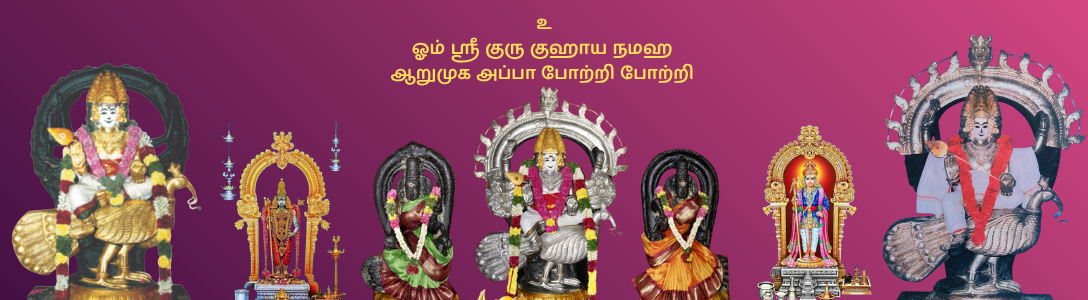
Thiruppugal 926 Niththappinikodu
மயூரகிரிநாதா உன் திருவடிகள் சரணம்
– மயூரகிரிநாதனுக்கு அரோகரா –
– குன்றக்குடி முருகனுக்கு அரோகரா –
பாடல்
தத்தத் தனதன தானன தானன
தத்தத் தனதன தானன தானன
தத்தத் தனதன தானன தானன – தனதான
நித்தப் பிணிகொடு மேவிய காயமி
தப்புப் பிருதிவி வாயுவு தேயுவு
நிற்பொற் ககனமொ டாமிவை பூதக – லவைமேவி
நிற்கப் படுமுல காளவு மாகரி
டத்தைக் கொளவுமெ நாடிடு மோடிடு
நெட்டுப் பணிகலை பூணிடு நானெனு – மடவாண்மை
எத்தித் திரியுமி தேதுபொ யாதென
வுற்றுத் தெளிவுண ராதுமெய் ஞானமொ
டிச்சைப் படஅறி யாதுபொய் மாயையி – லுழல்வேனை
எத்திற் கொடுநின தாரடி யாரொடு
முய்த்திட் டுனதரு ளாலுயர் ஞானமு
திட்டுத் திருவடி யாமுயர் வாழ்வுற – இனிதாள்வாய்
தத்தத் தனதன தானன தானன
தித்தித் திமிதிமி தீதக தோதக
டத்தக் குடகுகு தாகுட தீகுட – வெனபேரிச்
சத்தத் தொலிதிகை தாவிட வானவர்
திக்குக் கெடவரு சூரர்கள் தூள்பட
சர்ப்பச் சதமுடி நாணிட வேலதை – யெறிவோனே
வெற்றிப் பொடியணி மேனியர் கோகுல
சத்திக் கிடமருள் தாதகி வேணியர்
வெற்புப் புரமது நீறெழ காணிய – ரருள்பாலா
வெற்புத் தடமுலை யாள்வளி நாயகி
சித்தத் தமர்கும ராஎமை யாள்கொள
வெற்றிப் புகழ்கரு வூர்தனில் மேவிய – பெருமாளே.
பதம் பிரித்தது
தத்தத் தனதன தானன தானன
தத்தத் தனதன தானன தானன
தத்தத் தனதன தானன தானன – தனதான
நித்த(ம்) பிணி கொடு மேவிய காயம் இது
அப்புப் பிருதிவி வாயுவு(ம்) தேயுவு(ம்)
நில் பொன் ககனம் ஒடு ஆம் இவை பூத – கலவை மேவி
நிற்கப்படும் உலகு ஆளவும் மாகர்
இடத்தைக் கொளவுமே நாடிடும் ஓடிடு(ம்)
நெட்டுப் பணி கலை பூண் இடு நான் எனும் – மட ஆண்மை
எத்தித் திரியும் இது ஏது பொ(ய்)யாது என
உற்றுத் தெளிவு உணராது மெய் ஞானமொடு
இச்சைப் பட அறியாது பொய் மாயையில் – உழல்வேனை
எத்தில் கொடு நினது ஆர் அடியாரொடும்
உய்த்திட்டு உனது அருளால் உயர் ஞான
அமுது இட்டுத் திருவடியாம் உயர் வாழ்வு உற – இனிது ஆள்வாய்
தத்தத் தனதன தானன தானன
தித்தித் திமிதிமி தீதக தோதக
டத்தக் குடகுகு தாகுட தீகுட – என பேரி
சத்தத்து ஒலி திகை தாவிட வானவர்
திக்குக் கெட வரு(ம்) சூரர்கள் தூள்பட
சர்ப்பச் சத முடி நாணிட வேல் அதை – எறிவோனே
வெற்றிப் பொடி அணி மேனியர் கோகுல
சத்திக்கு இடம் அருள் தாதகி வேணியர்
வெற்புப் புரம் அது நீறு எழ காணியர் – அருள் பாலா
வெற்புத் தட முலையாள் வ(ள்)ளி நாயகி
சித்தத்து அமர் குமரா எமை ஆள் கொள
வெற்றிப் புகழ் கருவூர் தனில் மேவிய – பெருமாளே
English
niththap piNikodu mEviya kAyami
thappup piruthivi vAyuvu thEyuvu
niRpoR kakanamo dAmivai pUthaka – lavaimEvi
niRkap padumula kALavu mAkari
daththaik koLavume nAdidu mOdidu
nettup paNikalai pUNidu nAnenu – madavANmai
eththith thiriyumi thEthupo yAthena
vutRuth theLivuNa rAthumey njAnamo
dicchaip padaaRi yAthupoy mAyaiyi – luzhalvEnai
eththiR kodunina thAradi yArodu
muyththit tunatharu LAluyar njAnamu
thittuth thiruvadi yAmuyar vAzhvuRa – inithALvAy
thaththath thanathana thAnana thAnana
thiththith thimithimi theethaka thOthaka
daththak kudakuku thAkuda theekuda – venapEric
chaththath tholithikai thAvida vAnavar
thikkuk kedavaru cUrarkaL thULpada
sarppac chathamudi nANida vElathai – yeRivOnE
vetRip podiyaNi mEniyar GOkula
saththik kidamaruL thAthaki vENiyar
veRpup puramathu neeRezha kANiya – raruLbAlA
veRputh thadamulai yALvaLi nAyaki
siththath thamarkuma rAemai yALkoLa
vetRip pukazhkaru vUrthanil mEviya – perumALE.
English Easy Version
niththa(m) piNi kodu mEviya kAyam ithu
appup piruthivi vAyuvu(m) thEyuvu(m)
nil pon kakanam odu Am ivai pUtha – kalavai mEvi
niRkappadum ulaku ALavum mAkar
idaththaik koLavumE nAdidum Odidu(m)
nettup paNi kalai pUN idu nAn enum – mada ANmai
eththith thiriyum ithu Ethu po(y)yAthu ena
utRuth theLivu uNarAthu mey njAnamodu
icchaip pada aRiyAthu poy mAyaiyil – uzhalvEnai
eththil kodu ninathu Ar adiyArodum
uyththittu unathu aruLAl uyar njAna amuthu
ittuth thiruvadiyAm uyar vAzhvu uRa – inithu ALvAy
thaththath thanathana thAnana thAnana
thiththith thimithimi theethaka thOthaka
daththak kudakuku thAkuda theekuda – ena pEri
saththaththu oli thikai thAvida vAnavar
thikkuk keda varu(m) cUrarkaL thULpada
sarppac chatha mudi nANida vEl athai – eRivOnE
vetRip podi aNi mEniyar gOkula
saththikku idam aruL thAthaki vENiyar
veRpup puram athu neeRu ezha kANiyar – aruL pAlA
veRputh thada mulaiyAL va(L)Li nAyaki
siththaththu amar kumarA emai AL koLa
vetRip pukazh karuvUr thanil mEviya – perumALE
திருப்புகழ் 926 நித்தப் பிணிகொடு (கருவூர்) – விளக்கம்
அருணகிரிநாதர் அருளிச்செய்த திருப்புகழ் பாடல்களில் 926-வது பாடலான “நித்தப் பிணிகொடு மேவிய காயமிது…” எனத் தொடங்கும் பாடல், மனித உடலின் நிலையாமையையும், அகந்தையின் வீழ்ச்சியையும் ஆழமாகப் பதிவு செய்கிறது. தத்துவார்த்தமான சிந்தனைகளுடன் தொடங்கும் இப்பாடல், கருவூர் (கரூர்) திருத்தலத்தில் வீற்றிருக்கும் முருகப்பெருமானிடம் மெய்ஞானம் வேண்டிப் பாடும் அற்புதமான சரணாகதிப் பாடலாகும். இதன் விரிவான விளக்கம் கீழே 8 தலைப்புகளில் கொடுக்கப்பட்டுள்ளது:
1. பஞ்ச பூதங்களால் உருவான நோயுடம்பு
(நித்தப் பிணிகொடு மேவிய காயமி… பூதக லவைமேவி) மனித உடலானது நிலையானது அல்ல; அது தினந்தோறும் பல்வேறு நோய்களின் இருப்பிடமாகவே திகழ்கிறது. இந்த உடலானது அப்பு (நீர்), பிருதிவி (நிலம்), வாயு (காற்று), தேயு (நெருப்பு), மற்றும் ககனம் (ஆகாயம்) ஆகிய ஐந்து மாபெரும் பூதங்களின் ஒரு தற்காலிகக் கலவை மட்டுமேயாகும். என்றாவது ஒருநாள் பிரியப்போகும் இந்த ஐந்து பூதங்களின் சேர்க்கையைத் தான் மனிதன் ‘நான்’ என்று நம்பிக் கொண்டிருக்கிறான் என்ற ஆழமான சித்தாந்த உண்மையை அருணகிரிநாதர் முதல் வரியிலேயே உணர்த்துகிறார்.
2. உலக ஆசையும் அகந்தையும்
(நிற்கப் படுமுல காளவு மாகரி… நானெனு மடவாண்மை) இந்த உடல் நிலையற்றது என்பதை அறியாத மனிதன், நிலைத்து நிற்கும் இந்த உலகம் முழுவதையும் தான் ஒருவனே ஆள வேண்டும் என்று பேராசை கொள்கிறான். யானைகள், குதிரைகள் போன்ற பெரிய வாகனங்களை (இக்காலத்துச் செல்வங்களை) அடைய ஓடுகிறான்; நீண்ட ஆபரணங்களையும், ஆடம்பரமான ஆடைகளையும் அணிந்து கொள்கிறான். எல்லாவற்றிற்கும் மேலாக, இவை அனைத்தையும் சாதித்தது தான் தான் என்ற “நான்” என்னும் மாபெரும் அகந்தையிலும் (ஈகோ) அறியாமையிலும் மூழ்கிக் கிடக்கிறான்.
3. மெய்ஞானம் இல்லாத மாயை வாழ்க்கை
(எத்தித் திரியுமி தேதுபொ யாதென… மாயையி லுழல்வேனை) உலக ஆசைகளால் உந்தப்பட்டு, வஞ்சகமான வழிகளில் அலைந்து திரியும் மனித மனம், எது உண்மையானது, எது பொய்யானது என்று சற்றேனும் சிந்தித்துத் தெளிவு பெறுவதில்லை. அழிவற்ற மெய்ஞானத்தைப் பெற வேண்டும் என்ற விருப்பம் சிறிதும் இல்லாமல், நிலையில்லாத உலகப் பொருட்களின் மீதான பொய்யான மாயையிலேயே உழன்று, தன் வாழ்நாளை மனிதன் வீணடிக்கிறான் என்று வேதனைப்படுகிறார்.
4. அடியார் கூட்டத்தில் இணையும் பேறு
(எத்திற் கொடுநின தாரடி யாரொடு முய்த்திட் டுனதரு ளாலுயர் ஞானமு) மாயையில் உழலும் நான், இந்த அறியாமையிலிருந்து விடுபட என்ன வழி? “முருகப்பெருமானே! என்னை இந்த மாயை வலையிலிருந்து எப்போது விடுவித்து, உனது புகழைப் பாடும் உண்மையான அடியார்களின் திருக்கூட்டத்தோடு என்னைச் சேர்த்து வைப்பாய்?” என்று ஏங்குகிறார். இறைவனின் அடியார்களோடு சேர்வதே, ஒருவனைச் சிற்றின்ப மாயையிலிருந்து விடுவித்து மெய்ஞானத்தை நோக்கிய பயணத்திற்கு இட்டுச் செல்லும் முதல் படியாகும்.
5. திருவடி நிழலில் கிடைக்கும் உயர்ந்த வாழ்வு
(திட்டுத் திருவடி யாமுயர் வாழ்வுற…… இனிதாள்வாய்) உண்மையான அடியார்களுடன் சேர்ந்து, முருகப்பெருமானின் திருவருளால் மேலான மெய்ஞானம் (உயர் ஞானம்) என் உள்ளத்தில் உதிக்க வேண்டும். அந்த ஞானத்தின் மூலம், உனது தாமரை போன்ற திருவடிகளையே சரணடையும் அந்த மிக உயர்ந்த, உன்னதமான வாழ்வை நான் அடையும்படி நீ என்னை இனிமையாக ஆட்கொண்டு அருள்புரிய வேண்டும் என்று முருகனிடம் தனது இறுதிப் பிரார்த்தனையை முன்வைக்கிறார்.
6. போர்ப்பறைகளின் முழக்கமும் சூரசம்ஹாரமும்
(தத்தத் தனதன… சர்ப்பச் சதமுடி நாணிட வேலதை யெறிவோனே) இறைவனை வேண்டும் அருணகிரிநாதர், அடுத்ததாக முருகனின் மாபெரும் வீரத்தைப் போற்றுகிறார். “தத்தத் தனதன தித்தித் திமிதிமி…” என்று பலத்த ஓசையுடன் ஒலிக்கும் போர்ப் பறைகளின் முழக்கமானது எட்டுத் திசைகளிலும் எதிரொலிக்கிறது. தேவர்களுக்குத் துன்பம் தந்த சூரபத்மன் முதலான அசுரர்கள் தூளாகும்படியும், பூமியைத் தாங்கும் நூறு தலைகளைக் கொண்ட ஆதிசேஷன் நடுக்கம் கொள்ளும்படியும் தனது கூர்மையான வேலாயுதத்தைச் செலுத்திய மாவீரன் முருகன்.
7. முப்புரம் எரித்த சிவனாரின் திருமகன்
(வெற்றிப் பொடியணி மேனியர்… காணிய ரருள்பாலா) முருகனின் வீரத்திற்குப் பின், சிவபெருமானின் பெருமைகளைத் துதிக்கிறார். வெற்றியைத் தரும் திருநீற்றை உடலெங்கும் பூசியவரும், உலகைக் காக்கும் பராசக்தியான உமையவளுக்குத் தனது உடலின் இடப்பாகத்தை அளித்தவரும் (அர்த்தநாரீஸ்வரர்), ஆத்தி மலர் மாலையைச் சடாமுடியில் சூடியவரும், அசுரர்களின் மூன்று பறக்கும் நகரங்களான ‘திரிபுரத்தை’ ஒரே அம்பால் எரித்துச் சாம்பலாக்கியவருமாகிய சிவபெருமானின் அருமைப்புதல்வன் முருகவேள் ஆவான்.
8. வள்ளியம்மை மணாளனும் கருவூர் இறைவனும்
(வெற்புத் தடமுலை யாள்வளி நாயகி… வெற்றிப் புகழ்கரு வூர்தனில் மேவிய பெருமாளே) மலை போன்ற உறுதியான அன்பினைக் கொண்ட குறமகள் வள்ளியம்மையின் தூய உள்ளத்தில் எந்நேரமும் குடி கொண்டிருக்கும் அன்புமிக்க குமரனே! வெற்றிக்கும், பெரும் புகழுக்கும் இருப்பிடமாக விளங்கும் ‘கருவூர்’ (கொங்கு நாட்டுத் திருத்தலமான கரூர்) என்னும் திருத்தலத்தில் வீற்றிருந்து உலகத்து உயிர்களையெல்லாம் ஆட்கொண்டருளும் பெருமாளே! மாயையை நீக்கி எனக்கு ஞானத்தை அருள வேண்டும் எனப் பாடலை நிறைவு செய்கிறார்.
சுருக்கம்
கருவூர் திருத்தலத்து முருகப்பெருமானைப் போற்றும் இத்திருப்புகழ், மனிதப் பிறவியின் நிலையாமையையும், மெய்ஞானத்தின் தேவையையும் வலியுறுத்துகிறது. பஞ்ச பூதங்களால் உருவாக்கப்பட்ட இந்த நோயுடம்பை நிரந்தரம் என நம்பி, உலகை ஆளும் பேராசையிலும், “நான்” என்னும் அகந்தையிலுமே மனிதன் உழல்கிறான். எது உண்மை, எது பொய் என அறியாத இந்த மாயையிலிருந்து என்னை விடுவித்து, உனது அடியார் கூட்டத்தில் சேர்த்து, மெய்ஞானத்தை வழங்கித் திருவடி நிழலைத் தந்தருள வேண்டும் என்று அருணகிரிநாதர் இறைஞ்சுகிறார். அசுரர்களை அழித்த வேலின் வீரத்தையும், முப்புரம் எரித்த சிவபெருமானின் திருமகன் என்பதையும், வள்ளியம்மையின் உள்ளத்தில் வாழ்பவன் என்பதையும் கூறி, கருவூரில் வீற்றிருக்கும் முருகப்பெருமானிடம் முழுமையான சரணாகதி அடைவதே இப்பாடலின் உயர்ந்த தத்துவமாகும்.
The Essence of Thiruppugazh 926 nittap piNik^oTu (karuvUr)
Here is a deep and detailed explanation of Saint Arunagirinathar’s Thiruppugazh 926, structured across eight thematic headings and followed by a comprehensive summary.
1. The Fragility and Elemental Nature of the Body
The hymn begins by stripping away the illusions we hold about human physical existence. Arunagirinathar describes the human body not as a permanent or glorious vessel, but as an entity constantly afflicted by daily diseases and suffering. He breaks down the body to its fundamental cosmic components, explaining that it is merely a temporary amalgamation of the five elements: Appu (water), Prithvi (earth), Vayu (air), Theyu (fire), and Kaganam (ether or space). By reducing the human form to these basic elements, the poet immediately establishes the impermanence and fragility of physical life.
2. The Vain Arrogance of the Human Ego
Despite occupying such a fragile, disease-prone body, the human mind is often consumed by a massive, unwarranted ego. Arunagirinathar vividly depicts the delusions of grandeur that plague humanity. Driven by the arrogant thought of “I” and “Mine,” a person desires to conquer and rule the entire world. They endlessly chase after grand possessions like majestic elephants and swift horses (symbols of wealth and power), and adorn themselves with long, heavy ornaments and luxurious clothes. This pursuit is exposed as a foolish manifestation of false pride.
3. Wandering Blindly in the Illusion of Maya
Because of this unchecked ego and materialistic greed, the human soul wanders aimlessly through life, engaging in deceit and trickery to fulfill its desires. The poet laments that humanity lacks the spiritual clarity to differentiate between what is true (the eternal Divine) and what is false (the temporary world). Completely devoid of true wisdom (Jnana) and with no genuine desire to attain it, the individual becomes hopelessly trapped in the blinding, deceptive web of Maya (worldly illusion).
4. A Piteous Plea for Divine Association and Wisdom
Realizing the sheer futility of a life lived in ego and illusion, the poet shifts from philosophical observation to a desperate, heartfelt prayer. He asks Lord Murugan, “When will You rescue me from this deceitful wandering and place me amidst the holy gathering of Your true devotees?” Arunagirinathar recognizes that associating with the spiritually enlightened is the first step toward salvation. He begs the Lord to bless him with supreme, exalted wisdom so that he may transcend this worldly existence and attain the highest life—finding eternal refuge at the Lord’s holy feet.
5. The Thundering Rhythms of the Cosmic Battlefield
In the second half of the hymn, the tone shifts dramatically from a quiet, introspective prayer to the fierce, electrifying energy of a cosmic battlefield. Arunagirinathar employs brilliant rhythmic onomatopoeia—“Thaththath thanathana thAnana thAnana, thiththith thimithimi…”—to recreate the deafening, heart-pounding sounds of massive war drums (Bheri). This rhythmic cadence captures the unstoppable martial force of Lord Murugan’s divine army marching to restore cosmic order.
6. The Supreme Power of the Divine Spear (Vel)
The deafening roar of the war drums echoes across all the directions of the universe. Arunagirinathar describes the awe-inspiring moment when Lord Murugan unleashes His sacred weapon, the Vel (spear). The sheer force of His assault shatters the wicked demons (Suras)—who had ruined the celestial realms and tortured the Devas—into absolute dust. The impact of His cosmic warfare is so intense that even Adisesha, the mighty hundred-headed serpent who bears the weight of the world, shrinks and trembles in fear.
7. The Glorious Lineage of the Son of Shiva
To elevate the greatness of Lord Murugan, the poet praises His divine father, Lord Shiva. Murugan is hailed as the radiant son of the Supreme Lord who smears His body with the victorious holy ash (Vibhuti). Shiva is described as the compassionate one who gave the left half of His body to Goddess Shakti (the Ardhanarishvara form), who wears the sacred Athi flower in His matted hair, and whose mere laughter burned the three flying demonic cities (Tripura) to ashes. By invoking these majestic attributes of Shiva, the poet emphasizes Murugan’s supreme, invincible lineage.
8. The Lord of Valli and the Sovereign of Karuvur
The hymn concludes by softening the martial imagery with divine romance and localized devotion. Lord Murugan is addressed as the beloved Kumara who permanently resides in the pure, devoted heart of Goddess Valli, the beautiful huntress maiden. Finally, Arunagirinathar surrenders completely to this great Lord—who is simultaneously the cosmic warrior, the source of supreme wisdom, and the romantic consort—acknowledging Him as the presiding deity who graciously resides in the victorious and glorious town of Karuvur (modern-day Karur).
Summary
Thiruppugazh 926 is a profound spiritual composition that contrasts the fragile, ego-driven nature of human life with the supreme power and grace of the Divine. The first half of the hymn serves as a philosophical wake-up call. It reminds us that our bodies are just temporary mixtures of the five elements, yet we foolishly let our egos drive us to chase worldly wealth, power, and illusions. Seeking an escape from this ignorance, Arunagirinathar prays for true wisdom and the company of pure devotees. The second half of the song erupts into a rhythmic, martial glorification of Lord Murugan. It praises His battlefield prowess, the thundering sound of His war drums, and the destructive power of His Vel that turned the demons to dust. Acknowledging Murugan as the glorious son of Lord Shiva and the beloved residing in the heart of Goddess Valli, the hymn ends with a complete surrender to the Great Lord who presides over the sacred town of Karuvur.