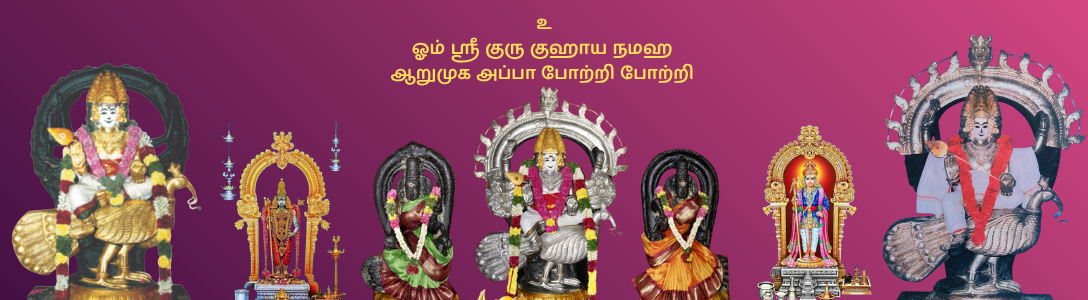
Thiruppugal 959 Pazhipparvazhththuvar
மயூரகிரிநாதா உன் திருவடிகள் சரணம்
– மயூரகிரிநாதனுக்கு அரோகரா –
– குன்றக்குடி முருகனுக்கு அரோகரா –
பாடல்
தனத்த தாத்தன தனதன தனதன
தனத்த தாத்தன தனதன தனதன
தனத்த தாத்தன தனதன தனதன – தனதனத் தனதான
பழிப்பர் வாழ்த்துவர் சிலசில பெயர்தமை
ஒருத்தர் வாய்ச்சுரு ளொருவர்கை யுதவுவர்
பணத்தை நோக்குவர் பிணமது தழுவுவர் – அளவளப் பதனாலே
படுக்கை வீட்டினு ளவுஷத முதவுவர்
அணைப்பர் கார்த்திகை வருதென வுறுபொருள்
பறிப்பர் மாத்தையி லொருவிசை வருகென – அவரவர்க் குறவாயே
அழைப்ப ராஸ்திகள் கருதுவ ரொருவரை
முடுக்கி யோட்டுவ ரழிகுடி யரிவையர்
அலட்டி னாற்பிணை யெருதென மயலெனு – நரகினிற் சுழல்வேனோ
அவத்த மாய்ச்சில படுகுழி தனில்விழும்
விபத்தை நீக்கியு னடியவ ருடனெனை
அமர்த்தி யாட்கொள மனதினி லருள்செய்து – கதிதனைத் தருவாயே
தழைத்த சாத்திர மறைபொரு ளறிவுள
குருக்கள் போற்சிவ நெறிதனை யடைவொடு
தகப்ப னார்க்கொரு செவிதனி லுரைசெய்த – முருகவித் தகவேளே
சமத்தி னாற்புகழ் சனகியை நலிவுசெய்
திருட்டு ராக்கத னுடலது துணிசெய்து
சயத்த யோத்தியில் வருபவ னரிதிரு – மருமகப் பரிவோனே
செழித்த வேற்றனை யசுரர்க ளுடலது
பிளக்க வோச்சிய பிறகம ரர்கள்பதி
செலுத்தி யீட்டிய சுரபதி மகள்தனை – மணமதுற் றிடுவோனே
திறத்தி னாற்பல சமணரை யெதிரெதிர்
கழுக்க ளேற்றிய புதுமையை யினிதொடு
திருத்த மாய்ப்புகழ் மதுரையி லுறைதரும் – அறுமுகப் பெருமாளே.
பதம் பிரித்தது
தனத்த தாத்தன தனதன தனதன
தனத்த தாத்தன தனதன தனதன
தனத்த தாத்தன தனதன தனதன – தனதனத் தனதான
பழிப்பர் வாழ்த்துவர் சிலசில பெயர்தமை
ஒருத்தர் வாய்ச்சுருள் ஒருவர் கை உதவுவர்
பணத்தை நோக்குவர் பிணமது தழுவுவர் – அளவளப் பதனாலே
படுக்கை வீட்டினுள் அவுஷதம உதவுவர்
அணைப்பர் கார்த்திகை வருது என உறு பொருள்
பறிப்பர் மாத்தையில் ஒருவிசை வருக என – அவரவர்க்கு உறவாயே
அழைப்பர் ஆஸ்திகள் கருதுவர் ஒருவரை
முடுக்கி ஓட்டுவர் அழிகுடி அரிவையர்
அலட்டினால் பிணை எருது என மயல் எனும் – நரகினில் சுழல்வேனோ
அவத்தமாய்ச் சில படு குழி தனில் விழும்
விபத்தை நீக்கி உன் அடியவர் உடன் எனை
அமர்த்தி ஆட் கொள மனதினில் அருள் செய்து கதி – தனைத் தருவாயே
தழைத்த சாத்திர மறை பொருள் அறிவு உள
குருக்கள் போல் சிவ நெறி தனை அடைவொடு
தகப்பனார்க்கு ஒரு செவி தனில் உரை செய்த – முருக வித்தக வேளே
சமத்தினால் புகழ் சனகியை நலிவு செய்
திருட்டு ராக்கதன் உடல் அது துணி செய்து
சயத்து அயோத்தியில் வருபவன் அரி திரு மருமகப் – பரிவோனே
செழித்த வேல் தனை அசுரர்கள் உடல் அது
பிளக்க ஓச்சிய பிறகு அமரர்கள் பதி
செலுத்தி ஈட்டிய சுர பதி மகள் தனை – மணம் அது உற்றிடுவோனே
திறத்தினால் பல சமணரை எதிர் எதிர்
கழுக்கள் ஏற்றிய புதுமையை இனிதொடு
திருத்தமாய்ப் புகழ் மதுரையில் உறை தரும் அறுமுகப் – பெருமாளே
English
pazhippar vAzhththuvar silasila peyarthamai
oruththar vAycchuru Loruvarkai yuthavuvar
paNaththai nOkkuvar piNamathu thazhuvuvar – aLavaLap pathanAlE
padukkai veettinu Lavushatha muthavuvar
aNaippar kArththikai varuthena vuRuporuL
paRippar mAththaiyi loruvisai varukena – avaravark kuRavAyE
azhaippa rASthikaL karuthuva roruvarai
mudukki yOttuva razhikudi yarivaiyar
alatti nARpiNai yeruthena mayalenu – narakiniR chuzhalvEnO
avaththa mAycchila padukuzhi thanilvizhum
vipaththai neekkiyu nadiyava rudanenai
amarththi yAtkoLa manathini laruLseythu – kathithanaith tharuvAyE
thazhaiththa sAththira maRaiporu LaRivuLa
kurukkaL pORchiva neRithanai yadaivodu
thakappa nArkkoru sevithani luraiseytha – murukavith thakavELE
samaththi nARpukazh sanakiyai nalivusey
thiruttu rAkkatha nudalathu thuNiseythu
sayaththa yOththiyil varupava narithiru – marumakap parivOnE
sezhiththa vEtRanai yasurarka Ludalathu
piLakka vOcchiya piRakama rarkaLpathi
seluththi yeettiya surapathi makaLthanai – maNamathut RiduvOnE
thiRaththi nARpala samaNarai yethirethir
kazhukka LEtRiya puthumaiyai yinithodu
thiruththa mAyppukazh mathuraiyi luRaitharum – aRumukap perumALE.
English Easy Version
pazhippar vAzhththuvar silasila peyarthamai
oruththar vAycchuruL oruvar kai uthavuvar
paNaththai nOkkuvar piNamathu thazhuvuvar – aLavaLap pathanAlE
padukkai veettinuL avushatham uthavuvar
aNaippar kArththikai varuthu ena uRu poruL
paRippar mAththaiyil oruvisai varuka ena – avaravarkku uRavAyE
Azhaippar ASthikaL karuthuvar oruvarai
mudukki Ottuvar azhikudi arivaiyar
alattinAl piNai eruthu ena mayal enum – narakinil suzhalvEnO
avaththamAyc chila padu kuzhi thanil vizhum
vipaththai neekki un adiyavar udan enai
amarththi Ad koLa manathinil aruL seythu – kathi thanaith tharuvAyE
thazhaiththa sAththira maRai poruL aRivu uLa
kurukkaL pOl siva neRi thanai adaivodu
thakappanArkku oru sevi thanil urai seytha muruka – viththaka vELE
samaththinAl pukazh sanakiyai nalivu sey
thiruttu rAkkathan udal athu thuNi seythu
sayaththu ayOththiyil varupavan ari thiru – marumakap parivOnE
sezhiththa vEl thanai asurarkaL udal athu
piLakka Occhiya piRaku amararkaL pathi
Seluththi eettiya sura pathi makaL thanai – maNam athu utRiduvOnE
thiRaththinAl pala samaNarai ethir ethir
kazhukkaL EtRiya puthumaiyai inithodu
thiruththamAyp pukazh mathuraiyil uRai tharum – aRumukap perumALE
திருப்புகழ் 959 பழிப்பர் வாழ்த்துவர் (மதுரை) – விளக்கம்
அருணகிரிநாதர் அருளிய திருப்புகழ் பாடல்களில், மதுரைத் திருத்தலத்தின் மீது பாடப்பட்ட “பழிப்பர் வாழ்த்துவர்” எனத் தொடங்கும் இப்பாடல் (திருப்புகழ் 959) மிகவும் ஆழமான பொருளைக் கொண்டது. உலக இன்பங்களின் நிலையாமையையும், விலைமாதர்களின் வஞ்சகத்தையும் விளக்கி, அதிலிருந்து விடுபட்டு இறைவனின் திருவடிகளை அடைய வழிகாட்டும் இப்பாடலின் விரிவான விளக்கம் கீழே 8 தலைப்புகளில் கொடுக்கப்பட்டுள்ளது.
1. விலைமாதரின் வஞ்சக இயல்பு
இப்பாடலின் முதல் பகுதியில் அருணகிரிநாதர், பொருளுக்காக உடலை விற்கும் விலைமாதர்களின் தீய குணங்களைக் கடுமையாகச் சாடுகிறார். அவர்கள் சிலரைத் தூற்றுவார்கள், வசதியுள்ள சிலரைப் புகழ்வார்கள். ஒருவருடைய வாயில் மென்ற வெற்றிலைச் சுருளை மற்றொருவருக்குக் கொடுத்து காமத்தை மையமாக வைத்து மயக்குவார்கள். பணத்தை மட்டுமே முழுமையான குறியாகக் கொண்ட இவர்கள், தங்களுக்குப் பணம் கிடைக்கும் என்றால் உயிரற்ற பிணத்தைக் கூட கட்டித் தழுவத் தயங்க மாட்டார்கள்.
2. பொருளாசையும் போலி அன்பும்
தங்களிடம் வரும் ஆடவர்களை மயக்குவதற்காகப் படுக்கை அறையில் காமத்தைத் தூண்டும் பல வகையான மருந்துகளைக் கொடுப்பார்கள்; அவர்களை அன்பாக அணைப்பது போல் நடிப்பார்கள். கார்த்திகை போன்ற பண்டிகைகள் வருகின்றன என்று பொய்யான காரணங்களைக் கூறி, ஆடவர்களிடம் உள்ள செல்வங்களை எல்லாம் தந்திரமாகப் பறிப்பார்கள். ஒவ்வொரு சமயத்தில் ஒவ்வொருவரைத் தங்கள் வீட்டிற்கு ரகசியமாக அழைத்து, அனைவரிடமும் தாங்கள் மிகவும் உறவுடையவர்கள் போலப் போலியாகப் பழகுவார்கள்.
3. காம நரகத்தில் உழலும் நிலை
இவர்கள் ஆடவர்களின் சொத்துக்களைப் பறிக்க அவர்களைத் தேடி அழைப்பார்கள்; பொருள் முழுமையாகத் தீர்ந்தவுடன் அவர்களைக் கடுமையாக முடுக்கி விரட்டி அடிப்பார்கள். இவ்வாறு பலரது குடும்பங்களை அழிக்கும் இத்தகைய பெண்களின் மாய வலையில் விழுந்து, வண்டியில் பூட்டப்பட்ட பிணை எருது போலத் துன்புற்று, நான் காமம் என்னும் கொடிய நரகத்தில் சுழன்று அழியலாமா? என்று கவிஞர் உலக மாந்தர்களின் சார்பாகத் தம்மை முன்னிலைப்படுத்தி முருகனிடம் முறையிடுகிறார்.
4. அடியவர் கூட்டத்தில் சேர்க்க வேண்டுதல்
வீணான இந்த காமப் படுகுழியில் விழும் விபத்திலிருந்து என்னை நீக்க வேண்டும். உன்னுடைய உண்மையான, தூய்மையான அடியவர்கள் கூட்டத்தில் என்னையும் ஒருவனாகச் சேர்த்து ஆட்கொள்ள வேண்டும். என் மனதிற்கு நல்லருள் செய்து, பிறவிப் பெருங்கடலைத் தாண்டி நிலையான முக்தி என்னும் நற்கதியை எனக்குத் தந்தருள வேண்டும் என்று முருகப்பெருமானிடம் அருணகிரிநாதர் மனம் உருகி வேண்டுகிறார்.
5. தந்தைக்கு உபதேசம் செய்த ஞான குரு
தழைத்தோங்கிய வேதங்கள் மற்றும் சாத்திரங்களின் ஆழமான மறைபொருளை முழுமையாக அறிந்த சிறந்த குருநாதராக விளங்குபவர் முருகப்பெருமான். அவர், சிவபெருமானுக்கு ஒப்பற்ற பிரணவ மந்திரத்தின் (ஓம்) பொருளை அவருடைய ஒரு காதில் உபதேசம் செய்து, சிறந்த சிவ நெறியை உலகிற்கு உணர்த்திய ஞான வடிவானவர். அத்தகைய அளப்பரிய அறிவைக் கொண்ட வித்தக வேளே என்று முருகனைப் போற்றுகிறார்.
6. திருமாலின் அன்புக்குரிய மருகன்
தனது வலிமையால் புகழ்வாய்ந்த சீதாதேவிக்குத் துன்பம் செய்த திருட்டுப் புத்தியுடைய அரக்கனான இராவணனின் உடலைத் துண்டு துண்டாக வெட்டி அழித்தவர் ஸ்ரீராமர். பின்னர் வெற்றி வீரராகத் தர்மத்தை நிலைநாட்டி அயோத்திக்குத் திரும்பிய அந்த திருமாலின் அன்புக்குரிய மருமகனே முருகப்பெருமான் ஆவார் எனப் புகழ்கிறார்.
7. அசுரர்களை அழித்து தெய்வானையை மணந்த வீரம்
அசுரர்களான சூரபத்மன் மற்றும் அவன் சுற்றத்தாரின் உடல்கள் பிளந்து அழியுமாறு செழிப்பான வேலாயுதத்தை வீசியவர் முருகவேள். அதன் பின், தேவர்களின் தலைவனான இந்திரனை அவனது அமராவதி பட்டணத்தில் மீண்டும் அரசனாகக் குடி அமர்த்தி, அந்த இந்திரனின் மகளான தெய்வானையைத் திருமணம் செய்துகொண்ட வெற்றி வீரர் அவர் என்பதை இப்பாடல் வரிகள் நினைவூட்டுகின்றன.
8. மதுரையில் வீற்றிருக்கும் ஆறுமுகப் பெருமான்
தமது சிறந்த திறமையால், சைவ நெறிக்கு எதிராக வாதிட்ட பல சமணர்களை எதிர்த்து நின்று, அவர்களைக் கழுமரத்தில் ஏற்றிய அற்புதத்தை நிகழ்த்திய திருஞானசம்பந்தராக அவதரித்தவர் முருகப்பெருமான். அத்தகைய சிறப்புமிக்க, திருத்தமாகப் புகழப்படும் மதுரை மாநகரில் விரும்பி வீற்றிருக்கும் ஆறுமுகப் பெருமானே! எனக்கு நற்கதி தந்து அருள வேண்டும் எனப் பாடலை நிறைவு செய்கிறார்.
சுருக்கம்
இத்திருப்புகழில் அருணகிரிநாதர், பணத்துக்காகப் போலியாக அன்பு காட்டி ஆடவர்களின் பொருளைப் பறித்து அவர்களின் குடும்பங்களை அழிக்கும் விலைமாதர்களின் மாய வலையில் வீழ்ந்து சீரழியாமல் என்னைக் காக்க வேண்டும் என்று இறைவனிடம் வேண்டுகிறார். தம்மைத் தூய்மையான அடியவர் கூட்டத்தில் சேர்த்து முக்தி தர வேண்டும் என்று முருகனிடம் கோருகிறார். தந்தையான சிவபெருமானுக்கே பிரணவ உபதேசம் செய்த ஞான குருவாகவும், சீதையை மீட்ட திருமாலின் மருமகனாகவும், சூரபத்மனை அழித்து தேவர்களைக் காத்து தெய்வானையை மணந்த வீரனாகவும், மதுரையில் சமணர்களை வென்ற திருஞானசம்பந்தரின் வடிவாகவும் முருகப்பெருமானைப் போற்றிப் பாடி, அந்த ஆறுமுகனின் கருணையை இறைஞ்சுகிறார்.
The Essence of Thiruppugazh 959 pazhippar vAzhttuvar (Madurai)
Here is a deep, paragraph-by-paragraph explanation of Thiruppugazh 959 (“Pazhippar Vazhthuvar”), composed by the revered saint Arunagirinathar. In this powerful hymn, the poet contrasts the deceptive, destructive nature of worldly lust with the supreme wisdom, valor, and grace of Lord Murugan residing in the ancient city of Madurai.
1. The Deceitful Nature of Materialistic Courtesans
The hymn opens with a stark, unvarnished depiction of courtesans whose sole motivation is the extraction of wealth. Arunagirinathar describes how these women manipulate their patrons: they will arbitrarily mock some while excessively praising others just to serve their financial interests. To create a false sense of intimacy, they might take a chewed betel leaf from their own mouth and offer it to a man. Their focus is so intensely fixed on material gain that they would willingly embrace a lifeless corpse if it meant acquiring its riches.
2. False Affection and Exploitation of Wealth
Moving into the private chambers, the poet details the calculated seduction employed by these women. Inside their bedrooms, they offer aphrodisiacs and feign deep, passionate affection. However, this is merely a ploy to extract more wealth. They invent clever excuses, such as claiming they need money to celebrate upcoming festivals like Karthigai, to siphon away their patrons’ hard-earned possessions. To maintain the illusion of exclusivity and keep the money flowing, they carefully schedule their clients, secretly asking each one to come at a different time while pretending to be deeply devoted to them.
3. The Destruction of Families and the Hell of Lust
Arunagirinathar exposes the brutal endgame of this transactional affection. These women actively seek out men with vast ancestral properties and estates. Once a man’s wealth is entirely depleted, they abruptly drop their facade of love and ruthlessly chase him away. This vicious cycle destroys noble families and ruins lives. The poet, acting as a representative of vulnerable humanity, laments this tragic state. He asks the Lord if he is doomed to suffer like a yoked ox, blindly walking in endless circles, trapped in the agonizing hell of lust and delusion.
4. A Sincere Plea for Divine Rescue and Salvation
Having described the dark pit of earthly temptations, the poet urgently shifts his focus toward divine grace. He humbly begs Lord Murugan to rescue him from the fatal disaster of falling into this useless, destructive pit of sensory illusion. He asks the Lord to purify his mind, steady his wandering thoughts, and grant him a permanent place amidst His true, holy devotees. Ultimately, Arunagirinathar is pleading for “Gathi”—the ultimate spiritual liberation and sanctuary at the Lord’s holy feet.
5. The Supreme Guru to Lord Shiva
To invoke the Lord’s grace, the poet begins reciting His magnificent attributes, starting with His unparalleled wisdom. Lord Murugan is celebrated as the ultimate repository of knowledge, perfectly understanding the deep, hidden meanings of the flourishing Vedas and Shastras. He is the divine child who functioned as the supreme Guru to His own father, Lord Shiva. With absolute perfection and clarity, Murugan whispered the profound secret of the Pranava Mantra (Om) into Shiva’s ear, establishing Himself as the Lord of Supreme Wisdom.
6. The Beloved Nephew of Lord Rama
The hymn then connects Lord Murugan to the great Vaishnavite traditions, highlighting the unity of the divine. Arunagirinathar praises Lord Vishnu (Hari), who incarnated as Lord Rama. With immense skill and valor, Rama destroyed the thieving demon Ravana, who had deceitfully abducted and tormented the renowned Sita (Janaki). After securing victory, Rama returned triumphantly to Ayodhya. Lord Murugan is affectionately addressed as the beloved nephew of this victorious, righteous Lord Hari.
7. The Victorious Warrior and Consort of Deivanai
The poet recalls Murugan’s own legendary martial exploits in saving the celestial beings. When the ruthless Asuras (demons like Surapadman) threatened the universe, Lord Murugan hurled His mighty and flourishing spear, the Vel, completely splitting their bodies and destroying their tyranny. Following this monumental victory, He restored the Devas to their heavenly capital, Amaravati. In gratitude, Indra, the king of the Devas, offered his daughter Deivanai in marriage to the Lord, an act that symbolizes the union of divine grace and heavenly prosperity.
8. The Divine Miracle in the City of Madurai
In the final lines, the hymn grounds the Lord’s presence in the sacred city of Madurai. Arunagirinathar references a historical miracle associated with Lord Murugan’s incarnation as the child-saint Thirugnana Sambandar. Through His supreme intellectual and spiritual prowess, Sambandar engaged in fierce philosophical debates with the Jains in Madurai, successfully defending the Saiva tradition. This led to the defeated opponents being impaled on stakes, a well-known legend in Tamil Saivite history. The poet concludes by bowing to this glorious, six-faced Lord (Arumugan) who resides gracefully in the orderly and highly praised city of Madurai.
Summary
Thiruppugazh 959 is a profound spiritual plea that starkly contrasts the destructive illusion of worldly lust with the liberating grace of the Divine. Arunagirinathar begins by vividly warning humanity about the manipulative and financially draining nature of materialistic courtesans, who ruin families and leave men suffering like trapped animals. Realizing the danger of this earthly pit, the poet begs for spiritual rescue and a place among genuine devotees. He then elevates his mind by praising Lord Murugan’s ultimate glories: His supreme wisdom in teaching Lord Shiva, His kinship as the nephew of the victorious Lord Rama, His martial triumph over the Asuras to protect the heavens, and His earthly miracles in the renowned city of Madurai. Through this hymn, the poet guides the soul away from sensory destruction and toward eternal, divine salvation.