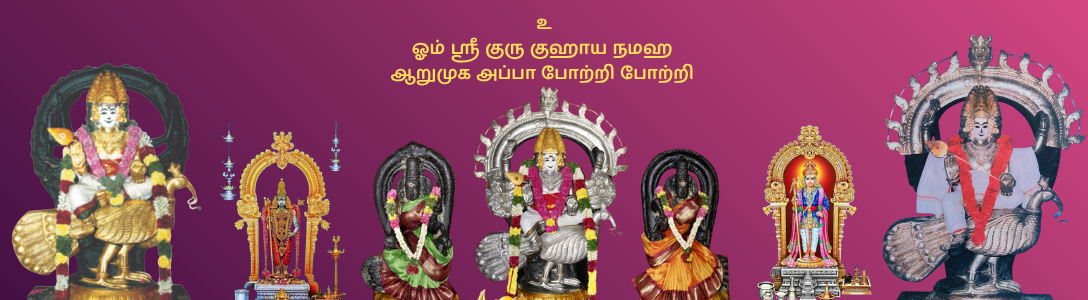
Thiruppugal 965 Neethaththuvamagi
மயூரகிரிநாதா உன் திருவடிகள் சரணம்
– மயூரகிரிநாதனுக்கு அரோகரா –
– குன்றக்குடி முருகனுக்கு அரோகரா –
பாடல்
தானத் தனதான தானத் – தனதான
நீதத் துவமாகி .. நேமத் – துணையாகிப்
பூதத் தயவான .. போதைத் – தருவாயே
நாதத் தொனியோனே .. ஞானக் – கடலோனே
கோதற் றமுதானே .. கூடற் – பெருமாளே.
பதம் பிரித்தது
தானத் தனதான தானத் – தனதான
நீதத் துவமாகி நேமத் – துணையாகி
பூதத் தயவான போதைத் – தருவாயே
நாதத் தொனியோனே ஞானக் – கடலோனே
கோதற்ற அமுதானே கூடற் – பெருமாளே
English
nee thath thuvamAgi nEmath – thuNaiyAgi
bUthath dhayavAna bOdhaith – tharuvAyE
nAdhath dhoniyOnE nyAnak – kadalOnE
kOdhatr amudhAnE kUdaR – perumALE.
English Easy Version
neethath thuvamAgi nEmath – thuNaiyAgi
bUthath dhayavAna bOdhaith – tharuvAyE
nAdhath dhoniyOnE nyAnak – kadalOnE
kOdhatr amudhAnE kUdaR – perumALE
திருப்புகழ் 965 நீதத்துவமாகி (மதுரை) – விளக்கம்
அருணகிரிநாதர் அருளிச்செய்த திருப்புகழில், முத்தமிழ் வளர்க்கும் மதுரை (கூடல் மாநகர்) திருத்தலத்தில் பாடப்பட்ட “நீதத்துவமாகி” என்று தொடங்கும் 965-வது திருப்புகழ் மிகவும் சுருக்கமான வரிகளைக் கொண்டிருந்தாலும், அளப்பரிய தத்துவச் செறிவைக் கொண்டதாகும். இறைவனிடம் உயர்ந்த நற்பண்புகளையும் மெய்ஞானத்தையும் வேண்டிப் பாடப்பட்ட இப்பாடலின் விரிவான விளக்கம் கீழே 8 தலைப்புகளில் கொடுக்கப்பட்டுள்ளது:
1. பாடல் முன்னுரை மற்றும் அமைப்பு
மதுரை மீனாட்சி சுந்தரேஸ்வரர் திருக்கோயிலில் (கூடல் மாநகர்) பாடப்பட்ட இத்திருப்புகழ், வெறும் நான்கு வரிகளைக் கொண்ட மிகச் சிறிய பாடலாகும். அளவால் சிறியதாக இருந்தாலும், அறநெறி, ஒழுக்கம், உயிரிரக்கம் மற்றும் மெய்ஞானம் ஆகிய நான்கு மாபெரும் வாழ்வியல் மற்றும் ஆன்மீகத் தத்துவங்களை இந்த ஒற்றைப் பாடலில் அருணகிரிநாதர் அடக்கியுள்ளார். இறைவனின் பேரருளைப் போற்றுவதோடு மட்டுமின்றி, ஒரு மனிதன் எப்படி வாழ வேண்டும் என்ற உபதேசத்தையும் இப்பாடல் முன்வைக்கிறது.
2. அறத்தின் தத்துவமாக விளங்கும் இறைவன் (நீதத்துவமாகி)
“நீதத்துவமாகி” என்ற சொல்லின் மூலம், இறைவனே உலகத்தின் நீதியாகவும், அறத்தின் தத்துவமாகவும் விளங்குகிறான் என்பதை அருணகிரிநாதர் பதிவு செய்கிறார். நீதி, நேர்மை, தர்மம் ஆகிய நற்பண்புகளின் முழு உருவமாக முருகப்பெருமான் திகழ்கிறார். உலக உயிர்கள் அனைத்தும் தர்ம நெறியில் இயங்குவதற்குக் காரணமான ஆணிவேராக விளங்கும் அந்தப் பரம்பொருளே நீதியின் முழுமையான தத்துவமாக இருக்கிறான் என்பதை இப்பகுதி உணர்த்துகிறது.
3. நல்வழிக்குத் துணையாக நிற்கும் நாதன் (நேமத்துணையாகி)
“நேமம்” என்பது நியமம் எனப்படும் நன்னெறி, விரதம் அல்லது ஒழுக்கத்தைக் குறிக்கும். ஒரு மனிதன் தன் வாழ்வில் நல்வழியில் செல்லவும், ஆன்மீகப் பாதையில் ஒழுக்கத்துடன் (நியமத்துடன்) பயணிக்கவும் இறைவனின் துணை மிக அவசியம். தர்ம வழியில் நடப்பவர்களுக்கும், விரதங்களைக் கடைப்பிடித்து தூய்மையாக வாழ நினைப்பவர்களுக்கும் முருகப்பெருமான் உற்ற துணையாக நின்று அவர்களை வழிநடத்துகிறான் என்பதை “நேமத் துணையாகி” என்ற வார்த்தை ஆழமாக உணர்த்துகிறது.
4. அனைத்து உயிர்களிடத்தும் அன்பு (பூதத் தயவான)
“பூதத் தயவான” என்பது “ஜீவகாருண்யம்” எனப்படும் அனைத்து உயிர்களிடத்தும் அன்பு செலுத்தும் உயர்ந்த பண்பைக் குறிக்கிறது. ‘பூதம்’ என்பது இங்கு உலகில் வாழும் அனைத்து உயிரினங்களையும் (பஞ்ச பூதங்களால் ஆன உடலைக் கொண்டவை) குறிக்கும். மனிதர்கள் மீது மட்டுமின்றி, ஓரறிவு உயிர் முதல் ஆறறிவு மனிதன் வரை அனைத்து உயிர்களிடத்தும் பாரபட்சமின்றிப் பரிவும், தயவும் காட்டும் உயர்ந்த உயிரிரக்கப் பண்பை அருணகிரிநாதர் இங்கு குறிப்பிடுகிறார்.
5. தூய உபதேசத்தை அருள வேண்டுதல் (போதைத் தருவாயே)
இறைவன் எவ்வாறு நீதியின் வடிவமாகவும், உயிர்களிடத்தில் அன்பு கொண்டவனாகவும் இருக்கிறானோ, அதே குணங்களை அடியேனுக்கும் தந்து அருள வேண்டும் என்று கவிஞர் வேண்டுகிறார். “போதை” என்பது இங்கு “உபதேசம்” அல்லது “ஞானம்” என்று பொருள்படும். நீதி தவறாத நேர்மையும், நன்னெறியில் நிற்கும் உறுதியும், அனைத்து உயிர்களையும் தன்னுயிர் போல் எண்ணும் இரக்க குணமும் எனக்கு வருமாறு நீ நல்ல உபதேசத்தை (ஞானத்தை) எனக்குத் தந்தருள வேண்டும் என்று ஆத்மார்த்தமாகப் பிரார்த்திக்கிறார்.
6. பிரணவ நாதத்தின் நாயகன் (நாதத் தொனியோனே)
இறைவனின் பெருமையைப் போற்றும் கவிஞர், அவனை “நாதத் தொனியோனே” என்று அழைக்கிறார். பிரபஞ்சத்தின் தொடக்கமாகிய ஓம்காரம் எனப்படும் ‘பிரணவ நாதத்தின்’ வடிவமாக முருகப்பெருமான் திகழ்கிறான். தந்தை சிவபெருமானுக்கே பிரணவ மந்திரத்தின் பொருளை உபதேசித்த சுவாமிமலை நாதனான குமரக் கடவுள், அனைத்து ஒலிகளுக்கும், வேதங்களுக்கும் மூலமான நாதப் பிரம்மமாக விளங்குகிறான் என்பதை இப்பகுதி சிறப்பிக்கிறது.
7. எல்லையில்லா ஞானப் பெருங்கடல் (ஞானக் கடலோனே)
உலகியல் அறிவு என்பது சிறிய குட்டை போன்றது, ஆனால் இறைவனின் அறிவோ அளவிட முடியாதது. எனவே முருகப்பெருமானை “ஞானக் கடலோனே” என்று புகழ்கிறார். அலைகள் வீசும் பரந்த கடல் எவ்வாறு ஆழமும் எல்லையும் அற்றதோ, அதே போல முருகப்பெருமானின் மெய்ஞானமும் அளவிட முடியாதது. அந்த ஞானக் கடலிடம் இருந்து தனக்கும் தெளிவான அறிவைத் தருமாறு கவிஞர் உருக்கமாக இறைஞ்சுகிறார்.
8. குற்றமற்ற அமுதமும் கூடல் பெருமானும்
இறுதியாக “கோதற்ற அமுதானே கூடற் பெருமாளே” என்று பாடி முடிக்கிறார். ‘கோது’ என்றால் குற்றம் அல்லது குறை என்று பொருள். எந்தவிதமான குறையும், மாசும் இல்லாத தூய்மையான, இனிமையான அமுதம் போன்றவன் முருகப்பெருமான். அந்த இறையமுதம், நான்மாடக் கூடல் என்று சிறப்பித்து அழைக்கப்படும் மதுரை மாநகரில் (கூடல்) வீற்றிருந்து அடியார்களுக்குக் குறைவற்ற அருளை வாரி வழங்குகிறது என்று மதுரை முருகனைப் போற்றிப் பணிகிறார் அருணகிரிநாதர்.
சுருக்கம்
திருப்புகழ் 965-வது பாடலான “நீதத்துவமாகி” மதுரை (கூடல் மாநகர்) திருத்தலத்தில் பாடப்பட்ட ஒரு சிறு, ஆனால் தத்துவச் செறிவு மிக்க பாடலாகும். அறமும் நீதியும் உருவான தத்துவமாக விளங்குபவனும், விரதங்கள் மற்றும் நன்னெறிகளைக் கடைப்பிடிப்பவர்களுக்கு உற்ற துணையாக நிற்பவனும் முருகப்பெருமானே ஆவான். உலகில் உள்ள அனைத்து உயிர்களிடத்தும் அன்பு செலுத்தும் ஜீவகாருண்யம் என்னும் உயர்ந்த ஞான உபதேசத்தை எனக்கு நீ தந்தருள வேண்டும் என்று அருணகிரிநாதர் வேண்டுகிறார். ஓம்கார நாதத்தின் வடிவமாக விளங்குபவனும், அளவிட முடியாத மெய்ஞானக் கடலாகத் திகழ்பவனும், எந்தக் குற்றமும் இல்லாத தூய்மையான அமுதம் போன்றவனுமான முருகப்பெருமான், மதுரை (கூடல்) மாநகரில் வீற்றிருந்து அருள்பாலிக்கும் சிறப்பை இப்பாடல் அழகாகச் சுருக்கிக் கூறுகிறது.
The Essence of Thiruppugazh 965 Needhaththuvamaagi (Madurai)
This Thiruppugazh, composed by the great saint Arunagirinathar, is set in the ancient city of Madurai, which is historically celebrated as Koodal. Despite being one of the shortest songs in the Thiruppugazh collection—comprising just four lines—it is an absolute masterpiece of philosophical concentration. It encapsulates a complete code of spiritual conduct and a profound glorification of the Divine.
Here is a deep, paragraph-by-paragraph explanation of the song across eight thematic headings.
1. Introduction to a Masterpiece of Brevity
While many of Arunagirinathar’s compositions vividly detail the miseries of human life or the grand cosmic battles of the deities, this specific hymn is remarkably brief and intensely focused. It reads like a refined meditative chant. The first two lines form a direct, humble prayer seeking the ultimate spiritual virtues—justice, discipline, and compassion—while the final two lines are a majestic offering of praise to Lord Murugan, recognizing His cosmic supremacy and His presence in Madurai.
2. The Embodiment of Absolute Truth and Justice
The phrase “nee thath thuvamAgi” translates to the Lord becoming the very philosophy and essence of truth and justice. Here, Arunagirinathar acknowledges that God is not merely a judge who enforces laws from afar; He is the living embodiment of Dharma (righteousness) and Tattva (the ultimate reality). To seek the Lord is to seek a life anchored in absolute integrity and cosmic truth. The poet asks the Divine to manifest within him as this very foundation of justice.
3. The Divine Guide in Spiritual Discipline
The poet then refers to the Lord as “nEmath thuNaiyAgi”, which means becoming the companion and support in maintaining spiritual discipline. Nemam (a variation of Niyamam) refers to strict moral codes, ethical living, and spiritual practices. Walking the path of righteousness is extraordinarily difficult for a human being surrounded by worldly temptations. Arunagirinathar prays for Lord Murugan to be his steadfast ally, providing the inner strength required to never waver from his spiritual vows and daily disciplines.
4. Universal Compassion for All Living Beings
One of the highest virtues in Hindu philosophy is Jeevakarunyam—unconditional love and mercy toward all sentient life. The phrase “bUthath dhayavAna” perfectly captures this. Bootha refers to all living creatures (beings composed of the five fundamental elements), and Daya means profound compassion. The poet realizes that true spiritual enlightenment is impossible without a heart that aches for and loves every living creature. He prays to cultivate this exact universal empathy.
5. The Plea for the Ultimate Teaching
Tying the previous virtues together, Arunagirinathar begs, “bOdhaith tharuvAyE”, meaning “Please bestow this ultimate teaching upon me.” Bodham represents true enlightenment or divine wisdom. The poet is not asking for material wealth, supernatural powers, or even an escape from rebirth. He is specifically asking for the wisdom to live a life grounded in absolute truth, unwavering discipline, and boundless compassion for all creatures. This is the ultimate spiritual education.
6. The Lord of the Primordial Sound
Transitioning from the prayer to the praise of the Lord, the poet addresses Murugan as “nAdhath dhoniyOnE”, the Lord of the primordial cosmic sound. In Hindu cosmology, creation begins with the sacred, foundational vibration known as Omkara (Pranava). Lord Murugan is celebrated as the absolute master of this primordial sound—famously revered as Swaminatha, the one who explained the profound meaning of the Pranava mantra to His own father, Lord Shiva.
7. The Boundless Ocean of Supreme Wisdom
To grant the enlightenment that Arunagirinathar seeks, the Lord must be the source of all knowledge. Therefore, the poet praises Him as “nyAnak kadalOnE”—the infinite ocean of spiritual wisdom. Human intellect is likened to a small, easily dried-up puddle, whereas the Lord’s divine consciousness is like a vast, unfathomable, and eternal ocean. By addressing Murugan this way, the poet expresses absolute faith that the Lord has infinite grace and wisdom to share with a seeking soul.
8. The Flawless Nectar of Madurai
In the concluding line, “kOdhatr amudhAnE kUdaR perumALE”, the poet localizes this vast cosmic entity to a specific sacred geography. Kodu means flaw or impurity, and Atra means without; thus, the Lord is the flawless, pure nectar (Amrutham) that grants spiritual immortality. Koodal is the classical Tamil name for the city of Madurai, referring to the gathering of great scholars and saints. Arunagirinathar bows to this sweet, perfect Lord who mercifully presides over the ancient, culturally rich city of Madurai to bless His devotees.
Summary
Thiruppugazh 965 is a highly concentrated, profound prayer composed in the sacred city of Madurai (Koodal). In just four lines, Arunagirinathar requests the highest spiritual virtues from the Divine. He prays for Lord Murugan to act as his foundation of absolute truth and justice, to be his steadfast companion in maintaining strict spiritual discipline, and to bless him with the ultimate enlightenment of possessing unconditional, universal compassion for all living beings. In reverence, the poet glorifies the Lord as the master of the primordial cosmic sound (Omkara), an infinite ocean of supreme wisdom, and the flawless, immortal nectar who graciously resides in the great city of Madurai.