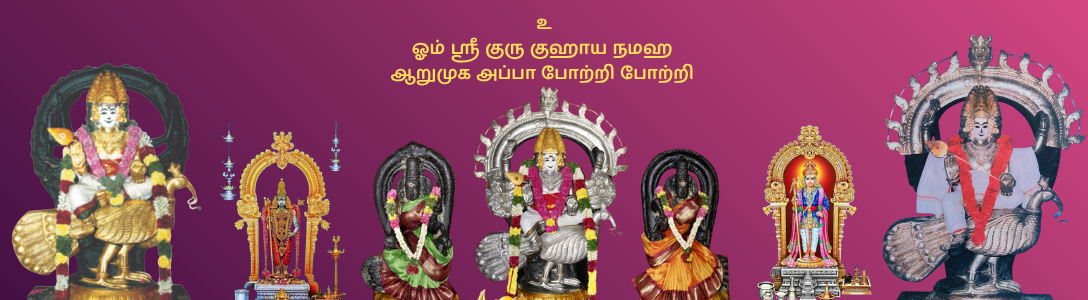
Thiruppugazh 208 kadAvinidai (swAmimalai)
மயூரகிரிநாதா உன் திருவடிகள் சரணம்
– மயூரகிரிநாதனுக்கு அரோகரா –
– குன்றக்குடி முருகனுக்கு அரோகரா –
திருப்புகழ் 207 ஒருவரையும் ஒருவர் (சுவாமிமலை) – திருப்புகழ் 209 கடிமா மலர்க்குள் (சுவாமிமலை)
பாடல்
தனாதனன தானம் தனாதனன தானம்
தனாதனன தானம் – தனதான
கடாவினிடை வீரங் கெடாமலினி தேறுங்
கடாவினிக ராகுஞ் – சமனாருங்
கடாவிவிடு தூதன் கெடாதவழி போலுங்
கனாவில்விளை யாடுங் – கதைபோலும்
இடாதுபல தேடுங் கிராதர்பொருள் போலிங்
கிராமலுயிர் கோலிங் – கிதமாகும்
இதாமெனிரு போதுஞ் சதாவின்மொழி யாலின்
றியானுமுனை யோதும் – படிபாராய்
விடாதுநட நாளும் பிடாரியுட னாடும்
வியாகரண ஈசன் – பெருவாழ்வே
விகாரமுறு சூரன் பகாரமுயிர் வாழ்வும்
விநாசமுற வேலங் – கெறிவோனே
தொடாதுநெடு தூரந் தடாதுமிக வோடுஞ்
சுவாசமது தானைம் – புலனோடுஞ்
சுபானமுறு ஞானந் தபோதனர்கள் சேருஞ்
சுவாமிமலை வாழும் – பெருமாளே.
பதம் பிரித்தது
தனாதனன தானம் தனாதனன தானம்
தனாதனன தானம் – தனதான
கடாவினிடை வீரங் கெடாமல் இனிது ஏறுங்
கடாவின் நிகராகுஞ் – சமனாரும்
கடாவிவிடு தூதன் கெடாதவழி போலும்
கனாவில் விளையாடுங் – கதைபோலும்
இடாதுபல தேடுங் கிராதர்பொருள்போல்
இங்கிராமல் உயிர் கோலிங்கு – இதமாகும்
இதாம் என இரு போதுஞ் சதா இன்மொழியால் இன்று
யானும் உனை ஓதும்படி – பாராய்
விடாதுநட நாளும் பிடாரியுட னாடும்
வியாகரண ஈச – ன்பெருவாழ்வே
விகாரமுறு சூரன் பகாரமுயிர் வாழ்வும்
விநாசமுற வேல் அங்கு – எறிவோனே
தொடாதுநெடு தூரந் தடாது மிக வோடுஞ்
சுவாசமதுதான் – ஐம்புலனோடுஞ்
சுபானமுறு ஞானந் தபோதனர்கள் சேரும்
சுவாமிமலை வாழும் – பெருமாளே.
English
kadAvin idai veerang kedAmal inidhERung
kadAvi nigarAgum – samanArung
kadAvi vidu dhUthan kedAdha vazhi pOlung
kanAvil viLaiyAdung – kadhai pOlum
idAdhu pala thEdung kirAdhar poruL pOl in
girAmal uyir kOl – ingidhamAgum
idhAmen iru pOdhum sadhA in mozhiyAl in
driyAnum unai Odhum – padi pArAy
vidAdhu nata nALum pidAri udan Adum
viyAkaraNa eesan – peru vAazhvE
vikAramuRu sUran pagAram uyir vAzhvum
vinAsamuRa vEl – angeRivOnE
thodAdhu nedu dhUran thadAdhu miga Odum
suvAsamadhu thAn – aimpulan Odum
subAnamuRu nyAnan thapOdhanargaL sErum
suvAmimalai vAzhum – perumALE.
English Easy Version
kadAvin idai veerang kedAmal inidhERum
kadAvi nigarAgum – samanArum
kadAvi vidu dhUthan kedAdha vazhi pOlum
kanAvil viLaiyAdung – kadhai pOlum
idAdhu pala thEdung kirAdhar poruL pOl
ingirAmal uyir kOl ingu – idhamAgum
idhAmena iru pOdhum sadhA in mozhiyAl
indriyAnum unai Odhum – padi pArAy
vidAdhu nata nALum pidAri udan Adum
viyAkaraNa eesan – peru vAazhvE
vikAramuRu sUran pagAram uyir vAzhvum
vinAsamuRa vEl – angeRivOnE
thodAdhu nedu dhUran thadAdhu miga Odum
suvAsamadhu thAn – aimpulan Odum
subAnamuRu nyAnan thapOdhanargaL sErum
suvAmimalai vAzhum – perumALE.
திருப்புகழ் 208 கடாவினிடை (சுவாமிமலை) – விளக்கம்
அருணகிரிநாத சுவாமிகள் சுவாமிமலையில் வீற்றிருக்கும் முருகப்பெருமானை வேண்டிப் பாடிய “கடாவினிடை” (பாடல் 208) என்ற இத்திருப்புகழ், நிலையற்ற மனித வாழ்வின் யதார்த்தங்களை உணர்த்தி, மரண பயத்தை நீக்க இறைவனின் திருநாமத்தை எந்நேரமும் உச்சரிக்கும் வரத்தை வேண்டி நிற்கும் ஆழமான பாடலாகும். இதன் விரிவான விளக்கத்தை எட்டுத் தலைப்புகளில் கீழே காணலாம்.
1. எமதர்மராஜனின் அச்சமூட்டும் வருகை
பாசக்கயிற்றை ஏந்தி, தனது வீரம் சற்றும் குறையாமல் கரிய எருமைக் கடாவின் (ஆண் எருமை) மீது ஏறி வரும் எமதர்மராஜனின் அச்சமூட்டும் காட்சியை அருணகிரிநாதர் முதலில் நினைவூட்டுகிறார். மரண காலம் நெருங்கும்போது, ஒருவரின் உயிரைப் பறிக்க வரும் எமனின் வருகையானது மனித மனங்களில் ஏற்படுத்தும் தவிர்க்க முடியாத பயத்தை இந்தப் பகுதி சுட்டிக்காட்டுகிறது.
2. மரணப் பாதையும் கனவு போன்ற வாழ்வும்
உயிரைப் பறித்த பிறகு, எமதூதர்கள் அந்த உயிரை அழைத்துச் செல்லும் கரடுமுரடான, இருண்ட பாதையை நினைத்துப் புலவர் அஞ்சுகிறார். இந்த உலக வாழ்வு என்பது தூக்கத்தில் தோன்றும் விசித்திரமான கனவுகளைப் போன்றது (கனாவில் விளையாடும் கதை) என்பதை அவர் ஆழமாகப் பதிவு செய்கிறார். விழித்தவுடன் கனவு எப்படிப் பொய்யாகிப் போகிறதோ, அதுபோல மரணம் நெருங்கும் போது இந்த உலக வாழ்வும் நிலையற்றதாகி விடுகிறது.
3. கஞ்சர்களின் பயனற்ற செல்வம் போலாகும் வாழ்வு
ஏழை எளியவர்களுக்குக் கொடுத்து உதவாமல், தமக்காக மட்டுமே சேர்த்து வைக்கும் கஞ்சர்களின் (கிராதர்) செல்வம் எவ்வாறு யாருக்கும் பயன்படாமல் வீணாகிப் போகிறதோ, அதுபோலவே இறைவனை நினையாத மனித வாழ்வும் வீணாகிப் போகும். எனவே, உயிர் உடலை விட்டுப் பிரியும் நேரத்திலாவது வீணாகப் பதறாமல், இறைவனின் திருவடிகளைச் சரணடைவதே ஆன்மாவிற்குச் செய்யும் உண்மையான நன்மையாகும் (இங்கிதம்).
4. எந்நேரமும் திருநாமம் ஓதும் வரம்
நிலையற்ற இந்த வாழ்வில் இருந்து தப்பிக்க ஒரே வழி இறைநாமத்தைச் சொல்வதுதான். ஆகையால், “இதுவே எனக்கு உகந்த வழி” என்று உணர்ந்து, இரவும் பகலுமாகிய இருவேளைகளிலும் உனது திருநாமத்தையே நான் ஓய்வின்றி உச்சரிக்கும்படி (ஓதும்படி) நீ எனக்கு அருள் செய்ய வேண்டும் என்று முருகப்பெருமானிடம் அவர் நெஞ்சுருகிப் பிரார்த்தனை செய்கிறார்.
5. காளியுடன் நடனமாடும் ஈசனின் பெருவாழ்வு
முருகனின் தந்தையான சிவபெருமானின் சிறப்பை இங்கு போற்றுகிறார். ஊழிக்காலத்திலும் அழியாமல், காளி தேவியுடன் (பிடாரியுடன்) ஓயாமல் திருநடனம் புரிபவர் ஈசன். உலகிற்கு இலக்கணங்களை (வியாகரணம்) உபதேசித்த அந்த ஆதிசிவனின் பெருவாழ்வாக, அவரின் தவப்பயனாக அவதரித்த அருமைப்புதல்வனே முருகன் என்று அவனது மேன்மையைப் புகழ்கிறார்.
6. சூரனை அழித்த வெற்றி வேலாயுதம்
அறத்திற்குப் புறம்பாக, தேவர்களைத் துன்புறுத்தி அக்கிரமங்கள் செய்து வந்த கொடிய சூரபத்மனின் வலிமையும், அவனது உயிரும் முற்றிலுமாக அழியும்படி (விநாசம் உற) தனது கூர்மையான வேலாயுதத்தைச் செலுத்தியவன் முருகப்பெருமான். தீய சக்திகளை அழித்த அந்த வேல், நம்முள் இருக்கும் அறியாமை எனும் இருளையும் அழிக்க வல்லது.
7. மூச்சும் புலன்களும் அடங்கும் யோக நிலை
மனித உடலில் மூச்சுக்காற்று (சுவாசம்) தடையின்றித் தொடர்ந்து ஓடிக்கொண்டிருக்கிறது. அந்தச் சுவாசத்தை வாசி யோகத்தின் (பிராணாயாமம்) மூலம் அடக்கி, மனதைக் கட்டுக்குள் கொண்டு வந்து, தறிகெட்டு ஓடும் ஐம்புலன்களையும் ஒடுக்கும் மேலான தியான நிலையை முனிவர்கள் அடைகிறார்கள். இந்த நிலை இறைவனை அடைவதற்கான ஆன்மீகப் பாதையாகக் கூறப்படுகிறது.
8. தபோதனர்கள் சேரும் சுவாமிமலைப் பெருமாள்
இத்தகைய கடுமையான யோகப் பயிற்சிகளால் புலன்களை அடக்கிய தவசிகள் (தபோதனர்கள்), தூய ஞானத்தையும் அழியாத பேரின்பத்தையும் பெறுவதற்காகச் சென்றடையும் புண்ணியத் தலம் சுவாமிமலை ஆகும். அந்தச் சுவாமிமலையில் வீற்றிருந்து அடியார்களுக்கு அருள்பாலிக்கும் தேவாதி தேவனே (பெருமாளே), எனக்கும் உனது திருவருளைத் தந்தருள வேண்டும் என்று பாடி நிறைவு செய்கிறார்.
சுருக்கம்
எருமைக் கடாவின் மீது வரும் எமனின் வருகைக்கும், அவன் அழைத்துச் செல்லும் இருண்ட மரணப் பாதைக்கும் அஞ்சும் இந்த மனித வாழ்வு, ஒரு கனவு போன்ற நிலையற்றது. கஞ்சன் சேர்த்த செல்வம் போல என் வாழ்வு வீணாகாமல், எந்நேரமும் உனது திருநாமத்தை ஓதும் வரத்தை எனக்குத் தர வேண்டும். காளியோடு நடனமாடும் இலக்கண ஈசனின் மகனே! சூரனை அழித்த வேலாயுதத்தை ஏந்தியவனே! முனிவர்கள் ஐம்புலன்களையும் அடக்கி யோக ஞானம் பெறும் சுவாமிமலையில் வீற்றிருக்கும் பெருமாளே, அடியேனை ஆட்கொள்ள வேண்டும் என்பதே இப்பாடலின் மையக்கருத்தாகும்.
The Essence of Thiruppugazh 208 kadAvinidai (swAmimalai)
Here is a deep explanation of the Thiruppugazh “Kadavini Dai” (Song 208), composed by Saint Arunagirinathar at the sacred shrine of Swamimalai. The hymn is a profound reflection on the inevitability of death, the fleeting nature of worldly attachments, and the ultimate salvation found through unceasing devotion.
Below is the detailed explanation divided into eight thematic headings.
1. The Fierce Approach of Yama, the God of Death
In the opening lines, Saint Arunagirinathar confronts the inevitable reality of human mortality. He paints a terrifying picture of Yama (Saman), the God of Death, who rides upon his fierce, dark male buffalo (“kadavu”). Yama approaches with undiminished valor and unwavering determination when a person’s time on earth comes to an end. This imagery serves as a stark wake-up call to the human soul, reminding us that no one can escape or overpower the finality of death when the appointed hour arrives.
2. The Illusion of Life and the Inescapable Path
Following the arrival of Yama, the poet describes the unrelenting messengers of death (dhoothar) who drag the departed soul down a dark, inescapable path. Arunagirinathar compares our worldly existence to a fleeting story played out in a dream (“kanavil vilaiyadung kadhai”). Just as a vivid dream abruptly ends and vanishes when one wakes up, human life, with all its dramas, attachments, and ego, vanishes instantly at the moment of death, exposing the illusory nature of the material world.
3. The Wasted Wealth of the Miserly
To emphasize the futility of living without spiritual purpose, the saint uses a powerful metaphor. He compares a life lived without devotion or charity to the hoarded wealth of a cruel miser (“kiradhar”). A miser spends his entire life endlessly accumulating riches but neither enjoys them nor gives them to those in need. Ultimately, when death strikes, that wealth is left behind, completely useless. Similarly, a life spent solely accumulating worldly gains, without preparing the soul for its onward journey, is a tragically wasted existence.
4. A Plea for Continuous Devotion and Chanting
Realizing the terrifying nature of death and the emptiness of materialistic pursuits, Arunagirinathar presents the ultimate solution: unwavering devotion. He pleads with Lord Murugan for a specific blessing. He asks for the divine grace to constantly, both day and night (“iru podhum”), chant the Lord’s sweet and holy names (“in mozhiyal… odhum”). He recognizes that keeping the mind anchored in the divine name is the only true refuge that can save the soul from the fear of death and karmic cycles.
5. The Divine Son of the Cosmic Dancer
Transitioning from his personal plea to glorious praise, the poet elevates Lord Murugan by describing His supreme lineage. He refers to Murugan’s father, Lord Shiva (“Eesan”), who is celebrated as the divine source of all grammar and supreme knowledge (“Viyakarana”). Lord Shiva is also depicted in His fierce, eternal cosmic dance alongside Goddess Kali (Pidari). Murugan is hailed as the great treasure and ultimate blessing (“peru vazhve”) born of this supreme cosmic dancer.
6. The Destroyer of the Demonic Forces
The hymn then celebrates Lord Murugan’s martial valor and His role as the cosmic protector. Arunagirinathar recalls the epic battle against the cruel, shape-shifting demon king, Surapadman, who tormented the celestial beings. With absolute precision and unstoppable power, Lord Murugan hurled His sacred spear (the Vel) to completely annihilate the demon’s physical form and life force (“vinasamura vel”). This act symbolizes the Lord’s power to destroy our internal demons of ego, ignorance, and illusion.
7. The Wandering Senses and the Breath of Life
Returning to the mechanics of the human condition, the poet touches upon the concepts of yoga and spiritual discipline. He describes the life breath (“suvasam”) that flows continuously and the five human senses (“aimpulan”) that relentlessly wander far and wide, chasing external pleasures. For a true spiritual seeker, the ultimate goal is to tame this breath and withdraw these wandering senses from the external world, turning them inward to realize the divine truth.
8. The Supreme Lord of Swamimalai
In the concluding lines, Arunagirinathar anchors the poem in the sacred physical space of Swamimalai. He describes this holy hill as a gathering place for great, disciplined ascetics and sages (“thapodhanargal”) who have mastered their senses and attained supreme, auspicious wisdom (“subanamuru nyanan”). He praises Lord Murugan as the Great Lord (“Perumale”) who presides over this gathering of enlightened souls, acting as the ultimate Guru who grants salvation to all who seek Him.
Summary
Thiruppugazh 208 is a profound spiritual awakening that contrasts the terror of mortality with the eternal comfort of divine grace. Saint Arunagirinathar begins by warning humanity of the inevitable arrival of Yama on his buffalo, comparing our worldly lives to a fleeting dream and our materialistic pursuits to the useless, hoarded wealth of a miser. To escape this tragic fate, he desperately prays for the blessing to chant Murugan’s holy names continuously, day and night. The poem then shifts to praising the Lord’s glory—honoring Him as the son of the cosmic dancer Shiva, the wielder of the Vel who destroyed the demon Surapadman, and the Supreme Master. Finally, the saint surrenders to the Lord of Swamimalai, the divine teacher sought by the greatest enlightened sages who have mastered their breath and wandering senses.
Thiruppugal – திருப்புகழ்