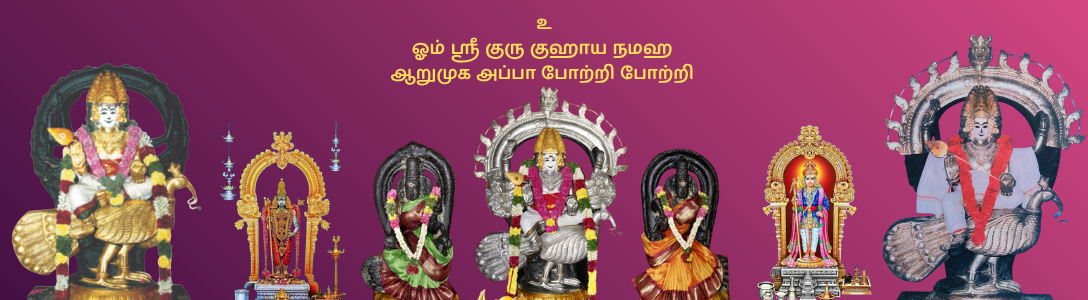
Thiruppugazh 209 kadimAmalarkkuL (swAmimalai)
மயூரகிரிநாதா உன் திருவடிகள் சரணம்
– மயூரகிரிநாதனுக்கு அரோகரா –
– குன்றக்குடி முருகனுக்கு அரோகரா –
திருப்புகழ் 208 கடாவினிடை (சுவாமிமலை) – திருப்புகழ் 210 கதிரவனெ ழுந்து (சுவாமிமலை)
பாடல்
தனனா தனத்த தந்த தனனா தனத்த தந்த
தனனா தனத்த தந்த – தனதான
கடிமா மலர்க்கு ளின்ப முளவேரி கக்கு நண்பு
தருமா கடப்ப மைந்த – தொடைமாலை
கனமேரு வொத்தி டும்ப னிருமாபு யத்த ணிந்த
கருணா கரப்ர சண்ட – கதிர்வேலா
வடிவார் குறத்தி தன்பொ னடிமீது நித்த முந்தண்
முடியான துற்று கந்து – பணிவோனே
வளவாய்மை சொற்ப்ர பந்த முளகீர னுக்கு கந்து
மலர்வாயி லக்க ணங்க – ளியல்போதி
அடிமோனை சொற்கி ணங்க வுலகாமு வப்ப என்று
னருளால ளிக்கு கந்த – பெரியோனே
அடியேனு ரைத்த புன்சொ லதுமீது நித்த முந்த
ணருளே தழைத்து கந்து – வரவேணும்
செடிநேரு டற்கு டம்பை தனின்மேவி யுற்றி டிந்த
படிதான லக்க ணிங்க – ணுறலாமோ
திறமாத வர்க்க னிந்து னிருபாத பத்ம முய்ந்த
திருவேர கத்த மர்ந்த – பெருமாளே.
பதம் பிரித்தது
தனனா தனத்த தந்த தனனா தனத்த தந்த
தனனா தனத்த தந்த – தனதான
கடிமா மலர்க்குள் இன்பமுள வேரி கக்கு நண்புதரு
மா கடப்பு அமைந்த – தொடைமாலை
கனமேரு ஒத்திடும் பன்இருமா புயத்த ணிந்த
கருணாகர ப்ரசண்ட – கதிர்வேலா
வடிவார் குறத்தி தன்பொன் அடிமீது நித்தமும் தண்
முடியானது உற்று உகந்து – பணிவோனே
வளவாய்மை சொற்ப்ரபந்தமுள கீரனுக்கு உகந்து
மலர்வாய் இலக்கணங்கள் – இயல்பு ஓதி
அடிமோனை சொற்கிணங்க உலகாம் உவப்ப என்றுன்
அருளால் அளிக்க உகந்த – பெரியோனே
அடியேனு ரைத்த புன்சொல் அதுமீது நித்தமும்
தணருளே தழைத்து உகந்து – வரவேணும்
செடிநேர் உடற் குடம்பை தனின்மேவியுற்றிடு இந்த
படிதான் அலக்கண் இங்கண் – உறலாமோ
திறமாதவர்க்க னிந்துன் இருபாத பத்மம் உய்ந்த
திருவேரகத்தமர்ந்த – பெருமாளே.
English
kadi mA malarkkuL inbam uLa vEri kakku naNbu
tharu mA kadappa maindha – thodai mAlai
gana mEru oththidum panniru mA buyath aNindha
karuNAkara prachaNda – kadhirvElA
vadivAr kuRaththi than ponnadi meedhu niththam unthaN
mudiyAna dhutR ugandhu – paNivOnE
vaLavAymai soR prabandham uLa keeranuk ugandhu
malarvAy ilakkaNangaL – iyalbOdhi
adimOnai soRkiNanga ulagAm uvappa endrun
aruLAl aLikku kandha periyOnE
adiyEn uraiththa punchol adhumeedhu niththam unthaN
aruLE thazhaith ugandhu – varavENum
chedi nEr udaR kudambai thanin mEvi utRi dindha
padidhAn alakkaN ingaN – uRalAmO
thiRa mAdhavark kanindhun iru pAdha padhma muyndha
thiru vEragath amarndha – perumALE.
English Easy Version
kadi mA malarkkuL inbam uLa vEri kakku naNbu
Tharu mA kadappa maindha – thodai mAlai
gana mEru oththidum panniru mA buyath aNindha
karuNAkara prachaNda – kadhirvElA
vadivAr kuRaththi than ponnadi meedhu niththam
unthaN mudiyAna dhutR ugandhu – paNivOnE
vaLavAymai soR prabandham uLa keeranukkku
malarvAy ilakkaNangaL – iyalbOdhi
adimOnai soRkiNanga ulagAm uvappa Endru una
ruLAl aLikku ukandha – periyOnE
adiyEn uraiththa punchol adhumeedhu niththam
unthaN aruLE thazhaith ugandhu – varavENum
chedi nEr udaR kudambai thanin mEvi utRidu indha
padidhAn alakkaN ingaN – uRalAmO
thiRa mAdhavark kanindhun iru pAdha padhmam uyndha
thiru vEragath amarndha – perumALE.
திருப்புகழ் 209 கடிமா மலர்க்குள் (சுவாமிமலை) – விளக்கம்
சுவாமிமலையில் வீற்றிருக்கும் முருகப்பெருமானை வேண்டி அருணகிரிநாதர் பாடிய “கடிமா மலர்க்குள்” (பாடல் 209) என்னும் இத்திருப்புகழ், இறைவனின் எல்லையற்ற கருணையையும், தமிழுக்கும் இலக்கணத்திற்கும் அவன் செய்த தொண்டினையும், பக்திக்கு அவன் கட்டுப்படும் எளிமையையும் மிக அழகாகப் பேசுகிறது. செந்தமிழ் இலக்கியங்களையும் அதன் இலக்கண மரபுகளையும் போற்றும் எவருக்கும் இப்பாடல் ஒரு சிறந்த ஞான விருந்தாகும்.
இதன் ஆழ்ந்த விளக்கத்தை எட்டுத் தலைப்புகளில் கீழே காணலாம்.
1. நறுமணமும் தேனும் சொட்டும் கடப்ப மாலை
பாடலின் தொடக்கத்தில் முருகப்பெருமானின் திருமேனி அழகை அருணகிரிநாதர் வர்ணிக்கிறார். நறுமணம் வீசும் சிறந்த மலர்களில் உள்ள இனிமையான தேனைச் சொட்டும் கடப்ப மலர்களால் தொடுக்கப்பட்ட மாலையை முருகப்பெருமான் அணிந்துள்ளார். அடியார்களுக்குத் தூய அன்பையும், இறுதியில் முக்தியையும் தரக்கூடிய சிறப்பினை உடையது அவனது மார்பில் புரளும் இந்தக் கடப்ப மாலை.
2. மேரு மலை நிகர்த்த பன்னிரு தோள்கள்
பொன்மலையான மேரு மலைக்கு ஒப்பான, எவராலும் அசைக்க முடியாத வலிமை பொருந்திய பன்னிரண்டு பெரிய தோள்களில் அந்தக் கடப்ப மாலையை அணிந்தவன் கந்தன். தனது அடியார்களின் மீது கருணைக் கடலாக விளங்கும் அவன், பகைவர்களின் அறியாமையை அழிக்கும் பிரசண்டமான (மிகக் கூர்மையான மற்றும் வீரியம் மிக்க) ஒளியுடைய வேலாயுதத்தைக் கரத்தில் ஏந்தி நிற்கிறான்.
3. வள்ளியம்மையின் திருவடியில் பணியும் பெருமான்
இவ்வளவு பெரிய பரம்பொருளாக, உலகங்களை ஆளும் தேவாதி தேவனாக இருந்த போதிலும், அழகு நிறைந்த குறவர் குலப் பெண்ணான வள்ளியம்மையின் பொற்பாதங்களில் தனது குளிர்ந்த திருமுடி படும்படி வீழ்ந்து வணங்கும் எளிமை கொண்டவன் முருகன். எவ்விதப் பகட்டும் இல்லாத தூய அன்பிற்கும், களங்கமற்ற பக்திக்கும் மட்டுமே பரம்பொருள் கட்டுப்படும் என்பதை இது காட்டுகிறது.
4. நக்கீரருக்கு அருளிய இலக்கண உபதேசம்
வளமான உண்மைகளைக் கூறும் சிறந்த பிரபந்தங்களைப் பாடிய சங்கப் புலவரான நக்கீரருக்கு, தனது மலர் போன்ற திருவாயால் தமிழ் இலக்கணங்களின் இயல்புகளைக் கற்பித்தவன் குமரகுருபரன். செம்மொழியான தமிழின் இலக்கண இலக்கியங்களை ஆராய்ந்து போற்றும் மெய்யடியார்களின் உள்ளங்களில் எந்நாளும் அவன் ஞானாசிரியனாக வீற்றிருப்பான் என்பதை இப்பாடல் வரிகள் ஆணித்தரமாக நிறுவுகின்றன.
5. மோனைத் தொடை நயமும் இலக்கிய இன்பமும்
நக்கீரர் பாடிய பாடல்களில் ‘அடிமோனை’ (பாடலின் அடிகளில் முதல் எழுத்து ஒன்றி வருதல்) முதலிய தொடை நயங்களும், சொற்களும் இலக்கணத்தோடு பொருந்தி அமையவும், அதனைப் படித்துப் பிரபஞ்சம் முழுவதும் மகிழும்படியும் தனது திருவருளால் அவருக்கு ஞானத்தை அளித்த மாபெரும் பெரியோன் முருகப்பெருமான் ஆவான். ஆழ்ந்த தமிழ் இலக்கியத் தொண்டில் ஈடுபடுவோர்க்கு அவனது திருவருளே ஊற்றுக்கண்ணாகும்.
6. புன்சொல்லையும் ஏற்கும் பேரருள்
இவ்வளவு பெரிய இலக்கணச் சுடராக விளங்கும் முருகப் பெருமானுக்கு முன், எவ்வித இலக்கண அறிவோ இலக்கியச் செறிவோ இல்லாத அடியேன் சொல்லும் புன்சொற்களையும் (அற்பமான சொற்களையும்) ஒரு பொருட்டாக நீ ஏற்க வேண்டும் என்று அருணகிரிநாதர் உருகி வேண்டுகிறார். எனது குறையுடைய சொற்களின் மீதும் உனது குளிர்ந்த திருவருள் தழைக்கும்படி நீ மகிழ்ந்து வந்து என்னை ஆட்கொள்ள வேண்டும் என்று யாசிக்கிறார்.
7. உடம்பு என்னும் சிறையிலிருந்து விடுதலை
பாவங்களும் குற்றங்களும் நிறைந்த, செடி கொடிகள் மண்டிய புதரைப் போன்ற இந்த உடம்பு என்னும் கூட்டில் (குடம்பை) அகப்பட்டு, மனம் சிதைந்து அடியேன் துன்பப்படுவது நியாயமோ? நிலையற்ற இந்த உடற்பற்றை நீக்கி, அறியாமை இருளில் உழலும் என் ஆன்மாவை விடுவித்து, எனக்கு ஞானப் பார்வையை அருள வேண்டும் என்பதே புலவரின் உளமார்ந்த வேண்டுதலாகும்.
8. திருவேரகம் என்னும் சுவாமிமலை நாதன்
திறமையான, மாசற்ற தவம் செய்யும் முனிவர்கள் தியானித்து உய்வடையும் உனது தாமரை போன்ற இரண்டு திருவடிகளையும் அடியேனுக்குத் தரவேண்டும். அடியார்களின் பிறவிப்பிணியை அறுத்து மெய்ஞ்ஞானம் நல்கும் திருவேரகம் என்று அழைக்கப்படும் சுவாமிமலையில் வீற்றிருக்கும் தேவாதி தேவனே (பெருமாளே), எனக்கு முக்தி அருள்வாய் எனப் பாடி முடிக்கிறார்.
சுருக்கம்
நக்கீரருக்குத் தமிழ் இலக்கணத்தையும், அடிமோனை போன்ற இலக்கிய நயங்களையும் மலர் போன்ற தன் திருவாயால் உபதேசித்த முருகப்பெருமான், தமிழின் வடிவமாகவே திகழ்கிறான். மேருமலை போன்ற பன்னிரு தோள்களை உடையவனாயினும், வள்ளியின் பாதங்களில் பணியும் எளிமை கொண்டவன். அத்தகைய பெருமான், பாவங்கள் நிறைந்த இந்த உடம்பில் நான் படும் துன்பத்தை நீக்கி, எனது புன்சொற்களையும் மகிழ்ந்து ஏற்று, திருவேரகம் எனப்படும் சுவாமிமலையில் இருந்து எனக்குத் தன் திருவடிப் பேற்றை அருள வேண்டும் என்பதே இத்திருப்புகழின் மையக்கருத்தாகும்.
The Essence of Thiruppugazh 209 kadimAmalarkkuL (swAmimalai)
Here is a deep explanation of the Thiruppugazh “Kadimamalar” (Song 209), composed by Saint Arunagirinathar at the sacred shrine of Swamimalai (historically known in this context as Thiruveragam). This hymn is celebrated for its beautiful references to Lord Murugan’s patronage of the Tamil language and his profound compassion for his devotees.
Below is the detailed explanation divided into eight thematic headings.
1. The Sweetness of the Kadamba Garland
The hymn begins with a rich, sensory description of Lord Murugan’s divine form. Arunagirinathar describes the Lord adorned with a beautiful garland made of large, fragrant Kadamba flowers. These flowers are overflowing with sweet, intoxicating nectar that constantly drips from them. In spiritual terms, the Kadamba flower represents the blossoming of the soul, and its sweet nectar symbolizes the pure, joyful grace and divine friendship that the Lord offers to those who seek him with absolute devotion.
2. The Mighty Shoulders and the Radiant Spear
Continuing the visual praise, the poet draws a magnificent comparison for the Lord’s physical strength. He compares Lord Murugan’s twelve broad and mighty shoulders to the grand, unshakeable Mount Meru, the cosmic mountain of Hindu mythology. Despite possessing such immense, awe-inspiring power and holding the fierce, brilliantly radiant “Vel” (spear) that destroys ignorance, the Lord is simultaneously described as “Karunakara”—the ultimate ocean of mercy and compassion.
3. The Supreme Lord’s Submission to Pure Devotion
In a profound verse that highlights the humility of the Divine, Arunagirinathar sings of Murugan’s love for Goddess Valli. Though He is the supreme Lord of the universe, Murugan willingly and joyfully bows His cool, sacred head to touch the golden feet of Valli, the beautiful maiden from the humble hunter tribe (Kuravar). This imagery serves as a powerful theological statement: the Almighty cannot be bound by wealth, status, or rituals, but He readily surrenders and submits Himself to the pure, unblemished love of a true devotee.
4. The Divine Teacher of Tamil Literature
The song beautifully shifts to historical and literary mythology, specifically Lord Murugan’s connection to the Tamil language. Arunagirinathar references the great Sangam-era poet Nakkirar, who authored magnificent and truthful literary works (Prabandhams) like the Thirumurugatruppadai. The poet celebrates Lord Murugan as the divine teacher who, with His lotus-like mouth, happily taught the intricate rules of grammar and literature to Nakkirar, clearing the poet’s doubts and illuminating his mind.
5. The Patron of Poetic Perfection
Delving deeper into this literary connection, the hymn notes how Lord Murugan specifically guided Nakkirar in perfecting “Adimonai”—the poetic rule of matching the first letters (alliteration) of consecutive lines. By the Lord’s grace, Nakkirar was able to compose flawless, melodious poetry that brought immense joy to the entire world. This portrays Lord Murugan not just as a warrior god, but as the supreme patron of arts, wisdom, and the perfection of the Tamil language.
6. A Humble Plea for Divine Acceptance
Having praised the Lord for accepting and elevating Nakkirar’s brilliant poetry, Arunagirinathar shifts to a deeply personal and humble plea. He refers to his own poetic compositions as “punchol”—poor, flawed, and paltry words. He desperately prays that just as the Lord joyfully accepted Nakkirar’s perfect verses, He must also show the exact same overflowing grace and joy toward Arunagirinathar’s humble, unpolished words. It is a beautiful expression of a devotee asking for grace based not on his own merit, but on the Lord’s boundless generosity.
7. The Agony of the Mortal Body
The tone of the hymn turns introspective and sorrowful as the poet reflects on the human condition. Arunagirinathar compares the physical human body to a fragile nest tangled in a thick, thorny bush (“chedi”). He laments the suffering of his soul, which is trapped within this painful, decaying physical vessel, enduring immense hardships and worldly miseries. He passionately questions the Lord, asking if it is fair or just to let His devotee suffer and perish in this painful state of material existence.
8. The Sanctuary of Thiruveragam (Swamimalai)
In the concluding lines, the poet finds his ultimate solace at the holy feet of the Lord. He describes Lord Murugan’s lotus feet as the ultimate refuge and salvation for great, disciplined ascetics (“madhavar”) who perform rigorous penance. Arunagirinathar surrenders to this Great Lord (Perumal) who resides majestically at “Thiruveragam”—the ancient Sangam name for Swamimalai. He seeks liberation from his physical suffering by taking shelter under the very feet that enlightened sages seek.
Summary
Thiruppugazh 209 is a masterful hymn that blends the themes of divine majesty, literary history, and personal surrender. Arunagirinathar praises Lord Murugan—adorned with a nectar-dripping Kadamba garland and possessing twelve Meru-like shoulders—as a God of both fierce power and infinite mercy, perfectly illustrated by His willing submission to the pure love of Goddess Valli. The poem highlights Murugan’s role as the divine patron of Tamil, recalling how He taught grammar and poetic nuances to the great poet Nakkirar. Showing profound humility, Arunagirinathar begs the Lord to accept his own flawed, simple words with that same divine grace. Finally, expressing the agony of being trapped in a painful mortal body, the saint seeks eternal salvation at the lotus feet of the Lord residing in Thiruveragam (Swamimalai).
Thiruppugal – திருப்புகழ்